
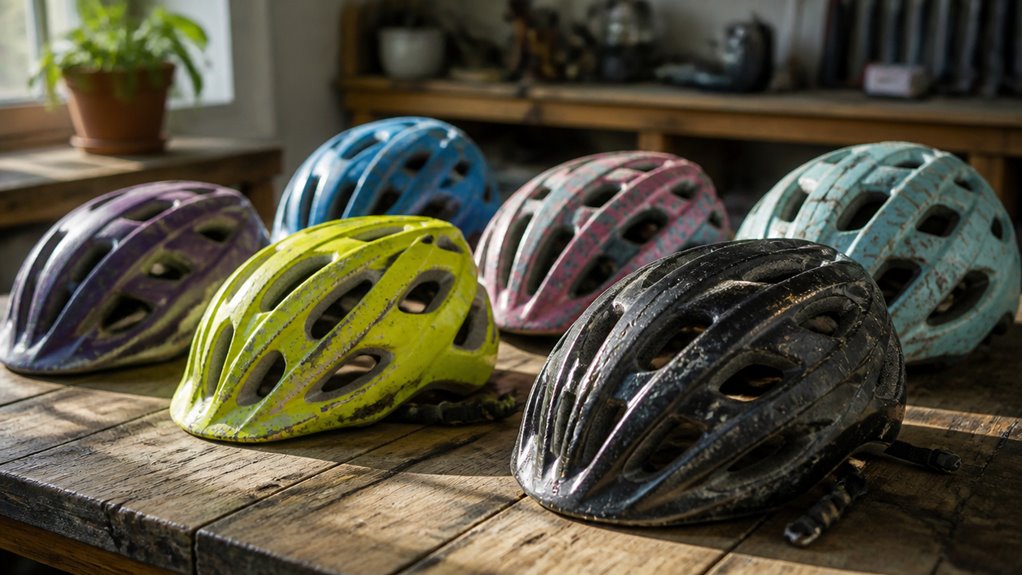
You should replace old bicycle helmets immediately after any crash or if you notice damage like cracks or dents, even if they seem fine.
Helmets also need replacing every 3–5 years due to material wear and UV degradation.
Never donate or reuse damaged or expired helmets. Instead, consider brand take-back programs, mail-in recycling, or disassembling parts for local recycling options.
If safe recycling isn’t available, dispose of helmets responsibly to prevent unsafe reuse.
Keep exploring to learn how best to handle your old helmet.
Key Takeaways
- Replace helmets immediately after any crash or visible damage to ensure safety and prevent compromised protection.
- Replace helmets every 3–5 years due to material degradation from wear and UV exposure.
- Donate only undamaged, non-expired helmets that meet current safety standards to verified organizations.
- Use brand take-back or mail-in recycling programs for helmets free of crash damage and structural issues.
- Disassemble helmets for component recycling where accepted, but destroy and discard damaged or expired helmets responsibly.
Replace Your Bicycle Helmet After a Crash

Always replace your bicycle helmet immediately after any crash or hard impact, even if it looks undamaged. The helmet’s protective structure can weaken internally without visible signs, compromising its ability to protect you in future accidents.
Replace your helmet after any impact, even if it appears undamaged, to ensure ongoing protection.
Don’t take chances. Impact can crush the foam or crack the shell, which might be invisible to the naked eye. After a crash, cut the straps before disposal to prevent unsafe reuse or resale.
Helmets with crushed foam, shell cracks, broken fit mechanisms, or damaged straps must be discarded. If your helmet has taken a severe blow, destroy and replace it promptly.
Prioritizing safety means never relying on a helmet that might’ve hidden damage from a previous impact. Your helmet’s integrity is essential for effective protection.
Additionally, understanding the importance of impact-absorbing materials like EPS foam and polycarbonate shells helps explain why helmets should not be reused after a crash.
Check Your Helmet’s Age and Wear for Safety
After a crash, replacing your helmet is non-negotiable.
However, even helmets that haven’t been impacted need regular evaluation.
Helmet materials degrade over time, losing strength and compromising protection.
Experts often recommend replacing your helmet every three to five years, regardless of visible damage.
Check for signs like fading, UV damage, delamination, or worn straps, which indicate it’s time for a new one.
Don’t rely solely on appearance; age weakens internal components that aren’t visible.
Following manufacturer guidelines and safety standards guarantees your helmet performs as intended.
Regularly assessing your helmet’s condition helps you avoid riding with compromised gear, keeping your head safer.
Additionally, understanding the importance of impact resistance and proper helmet fit can further enhance your safety when selecting a replacement.
Handle Damaged or Cracked Bicycle Helmets
When you notice cracks, dents, or any visible damage on your bicycle helmet, stop using it immediately.
Even if damage isn’t obvious, a previous impact can weaken the helmet’s protective structure, compromising your safety.
Helmets with crushed foam, cracked shells, broken fit parts, or damaged straps should be discarded without hesitation.
Never attempt repairs or continue using a helmet after a crash, as its integrity is likely compromised.
To prevent accidental reuse, cut the straps before disposal.
Remember, a damaged helmet no longer offers reliable protection and poses a serious risk.
Prioritize your safety by replacing any helmet showing signs of damage or impact, ensuring you always ride with dependable head protection.
Additionally, just as with knee scooters, it is crucial to regularly inspect equipment for wear and damage to maintain optimal safety.
How to Donate Your Bicycle Helmet Safely?
Before you think about donating your bicycle helmet, take a moment to check that it’s in good shape. Make sure it’s free from any damage, hasn’t expired, and meets the current safety standards. You definitely want to avoid passing along a helmet that mightn’t be safe!
Also, consider who you’re giving it to. It’s important to choose recipients who understand how to use helmets properly. After all, you want to make sure that your donation isn’t only well-intentioned but also genuinely safe for the wearer.
Keeping these things in mind will help protect both the person receiving the helmet and your good intentions. Additionally, understanding the importance of safety certifications ensures the helmet provides reliable protection.
Helmet Condition Check
Make sure your bicycle helmet is in excellent condition before considering donation, as safety must come first.
Inspect it for any visible damage like cracks, crushed foam, or broken straps.
Remember, helmets suffer invisible structural weakening after any crash, so replace them immediately if damage is suspected.
Check the helmet’s age; most manufacturers recommend replacing helmets every three to five years due to material degradation from UV exposure and wear.
Only donate helmets that remain structurally sound and fit current safety standards.
If the helmet shows signs of wear, impact, or is past its recommended lifespan, don’t donate it.
Ensuring your helmet meets these criteria protects others and prevents potential liability from passing on unsafe gear.
Consider helmets that incorporate MIPS technology for enhanced rotational impact protection when choosing replacements or donations.
Safety Considerations Before Donation
Safety remains the top priority when considering donating your bicycle helmet. Before donation, make certain the helmet is crash-free, less than 3-5 years old, and shows no visible wear or damage.
Helmets compromised by impacts or age lose protective integrity and shouldn’t be passed on. Cut straps to prevent unsafe reuse if you must dispose of it. Only helmets that remain structurally sound and fit properly are safe to donate.
For hot weather use, helmets with features like advanced ventilation systems and removable liners can enhance rider comfort while maintaining safety.
| Condition | Action Required | Reason |
|---|---|---|
| Crash impact | Replace and destroy | Hidden structural damage |
| Age > 5 years | Replace | Material degradation |
| Visible wear | Discard or recycle | Compromised protection |
This makes certain you donate helmets that genuinely safeguard others.
Choosing Appropriate Recipients
Make certain your helmet meets safety standards is just the first step; knowing who should receive it’s equally important. Only donate helmets that are structurally sound, undamaged, and not past their recommended lifespan, usually three to five years.
Prioritize established organizations, such as community cycling programs or schools, that have protocols to verify helmet fit and condition before distribution. Avoid passing helmets directly to individuals without confirming their safety and fit needs, as used helmets can pose liability risks if their history is unknown.
When selecting recipients, choose those who understand bicycle safety and can ensure helmets are worn correctly. If no appropriate recipient exists, consider recycling or responsible disposal instead. Your careful selection protects others and maintains helmet safety integrity.
Additionally, understanding the importance of proper maintenance can extend helmet usability and safety for future users.
Explore Bicycle Helmet Recycling Options
If you’ve got an old bicycle helmet lying around, you’re in luck! There are some great ways to recycle it. Many brands have take-back programs where they collect used gear and give it a new life. It’s super easy—just check with your favorite brands to see if they offer this service.
You might also want to reach out to your local recycling centers. Some of them accept helmets during special events, like car-seat recycling drives. It’s a nice way to get rid of your helmet and help the environment at the same time!
And hey, if local options are a bit thin, don’t worry! There are mail-in recycling services out there that make it really convenient to recycle your helmet. It’s a simple way to keep those old helmets out of landfills and do your part for the planet.
Additionally, choosing cycling gear made with durable materials can extend the life of your helmet and reduce frequent replacements.
Brand Take-Back Programs
When looking to recycle your old bicycle helmet, brand take-back programs offer a practical solution that you mightn’t have considered.
Some cycling manufacturers run dedicated programs to collect and recycle helmets, often providing drop-off points or mail-in options.
These initiatives guarantee your helmet is processed responsibly, with materials repurposed or safely disposed of.
Since helmet recycling isn’t widely available through local centers, brand take-back programs fill a crucial gap.
Before sending in your helmet, verify it meets the program’s criteria. Typically, helmets should be undamaged and not crash-impacted.
Using these programs helps keep unsafe helmets out of circulation and supports sustainable disposal.
Check your helmet manufacturer’s website or contact customer service to find out if they offer a take-back program near you.
Many helmets use materials like EPS foam and polycarbonate shells that can be recycled through specialized processes designed for impact protection technologies.
Local Recycling Centers
Local recycling centers sometimes accept bicycle helmets through specialized programs, such as car-seat or sporting goods recycling events.
To find out if your local center participates, check community recycling guidelines or call ahead.
Keep in mind, not all centers take helmets due to their mixed materials. Plastic shells, foam liners, and fabric straps can complicate processing.
If accepted, helmets usually must be clean and free from crash damage. Cut the straps before dropping off to prevent reuse.
When centers don’t accept helmets, consider disassembling parts for separate recycling if local programs support plastics or textiles.
Always confirm accepted materials before sorting.
If no recycling options exist, properly dispose of the helmet to ensure unsafe gear doesn’t reenter circulation.
This responsible step protects others and supports community safety.
For transporting used helmets or other mobility equipment, securing items with straps or tie-downs can prevent damage and ensure safe handling.
Mail-In Recycling Options
If nearby recycling centers don’t accept helmets, mail-in recycling programs offer an alternative to keep your old gear out of the landfill.
Some private companies and cycling brands provide these services, allowing you to send in your used helmet for proper recycling or repurposing.
Before mailing, check the program’s specific guidelines, as many require the helmet to be intact but free of crash damage.
Disassemble the helmet if instructed, separating components like the plastic shell and foam padding for better processing.
Keep in mind that mail-in options aren’t widely available everywhere, so research carefully.
Using mail-in recycling helps you dispose of helmets responsibly, preventing unsafe reuse and reducing environmental impact when local facilities can’t accommodate your helmet.
Disassemble Your Helmet for Local Recycling
By carefully disassembling your helmet, you can increase the chances that its components will be accepted by local recycling programs. Start by separating the plastic shell, EPS foam liner, nylon straps, and any fabric padding.
Many recycling centers accept plastics and textiles separately, but rarely whole helmets. Removing the foam from the shell allows you to recycle or repurpose these parts individually. Foam can sometimes serve as packing material, while fabric padding may be suitable for textile recycling.
Cut the straps to prevent reuse, as they’re generally nonrecyclable and should be discarded. Always check your local recycling guidelines before proceeding, as acceptance criteria vary.
Disassembly maximizes material recovery, reduces landfill waste, and supports responsible disposal of your old bicycle helmet.
Dispose of Bicycle Helmets Responsibly When Recycling Isn’t Available
When you can’t find recycling options for your old bicycle helmet, it’s important to dispose of it properly to keep unsafe gear out of circulation.
Proper disposal of old helmets prevents unsafe gear from being reused when recycling isn’t available.
Damaged, expired, or crash-impacted helmets should never be reused or donated. Instead, follow these responsible disposal steps:
Cut the straps to prevent reuse or resale.
Destroy helmets involved in crashes before discarding.
Separate components only if your local program explicitly accepts them.
Prefer trashing the helmet over passing it along if no safe recycling exists.
Frequently Asked Questions
Can Helmet Liners Be Replaced to Extend Helmet Life?
No, you can’t simply replace helmet liners to extend your helmet’s life. While liners offer comfort and fit, they don’t restore the helmet’s protective integrity.
Helmets lose strength over time and after impacts, making replacement essential. Even if the liner is intact, underlying foam or shell damage isn’t visible.
To stay safe, replace your helmet every 3–5 years or immediately after any crash, regardless of liner condition.
Are There Specific Helmet Brands With Better Recycling Programs?
Think of helmet recycling like returning a library book. You want to give it back to the right place to keep the system running smoothly.
Brands like Trek and Specialized offer take-back or recycling programs, making them stand out. However, helmet recycling options vary widely by location, and many brands lack formal programs.
Always check if your helmet’s brand partners with local or mail-in recycling initiatives to safeguard responsible disposal and avoid landfill waste.
How to Store Helmets to Prevent Premature Wear?
You should store your helmet in a cool, dry place away from direct sunlight to prevent UV damage and fading.
Avoid leaving it in hot environments like a car trunk, which can degrade foam and adhesives.
Keep it on a shelf or in a breathable bag rather than sealed plastic to allow air circulation.
Don’t hang it by straps, as this can weaken them over time.
Proper storage extends your helmet’s protective lifespan.
Is It Safe to Use Helmets After Minor Scratches?
Minor scratches on your helmet are like small cracks in a fortress wall. They might look harmless but could hide unseen weaknesses.
You shouldn’t assume it’s safe to keep using a helmet after any impact, even if the damage seems minor. The protective structure might be compromised.
Always replace your helmet after a crash or if you notice any significant damage to guarantee your safety isn’t put at risk.
Can Helmet Accessories Be Reused Separately?
Yes, you can reuse some helmet accessories separately.
Fabric padding may be suitable for textile or fabric-scrap recycling or upcycling efforts.
Straps and buckles might be repurposed if they’re undamaged, but they often end up in the trash since many local programs don’t accept them.
Always check with your local recycling guidelines before separating parts.
Avoid reusing components from helmets involved in crashes to guarantee safety.
Final Thoughts on Helmet Replacement and Responsible Disposal
Don’t hesitate to replace your helmet after any crash. Even if it looks fine, its protective ability may be compromised.
You might think old helmets have no use, but donating or recycling them extends their value and reduces waste.
By checking your helmet’s condition regularly and responsibly disposing of it, you guarantee your safety and help protect the environment.
Taking these simple steps keeps you and your community safer on every ride.