

Yes, most motorcycles manufactured since 2003 come equipped with catalytic converters to meet emissions standards.
This is especially true for those produced after 2021 that comply with Euro 5 rules.
These devices chemically reduce harmful gases like carbon monoxide, hydrocarbons, and nitrogen oxides.
Removing a converter not only breaks legal requirements and triggers MOT failure but also disrupts engine backpressure.
This can reduce torque and efficiency.
Understanding converter types, placement, and maintenance can clarify how these components impact performance and compliance.
Key Takeaways
- All motorcycles manufactured from 2003 onward are equipped with catalytic converters at the factory.
- New motorcycles produced since 2021 must have catalytic converters to comply with Euro 5 emissions standards.
- Removing catalytic converters from motorcycles made between 1985 and 2020 is illegal and causes MOT failure in the UK.
- Pre-1985 motorcycles generally do not have catalytic converters and are exempt from current emissions regulations.
- Catalytic converters on motorcycles reduce harmful emissions like carbon monoxide, hydrocarbons, and nitrogen oxides.
Which Motorcycles Must Have Catalytic Converters?
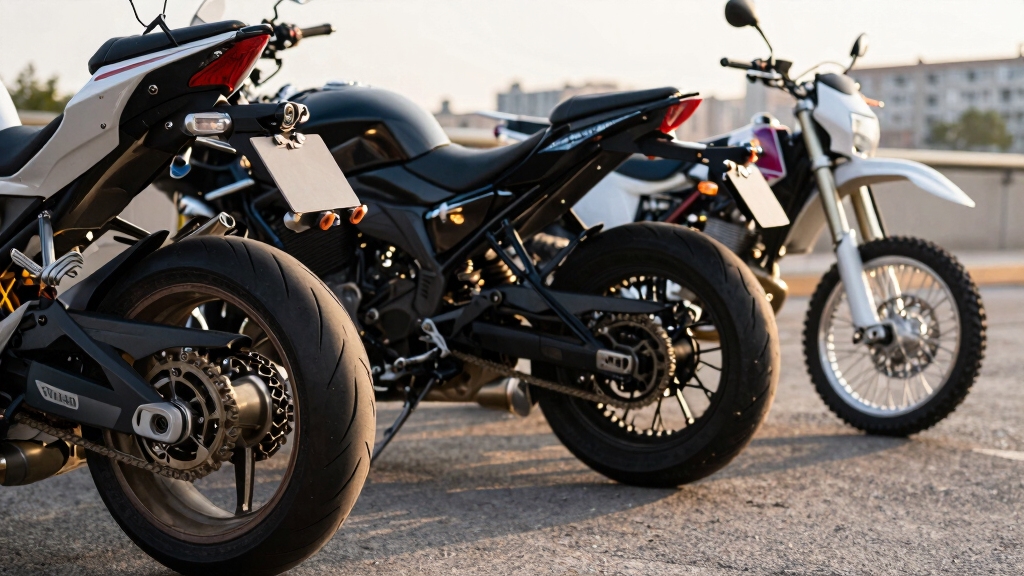
Although the regulatory landscape varies by manufacture date, all new motorcycles produced since 2021 must have catalytic converters to comply with Euro 5 emissions standards.
Since 2021, all new motorcycles are required to have catalytic converters to meet Euro 5 emissions standards.
You’ll find that motorcycles manufactured from 2003 onward universally include catalytic converters fitted at the factory, reflecting tighter emission controls.
If your motorcycle dates between 1985 and 2020, it must retain the catalytic converter if originally installed; removal is illegal and leads to MOT failure in the UK.
Pre-1985 models generally fall outside current emissions regulations and aren’t subject to catalytic converter requirements.
Understanding these timelines guarantees you maintain compliance and avoid legal repercussions.
Always verify your motorcycle’s model year and original equipment specifications to confirm whether a catalytic converter is mandated under prevailing emission legislation.
Additionally, emerging electric drivetrain technology in motorcycles, such as Harley-Davidson’s LiveWire, eliminates the need for catalytic converters by producing zero tailpipe emissions.
How Catalytic Converters Reduce Motorcycle Emissions?
With the regulatory requirements for catalytic converters firmly established, understanding their role in emissions control is the next step.
Catalytic converters reduce motorcycle emissions by chemically transforming harmful gases: carbon monoxide (CO), hydrocarbons (HC), and nitrogen oxides (NOx) into less toxic substances like carbon dioxide (CO2), water vapor, and nitrogen.
You’ll find two main types: two-way converters oxidize CO and HC, while three-way converters simultaneously reduce NOx and oxidize CO and HC.
The catalytic substrate’s honeycomb structure maximizes surface area, promoting efficient reactions.
To work effectively, the converter relies on maintaining the engine’s air-fuel ratio close to stoichiometric balance, ensuring peak catalyst activity.
By doing so, catalytic converters not only meet emissions standards but also sustain engine performance.
They prevent excess pollutant release without compromising power output.
Where Are Catalytic Converters Located on Motorcycles?
You’ll typically find catalytic converters integrated into the exhaust system near the end of the pipes, just before the exhaust outlet. Their placement optimizes the temperature required for efficient catalytic reactions while minimizing backpressure impact.
Some motorcycles incorporate the converter within the silencer assembly, merging functionality and compact design. Others position it in the headers, closer to the engine, capitalizing on higher exhaust gas temperatures for quicker catalyst activation.
Most converters use ceramic monolith substrates with honeycomb structures. However, high-heat applications employ metal core Kanthal foils. The precise location varies by model and design priorities, balancing emission control, heat resistance, and performance.
Understanding this placement is essential for maintenance and compliance verification. Converter positioning directly affects thermal efficiency and exhaust flow dynamics.
Proper maintenance of components like reinforced carcasses in motorcycle systems promotes durability and optimal performance.
Two-Way vs Three-Way Catalytic Converters on Motorcycles
When it comes to catalytic converters for motorcycles, there are two main types you should know about: two-way and three-way converters.
So, what’s the deal with two-way catalytic converters? Well, they mainly focus on oxidizing carbon monoxide and hydrocarbons. However, they don’t really do much when it comes to controlling nitrogen oxides. That’s a key point to keep in mind.
On the flip side, we’ve three-way catalytic converters. These bad boys are much more versatile. They can reduce nitrogen oxides while also taking care of those other pollutants by oxidizing them. This means you get a more thorough emission control, which is pretty important for both compliance and performance.
Understanding these differences is essential when you’re deciding which converter is right for your motorcycle. It can really make a difference in how your bike performs and meets regulations.
Additionally, keeping up with regular motorcycle maintenance can help ensure your catalytic converter and engine run efficiently.
Two-Way Converter Functions
Although both two-way and three-way catalytic converters serve to reduce harmful emissions on motorcycles, their functions differ markedly in scope and complexity.
Two-way converters focus solely on oxidizing carbon monoxide (CO) and unburned hydrocarbons (HC) into carbon dioxide and water vapor. They lack the mechanism to reduce nitrogen oxides (NOx).
This limitation means they don’t address NOx emissions, which contribute greatly to air pollution. Their simpler design often results in lower backpressure and slightly improved engine responsiveness at certain RPMs, but at the cost of incomplete emission control.
When you consider older motorcycles, two-way converters were standard before regulatory demands increased. Understanding these functional distinctions helps you evaluate emission compliance and performance impacts. This is especially important when comparing legacy systems to modern three-way converters mandated by current standards.
Three-Way Converter Advantages
While two-way converters handle oxidation of carbon monoxide and hydrocarbons, three-way catalytic converters add a critical function by simultaneously reducing nitrogen oxides (NOx).
This tri-functional capability markedly improves emission control efficiency, aligning with modern regulatory demands.
You’ll find three-way converters employ a catalyst formulation that facilitates reduction and oxidation reactions concurrently, optimizing the chemical transformation process.
Compared to two-way converters, they maintain a stoichiometric air-fuel ratio more effectively, essential for balanced reaction kinetics.
As a result, three-way converters provide superior pollutant conversion rates, particularly in NOx reduction, which two-way systems can’t address.
When you choose a three-way converter for your motorcycle, you enhance compliance potential and environmental performance without sacrificing engine responsiveness or durability.
Emission Control Differences
Because two-way and three-way catalytic converters employ distinct chemical processes, understanding their emission control differences is essential for selecting the right system for your motorcycle.
Two-way converters oxidize carbon monoxide (CO) and hydrocarbons (HC) into carbon dioxide and water but lack the capability to reduce nitrogen oxides (NOx).
In contrast, three-way converters manage CO and HC oxidation while simultaneously reducing NOx emissions through a reduction reaction.
This tri-functional process makes three-way converters more effective at meeting stringent emission standards, especially Euro 5.
While two-way converters are simpler and were common in older motorcycles, three-way units provide all-encompassing emission control critical for modern engines.
Choosing between them depends on regulatory compliance, engine design, and your motorcycle’s intended use, ensuring optimized pollutant reduction without compromising performance.
Motorcycle Age and Catalytic Converter Rules
When evaluating catalytic converter requirements, the age of your motorcycle plays a critical role in determining compliance obligations and regulatory exemptions.
For motorcycles manufactured from 2021 onward, catalytic converters are mandatory to comply with Euro 5 emissions standards.
Models produced between 1985 and 2020 must retain factory-fitted converters, reflecting evolving regulations.
If your bike was made before 1985, it’s generally exempt from current emissions mandates and MOT emissions testing.
Importantly, since 2003, all motorcycles have incorporated catalytic converters as standard components to reduce harmful pollutants.
Understanding these chronological distinctions helps you guarantee compliance and avoid legal issues, such as MOT failure or regulatory penalties.
Keep in mind, removing converters from any regulated motorcycle is illegal, reinforcing the importance of respecting age-specific catalytic converter rules.
Additionally, regional environmental regulations may impose battery lifecycle management practices that complement emissions controls for electric and hybrid vehicles.
Why Removing a Catalytic Converter Hurts Performance?
You might think that taking out the catalytic converter would give your car a power boost, right? Well, not quite!
In fact, it can really mess with your engine’s efficiency. See, the catalytic converter plays a crucial role in how exhaust flows out of the engine.
It actually creates important backpressure that helps optimize combustion, especially when you’re cruising in those low to mid RPM ranges. So, when you remove it, you’re not just losing that backpressure; you’re also risking a drop in overall engine performance and fuel economy. It’s kind of a double whammy!
Engine Efficiency Impact
Although some riders believe removing the catalytic converter enhances engine performance, doing so actually disrupts the carefully engineered exhaust backpressure that modern motorcycle engines rely on.
This backpressure is critical for optimizing combustion efficiency, especially at low to medium RPMs. Without the catalytic converter, you alter exhaust scavenging dynamics, causing incomplete expulsion of exhaust gases and reducing cylinder filling.
Consequently, you’ll experience lower torque and throttle response. Additionally, catalytic converters support maintaining the stoichiometric air-fuel ratio by influencing exhaust gas composition sensed by oxygen sensors.
This is essential for closed-loop fuel injection control. Removing it compromises this feedback loop, leading to suboptimal combustion and increased fuel consumption.
Hence, instead of performance gains, you’ll likely see reduced engine efficiency and power output, undermining the precision tuning inherent in modern motorcycle powertrains.
Furthermore, improper modifications can upset the balance between power and safety, emphasizing the importance of power management in maintaining engine and rider performance.
Exhaust Flow Dynamics
The catalytic converter’s design directly influences exhaust flow dynamics, which play a pivotal role in engine performance.
When you remove the catalytic converter, you disrupt the carefully engineered backpressure balance that enhances combustion efficiency. This imbalance can degrade throttle response and torque, especially in low to mid-RPM ranges.
Here’s why removing the converter hurts performance:
- Increased exhaust velocity leads to insufficient backpressure, reducing low-end torque.
- Loss of catalytic substrate disturbs smooth gas flow, causing turbulence.
- Engine control units (ECUs) tuned for a converter’s presence may mismanage fuel-air mixture.
- Exhaust scavenging efficiency declines, impairing cylinder evacuation.
In short, the catalytic converter isn’t just for emissions. It’s integral to maintaining peak exhaust flow and engine output. Additionally, improper exhaust flow can cause a buildup of exhaust fumes during both piston movements, negatively affecting engine efficiency and emissions control, as explained in the exhaust system dynamics.
Is Removing a Catalytic Converter Illegal?
Why would anyone consider removing a catalytic converter from a motorcycle when it’s illegal in the UK and causes automatic MOT failure?
Removing this component violates emissions regulations designed to reduce harmful pollutants such as carbon monoxide, hydrocarbons, and nitrogen oxides.
UK law mandates that motorcycles manufactured since 2003 must retain their catalytic converters, ensuring compliance with Euro 5 standards.
Beyond legal consequences, removing the converter disrupts engine calibration, often reducing performance due to altered exhaust backpressure.
This alteration not only triggers MOT test failure but also risks environmental harm and legal penalties.
Consequently, tampering with or removing the catalytic converter compromises both regulatory compliance and operational efficiency, making it an ill-advised and unlawful modification under current UK legislation.
Additionally, smaller engines like those in mopeds and scooters rely heavily on properly functioning exhaust systems to maintain engine performance and emissions standards.
How to Choose and Maintain Your Motorcycle’s Catalytic Converter?
Selecting and maintaining your motorcycle’s catalytic converter demands careful consideration of engine compatibility, emissions standards, and material quality.
You must guarantee the converter matches your motorcycle’s engine specifications and complies with regional regulations such as Euro 5.
Material quality influences durability and heat resistance, affecting long-term performance. Proper maintenance prevents clogging and efficiency loss.
Focus on these key steps:
- Verify converter fitment for your specific model to maintain peak exhaust flow and emissions control.
- Choose reputable manufacturers offering certified converters that meet or exceed emissions standards.
- Regularly inspect for physical damage and clean to avoid substrate contamination.
- Monitor air-fuel ratios to maintain stoichiometric balance, guaranteeing catalyst efficiency and engine performance.
Additionally, ensuring your motorcycle’s braking system is well-maintained, such as by properly bleeding dual front brakes, contributes to overall vehicle safety and reliability.
Adhering to these guidelines secures compliance and prolongs converter lifespan.
Frequently Asked Questions
What Materials Are Used Inside Motorcycle Catalytic Converters?
Inside motorcycle catalytic converters, you’ll find ceramic monolith substrates with honeycomb structures, favored for their high surface area and cost efficiency.
For high-heat resistance applications, metal core converters use Kanthal (FeCrAl) metallic foil monoliths.
These materials guarantee durability and effective pollutant conversion.
Depending on your motorcycle’s design and performance needs, the substrate cell density (CPSI) ranges from 100 to 400, impacting flow and conversion efficiency precisely.
Can Aftermarket Exhaust Systems Include Catalytic Converters?
Yes, aftermarket exhaust systems can include catalytic converters, but you must verify compatibility with your motorcycle’s engine and emissions standards.
Some aftermarket options integrate high-flow catalytic converters designed to maintain performance while guaranteeing compliance.
Be aware that improper selection or removal can cause legal issues and MOT failure.
Always choose quality components from reputable manufacturers to assure durability, efficiency, and adherence to regulations like Euro 5 or Euro 6 where applicable.
How Does Substrate Cell Density Affect Converter Performance?
Substrate cell density drastically impacts catalytic converter performance. You could say it’s the secret sauce for efficiency!
Higher CPSI (cells per square inch) means more surface area for chemical reactions, boosting pollutant conversion rates. But too dense, and you risk choking exhaust flow, reducing engine power.
Lower CPSI improves flow but sacrifices purification. You’ve got to strike a precise balance tailored to your bike’s engine and emission needs for peak results.
Are There Brand-Specific Catalytic Converters for Popular Motorcycle Models?
Yes, you’ll find brand-specific catalytic converters designed for popular motorcycle models.
Manufacturers like Akrapovic and QD Exhaust offer tailored units ensuring perfect fitment and compliance with emissions standards.
When selecting, you must verify engine compatibility and regional regulations.
These specialized converters optimize performance and durability by matching substrate cell density, material quality, and design to your bike’s specifications and riding conditions.
This provides superior function compared to universal units.
What Maintenance Practices Extend Catalytic Converter Lifespan?
You might think occasional checks suffice, but consistent maintenance truly extends your catalytic converter’s lifespan.
Keep your engine tuned to maintain the proper air-fuel ratio, preventing catalyst poisoning.
Avoid running rich mixtures that foul the converter.
Use quality fuel and replace exhaust components promptly to prevent damage.
Regular inspections for physical damage or clogging help you catch issues early, ensuring your converter operates efficiently and stays compliant with emissions standards longer.
Final Answer: Does Motorcycles Have Catalytic Converters Today?
When you ride, imagine your motorcycle’s catalytic converter as a vigilant guardian, quietly transforming harmful gases into cleaner air.
Removing it might seem tempting, but it disrupts this balance, hurting performance and breaking the law.
Understanding the types, placement, and maintenance guarantees you keep emissions low and efficiency high.
By respecting these technical details, you not only comply with regulations but also contribute to a cleaner ride for everyone sharing the road with you.