

A 2-stroke power band is a narrow RPM range near redline where your engine delivers peak horsepower and torque. It’s tight because precise port opening and closing at high RPMs optimize cylinder scavenging and intake flow.
Outside this band, power drops rapidly due to intake restrictions and timing loss. Unlike 4-strokes, 2-strokes rely on rapid cycles and exact port timing, making high revs essential.
Understanding these dynamics reveals why the power band behaves this way and what influences its limits.
Key Takeaways
- A 2-stroke power band is a narrow RPM range where the engine delivers its maximum power output.
- It occurs at high RPMs near the redline, concentrating torque and horsepower in a small speed window.
- Precise port timing and rapid cycles in 2-strokes produce efficient cylinder scavenging only within this band.
- Outside the power band, power drops sharply due to intake flow limits and suboptimal combustion timing.
- The band is much narrower than in 4-strokes, requiring sustained high engine speeds for peak performance.
What’s a 2-Stroke Power Band: And Why It Matters?
Although you mightn’t notice it immediately, the 2-stroke power band plays a crucial role in how your engine delivers peak performance.
The 2-stroke power band is key to unlocking your engine’s peak performance potential.
This band represents a narrow RPM range where the engine produces maximum power, beginning near peak torque and extending close to the redline.
Within this band, the engine efficiently combines high torque and high RPM to generate peak horsepower.
Your 2-stroke’s design, including valve timing and piston position, optimizes power stroke timing to maximize output here.
Outside this range, power drops sharply due to limitations in air/fuel intake and combustion timing.
Understanding this band helps you keep your engine within its most effective RPM zone, ensuring optimal acceleration and responsiveness during operation, especially since the band shifts slightly depending on gear selection.
Selecting the right sprocket tooth count can further optimize your bike’s power delivery within this band for better control and speed.
How Engine Design Makes the 2-Stroke Power Band So Narrow?
The narrowness of the 2-stroke power band stems directly from its unique engine design, where precise valve sizing and timing play a pivotal role.
You rely on the exhaust port opening at the piston’s top dead center to expel burnt gases efficiently while simultaneously allowing a fresh air-fuel mixture to enter during the compression phase.
This timing must be exact; any deviation severely impacts cylinder filling and combustion efficiency.
Since the engine generates power every revolution, it demands high RPMs to maintain ideal cylinder scavenging and volumetric efficiency.
However, as RPM rises beyond the band, intake flow becomes insufficient, and the engine chokes on its own mixture.
This interplay of valve timing, piston position, and intake limitations confines the effective power band to a narrow RPM range where peak power and torque coincide.
Proper maintenance, such as regularly draining the carburetor float bowl to prevent fuel contamination, helps sustain optimal engine performance throughout the power band.
Comparing 2-Stroke and 4-Stroke Power Bands: Key Differences
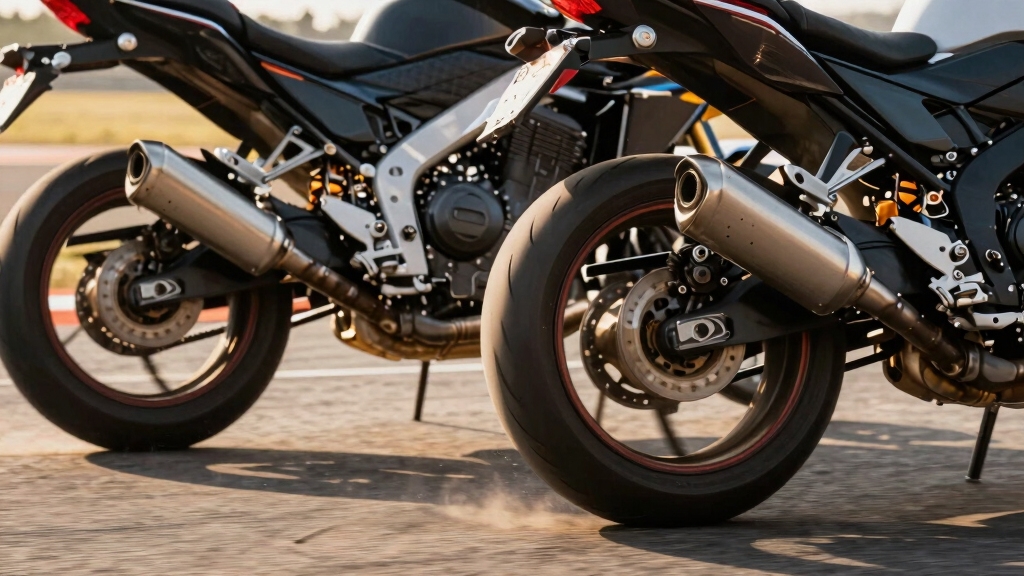
When comparing 2-stroke and 4-stroke engines, you’ll notice that 2-strokes produce a much narrower power band concentrated at higher RPMs, whereas 4-strokes deliver a broader band with peak power occurring at lower engine speeds.
The 2-stroke’s power band tightly clusters near redline due to its reliance on precise port timing and rapid intake-exhaust cycles. This maximizes torque only at elevated RPMs.
In contrast, 4-strokes generate torque over a wider RPM range because of separate intake and exhaust strokes. This allows for more gradual combustion and valve timing flexibility.
This broader band provides usable power from mid to high RPMs, peaking typically below 6,800 RPM. Consequently, 2-strokes demand sustained high engine speeds for peak output, while 4-strokes offer more versatility and torque availability across diverse operating conditions.
Maintaining proper engine function is critical, and issues like low compression can significantly affect power delivery and performance.
Why High RPMs Are Essential for the 2-Stroke Power Band?
Because 2-stroke engines rely on rapid intake and exhaust cycles controlled by precisely timed ports, maintaining high RPMs is essential to sustaining their narrow power band.
High RPMs are crucial to keep the precise port timing that powers 2-stroke engines efficiently.
You need high engine speeds to guarantee the ports open and close at peak intervals, maximizing cylinder scavenging and fresh charge intake.
This process directly affects torque generation and power output.
You’ll notice that high RPMs enable near-complete cylinder filling by accelerating intake flow, critical for combustion efficiency.
They also guarantee the exhaust port timing expels spent gases effectively before the next cycle.
High RPMs maintain consistent power pulses every revolution, delivering peak torque within the narrow band.
Without sustaining high RPMs, you risk reduced volumetric efficiency and rapid power loss outside the peak power band.
Proper engine maintenance, including regular timing chain tensioner adjustment, helps ensure these high RPMs are achievable and sustainable.
What Engine Limits Reduce Power Beyond the 2-Stroke Peak RPM?
Although your 2-stroke engine may reach high RPMs, various mechanical and physical constraints limit power output beyond the peak range.
As RPM rises past peak, your engine faces intake flow restrictions. There isn’t enough time to draw a full air/fuel charge before the next combustion cycle. This causes mixture starvation and reduces volumetric efficiency.
Additionally, friction losses increase markedly with RPM, dissipating power as heat. Valve timing and combustion duration become suboptimal at extreme speeds, preventing complete combustion and reducing torque.
Mechanical stresses increase vibration and thermal loads, risking damage and necessitating conservative redline limits. Collectively, these factors cause horsepower to drop sharply beyond peak RPM, defining the narrow effective power band unique to 2-stroke engines.
Understanding these limits helps you optimize performance without exceeding mechanical capabilities. Choosing the right intake system, such as a pod filter, can slightly increase horsepower by improving airflow at certain RPMs.
Frequently Asked Questions
How Do Rider Techniques Affect Managing the 2-Stroke Power Band?
You adjust your throttle and shift gears precisely to keep the engine within its narrow 2-stroke power band, maximizing torque and power output.
You avoid lugging the engine below peak RPM to prevent power loss and guarantee smooth acceleration.
Timing your clutch engagement and gear changes optimizes the piston’s position for combustion efficiency.
Mastering these techniques helps you maintain ideal cylinder filling and exhaust scavenging, vital for sustaining peak performance in high-RPM conditions.
What Maintenance Tips Improve 2-Stroke Engine Power Band Performance?
To improve your 2-stroke engine’s power band, regularly clean or replace the air filter to guarantee peak airflow.
Use high-quality fuel and oil mix to maintain combustion efficiency.
Inspect and adjust the exhaust system for proper timing and sealing.
Keep spark plugs clean and correctly gapped for consistent ignition.
Check and tune the carburetor to guarantee precise fuel delivery, and routinely inspect for worn piston rings or ports that could degrade performance.
Are There Aftermarket Parts That Widen the 2-Stroke Power Band?
Yes, you can widen your 2-stroke power band using aftermarket parts.
You’ll want to weigh components like expansion chambers, reed valves, and porting kits designed to optimize gas flow and timing.
High-performance exhausts and tuned intake systems improve cylinder filling across a broader RPM range.
However, balance is key. You’ll need to match parts precisely to avoid sacrificing low-end torque for high-end power and make certain your engine breathes efficiently throughout the band.
How Does Fuel Type Influence the Characteristics of a 2-Stroke Power Band?
Fuel type directly affects your 2-stroke power band by influencing combustion speed and energy output.
Higher-octane fuels enable cleaner, more efficient burns at high RPMs, widening the usable power range.
Conversely, lower-quality fuels can cause incomplete combustion, reducing peak power and narrowing the band.
Additionally, fuel additives alter lubrication and exhaust characteristics, impacting valve timing precision and gas flow.
This ultimately shifts and shapes your engine’s peak power band performance.
Can Electronic Tuning Optimize a 2-Stroke Engine’s Power Band?
Yes, electronic tuning can optimize your 2-stroke engine’s power band by precisely adjusting ignition timing and fuel delivery.
This enhances combustion efficiency across RPMs, extending the effective power band and improving throttle response.
You’ll gain better control over peak torque and horsepower, especially in high-RPM ranges where traditional mechanical setups struggle.
However, tuning must account for the engine’s narrow power band and airflow limitations to avoid power loss beyond peak RPM.
Inside the Critical Balance of Compression, Timing, and Fuel
Now that you understand the narrow, high-RPM nature of the 2-stroke power band, imagine pushing your engine right to that critical edge where compression, exhaust timing, and fuel delivery align perfectly.
Step beyond this peak, and power sharply drops off, revealing the delicate balance engineers must maintain. Mastering this band isn’t just about speed; it’s about precision tuning that extracts maximum performance from a complex, finely tuned system.
Are you ready to harness that power?