
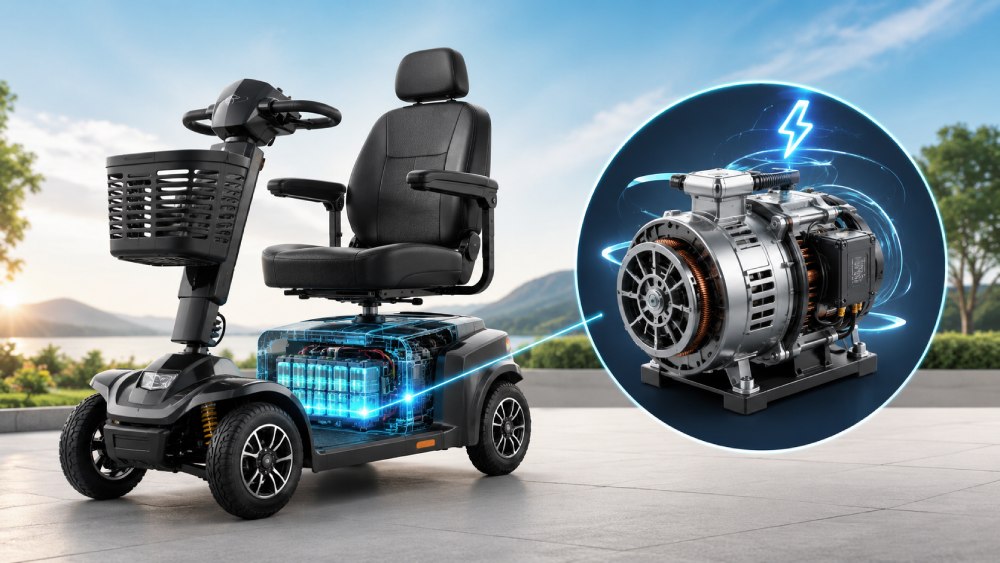
You’ll find battery generators built into mobility scooters like the Drive Medical Odyssey, EV Rider Transport Plus, and Pride Mobility Raptor.
These models recharge batteries while you ride or rest, extending your range and reducing downtime on long trips.
Odyssey offers steady, quiet recharging, while EV Rider provides faster, manual-controlled boosts.
The rugged Pride Raptor excels in durability for outdoor use.
If you want to optimize your travel and charging options, exploring their features will offer valuable insights.
Key Takeaways
- Drive Medical Odyssey, EV Rider Transport Plus, and Pride Mobility Raptor feature built-in battery generators for extended scooter range.
- Odyssey offers steady, automatic recharging with quiet operation, focusing on battery longevity and stable power output.
- EV Rider provides a robust, faster recharge with manual control but requires more user attention to prevent battery stress.
- Pride Mobility Raptor’s generator supports long-distance travel and rugged terrain with durable construction and consistent power delivery.
- Travel scooters like Paiseec S3 and ATTO typically lack built-in generators to maintain portability and lightweight design.
What Is a Battery Generator in a Mobility Scooter?

A battery generator in a mobility scooter acts as an on-the-go power source that recharges the scooter’s battery while you’re using it or resting.
A battery generator keeps your mobility scooter charged continuously, whether in motion or at rest.
This system extends your scooter’s range without needing frequent stops to plug into a wall outlet.
Unlike traditional chargers, battery generators provide continuous recharging by converting mechanical energy or using auxiliary power sources.
You can rely on this feature during long trips or in areas with limited charging options, ensuring uninterrupted mobility.
While not all scooters have built-in generators, portable battery generators can serve as effective backups.
Understanding how these generators function helps you choose the right equipment to maintain energy levels, optimize travel distance, and enhance your overall independence when you’re on the move.
For safe and effective use, it’s important to secure the scooter properly during transport to prevent damage to the battery generator system.
Mobility Scooters With Built-In Battery Generators
When you need extended range and fewer charging stops, mobility scooters with built-in battery generators offer a practical solution.
Models like the Drive Medical Odyssey, EV Rider Transport Plus, and Pride Mobility Raptor integrate generators that recharge batteries while you ride or rest.
This feature guarantees longer operation without relying solely on external chargers.
The Pride Mobility Raptor stands out with its rugged design and higher speeds, ideal for outdoor use and long-distance travel.
These scooters balance performance and convenience, reducing downtime and increasing independence.
If your daily routine or travel demands consistent power, choosing a scooter with a built-in generator can markedly enhance your mobility experience by minimizing interruptions and providing reliable energy replenishment on the go.
For optimal daily usability, also consider scooters with adjustable seating and intuitive controls to maximize comfort alongside extended battery life.
Benefits of Battery Generators for Long-Distance Travel
Since long-distance travel demands reliable and continuous power, battery generators provide essential benefits by extending your scooter’s range without frequent stops for charging.
They allow you to cover greater distances confidently, reducing anxiety over battery depletion in remote areas. By recharging your scooter’s batteries on the go, these generators enhance your mobility and independence, especially where charging infrastructure is scarce.
You’ll experience improved convenience as you avoid lengthy downtime, maintaining a steady pace throughout your journey. Additionally, battery generators optimize battery life by preventing deep discharges, which can degrade performance.
Many advanced 3-wheel mobility scooters feature long-range batteries that can be effectively complemented by battery generators to maximize travel distance and reliability.
Comparing Odyssey and EV Rider Built-In Generators
When you start comparing the Odyssey and EV Rider built-in generators, you’ll quickly see some differences in performance. These differences can really affect how well each generator helps extend battery life. It’s pretty important to consider these factors, especially if you’re looking for something reliable.
Another thing to think about is how each system fits into the overall design of the scooter. You’ll want something that not only works well but is also easy to use when you’re out and about. After all, convenience matters!
Additionally, understanding the battery type restrictions is crucial to ensure the generator and scooter comply with airline travel regulations.
Generator Performance Comparison
Comparing the built-in generators of the Drive Medical Odyssey and the EV Rider Transport Plus reveals key differences in performance that affect your mobility experience.
The Odyssey’s generator focuses on steady, reliable recharging, extending your range efficiently without sacrificing battery health. It excels in moderate use scenarios, offering consistent output that keeps you moving longer.
In contrast, the EV Rider’s generator delivers a more robust power boost, better suited for demanding conditions or longer trips. It recharges faster but may put additional strain on the battery over time.
Both systems integrate seamlessly, yet the Odyssey prioritizes longevity and stability, while the EV Rider emphasizes power and quick recharge. Understanding these distinctions helps you choose a scooter generator tailored to your specific mobility needs and usage patterns.
When considering a scooter for travel, it is important to note that many models feature long battery life and are designed with convenience for excursions in mind.
Integration and Usability
Although both the Drive Medical Odyssey and EV Rider Transport Plus feature built-in generators, their integration and usability differ in ways that impact your daily experience.
The Odyssey’s generator is seamlessly integrated, allowing automatic battery recharge without interrupting your ride. It operates quietly and requires minimal user input, enhancing convenience during long trips.
In contrast, the EV Rider’s generator system offers manual control, giving you the option to engage it as needed but requiring more attention. This can be beneficial if you want to manage power consumption but may add complexity.
Additionally, the Odyssey’s controls are more intuitive, with clear indicators, while the EV Rider’s interface demands a learning curve.
Ultimately, your choice depends on whether you prioritize hands-off operation or customizable power management.
For users frequently navigating hills, considering a scooter’s motor power range alongside generator integration can significantly improve performance and safety.
What Makes the Pride Mobility Raptor’s Generator Special?
Experience the Pride Mobility Raptor’s generator as a standout feature that keeps you moving farther without frequent charging breaks.
This built-in generator is specially designed for long-distance travel, allowing you to cover rugged terrain and maintain higher speeds without worrying about battery depletion.
Its integration means you don’t have to carry extra equipment or stop often for recharging, enhancing your mobility and independence.
The Raptor’s generator works seamlessly with its robust battery system, ensuring consistent power output during extended use.
You’ll appreciate the combination of durability and performance, as the generator supports the Raptor’s rugged construction and outdoor capabilities.
This thoughtful design makes the Pride Mobility Raptor uniquely suited for users who prioritize range, speed, and reliability on demanding journeys.
Additionally, features like suspension systems and sturdy frames further improve stability and comfort during long rides over varied terrain.
Portable Battery Generators Compatible With Any Scooter
Several portable battery generators on the market can recharge your mobility scooter’s battery wherever you are. This extends your travel range without needing a fixed power source.
These compact power stations work well with most scooters, providing a reliable backup when access to electrical outlets is limited. You don’t have to worry about compatibility since many models feature versatile output ports.
Compact power stations offer reliable backup and versatile ports, ensuring compatibility with most mobility scooters when outlets aren’t available.
Consider these popular options:
Jackery Explorer: Lightweight, multiple output options, and fast recharge.
Goal Zero Yeti: Robust capacity, solar-compatible, and user-friendly interface.
Anker PowerHouse: Compact design, efficient power delivery, and USB-C support.
Using a portable generator boosts your scooter’s independence, especially on long trips or in remote locations. It’s a practical, flexible solution to keep you moving without interruption. To maximize your scooter’s uptime, proper battery capacity management is essential when pairing with portable generators.
Alternative Battery Generator Options: Solar and Travel Scooters
How can you enhance your mobility scooter’s charging options beyond traditional power sources?
One effective way is by exploring solar-powered scooters like the Afiscooter S4, which features a canopy solar panel that charges the battery while you ride or rest. This reduces your dependency on electrical outlets, especially useful in remote areas.
Travel scooters, such as the Paiseec S3 and ATTO, prioritize portability and lightweight design but typically don’t include built-in generators.
However, their compatibility with portable power stations means you can still recharge on the go.
By combining solar technology or portable power packs with travel scooters, you gain flexibility and extended range without sacrificing convenience.
These alternative options empower you to maintain independence and mobility, even when traditional charging isn’t available.
Additionally, choosing models with a 24V 12Ah lithium battery ensures a reliable and efficient power source for longer travel distances.
Why Travel Scooters Lack Built-In Battery Generators?
You’ll notice that travel scooters really prioritize portability. They’re designed to be lightweight and easy to carry around. If they’d built-in battery generators, they’d end up being heavier and bulkier, which totally goes against their compact design goals. Additionally, these scooters typically have limited battery capacity to maintain their lightweight structure.
Portability Over Power
Travel scooters typically prioritize portability over built-in battery generators to keep their weight and size manageable for easy transport.
When you choose a travel scooter, you want something lightweight and compact. This means manufacturers avoid adding heavy, bulky generator systems. This trade-off helps maintain convenience but limits on-the-go recharging capabilities.
Here’s why portability wins out:
- Easier handling: Lightweight scooters fold and carry more effortlessly for travel.
- Compliance: Compact designs meet airline and vehicle cargo space restrictions.
- User convenience: Less bulk means quicker setup and storage during trips.
Battery Weight Constraints
Weight limitations play a critical role in why travel scooters don’t include built-in battery generators.
When you’re selecting a travel scooter, portability is key. Adding a generator means extra weight.
Battery generators require heavy components, such as motors, batteries, and control systems, that increase overall mass.
This added weight reduces maneuverability and makes folding or carrying the scooter difficult.
Travel scooters, like the Paiseec S3 or ATTO, prioritize lightweight designs to stay flight-approved and easy to transport.
By contrast, scooters with built-in generators, such as the Pride Mobility Raptor, are heavier and designed for rugged use, not travel convenience.
How to Choose a Mobility Scooter With a Battery Generator?
Evaluating your mobility needs and typical usage is key when choosing a scooter with a battery generator.
Consider how far and often you travel, the terrain you encounter, and whether you need additional power for longer trips. This helps you select a model that truly matches your lifestyle.
Focus on these factors:
- Range and Generator Efficiency: Choose a scooter with a battery generator that reliably extends your travel distance without excessive weight or bulk.
- Build and Terrain Compatibility: Look for rugged models like the Pride Mobility Raptor if you need durability and higher speeds outdoors.
- Portability and Convenience: If you prioritize travel ease, consider scooters compatible with portable battery generators or solar charging options.
Tips for Using Battery Generators to Maximize Range
To really make the most of your battery generator, it’s essential to stick to some solid charging practices and keep your generator in tip-top shape. You know, a little maintenance goes a long way! Plus, how you manage your power while using it can seriously impact your scooter’s range. So, let’s dive into some key tips that can help you maximize every charge and keep everything running smoothly.
First off, always charge your generator fully before heading out. It sounds simple, but it really makes a difference!
And when you’re charging, try to do it in a cool, dry place—extreme temperatures can mess with battery life.
Next, think about how you’re using your power. If you can, avoid using all the gadgets at once; it’s a great way to stretch your range.
You might even consider using eco modes if your generator has them. They can help you conserve energy while still getting where you need to go.
And don’t forget about regular maintenance! A quick check on your generator can help catch any issues before they become big problems.
Just a little effort can go a long way in ensuring you have a reliable ride every time.
Optimal Charging Practices
Frequently, users overlook key charging practices that can substantially extend their mobility scooter’s range when using battery generators.
To maximize efficiency, you should adopt smart habits that preserve battery health and optimize generator output. Start by avoiding frequent deep discharges; partial charging helps maintain battery longevity.
Charge your scooter during idle periods to keep the battery topped off, preventing range dips. Finally, make sure your battery generator’s output matches your scooter’s specifications to avoid inefficient charging.
Charge in short intervals rather than letting the battery drain completely.
Use the generator primarily when you’re stationary to reduce power loss.
Monitor battery voltage via the scooter’s display for timely recharge decisions.
Generator Maintenance Tips
Regularly maintaining your battery generator is essential to maximizing your mobility scooter’s range and reliability. You should routinely check connections for corrosion, clean terminals, and make sure the generator runs smoothly without overheating.
Store it in a dry place to prevent moisture damage. Following these steps helps you avoid unexpected power loss and prolongs battery life.
| Task | Frequency | Result |
|---|---|---|
| Clean terminals | Weekly | Consistent power flow |
| Inspect cables | Monthly | Safe, efficient use |
| Test output | Bi-monthly | Reliable charging |
| Lubricate parts | Quarterly | Smooth operation |
| Store properly | Always | Prevents damage |
Efficient Power Management
Although battery generators provide valuable extended power, managing their use efficiently is key to maximizing your mobility scooter’s range. You want to balance power output and conservation to avoid unnecessary battery drain.
Start by monitoring your battery levels closely and activating the generator only when the charge falls below 30%. Next, optimize your scooter’s speed and avoid sudden acceleration, which consumes more energy.
Finally, plan your routes to minimize stops and avoid rough terrain that demands extra power.
Use the built-in LCD panel or battery indicators to track energy consumption. Adjust speed settings to maintain steady, moderate speeds. Schedule generator use during breaks or downhill stretches to recharge efficiently.
Frequently Asked Questions
How Heavy Are Mobility Scooters With Built-In Battery Generators?
You’ll find that mobility scooters with built-in battery generators tend to be heavier due to added components and rugged construction.
For example, models like the Pride Mobility Raptor weigh markedly more than lightweight travel scooters, often exceeding 200 pounds.
This extra weight supports durability and extended range but makes them less portable.
If you need a scooter with a built-in generator, be prepared for a heavier, more robust machine designed for long-distance use.
What Maintenance Do Battery Generators in Scooters Require?
Think of your battery generator as the heart of your scooter’s endurance.
You’ll want to keep it clean, check connections regularly, and avoid overloading it.
Just like tuning a musical instrument, make sure the battery stays charged but not overheated.
Periodic inspections for wear and tear help prevent surprises.
With simple upkeep, your generator keeps humming smoothly, extending your rides without unexpected stops or power drops.
Are Battery Generators Safe for Indoor Use?
Yes, battery generators in mobility scooters are generally safe for indoor use since they produce no harmful emissions.
You don’t have to worry about fumes like you’d with gas-powered generators. However, you should still guarantee proper ventilation and avoid obstructing airflow around the scooter to prevent overheating.
Regular maintenance and following manufacturer guidelines will help keep the generator operating safely inside your home or other enclosed spaces.
Can Battery Generators Recharge Other Devices?
Yes, battery generators can recharge other devices, especially portable models like the Jackery Explorer or Goal Zero Yeti.
You can plug in phones, tablets, or even small appliances, making them useful beyond just mobility scooters.
However, built-in scooter generators mainly focus on recharging the scooter’s battery.
If you want to power multiple devices on the go, consider a portable generator designed with multiple output ports for versatility and convenience.
How Long Do Built-In Generators Typically Last?
Built-in generators in mobility scooters typically last several years with proper maintenance, often matching the scooter’s battery lifespan of 3 to 5 years.
Their durability depends on usage frequency, terrain, and charging habits. You can extend their life by avoiding overuse and keeping the scooter clean.
Regular check-ups help spot wear early, ensuring your generator keeps your scooter powered longer during trips without unexpected downtime.
Extend Your Travel Range and Ride with Greater Confidence
Choosing a mobility scooter with a battery generator is like having a backup compass on a long hike. It keeps you moving when the main path dims.
For example, users of the Pride Mobility Raptor report up to 30% longer travel range thanks to its unique generator.
By understanding these options and using generators wisely, you’ll extend your journey without the stress of sudden power loss. This ensures freedom and confidence on every trip.