
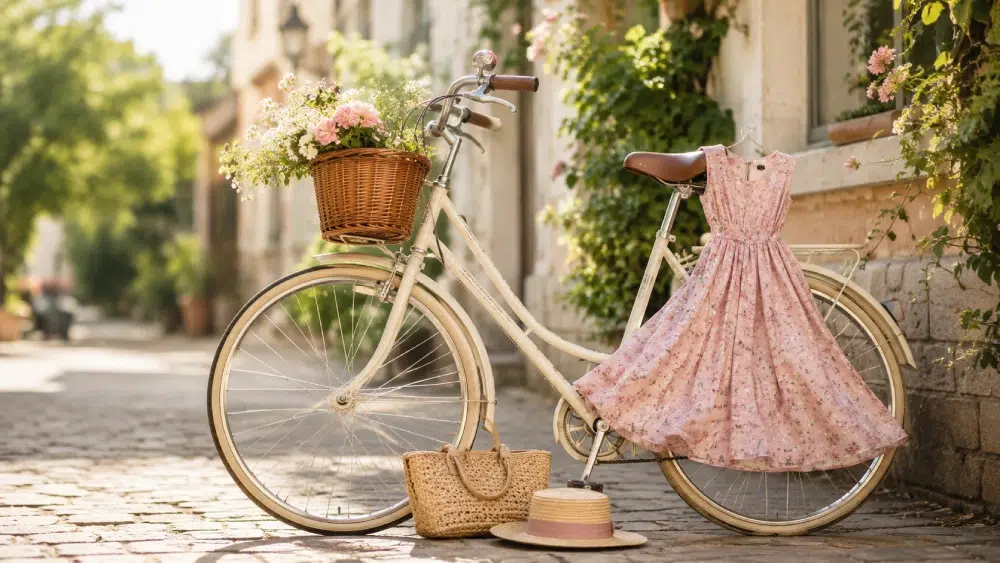
To ride a bike in a dress, choose lightweight, breathable fabrics with stretch to guarantee comfort and freedom of movement.
Secure hems using clips or rubber bands to prevent fabric from catching in the chain or spokes.
Adjust your saddle height for better leg extension and maintain a controlled pedaling posture to keep fabric away from moving parts.
Layer with tight bike shorts to reduce chafing. With these techniques, you’ll enhance safety and ease.
Explore further for detailed tips on fabric management and bike setup.
Key Takeaways
- Choose lightweight, breathable, and stretchy fabrics with loose or flowy silhouettes to ensure comfort and mobility while riding in a dress.
- Wear slim-fitting bike shorts or lightweight leggings under the dress to prevent chafing and keep fabric secure.
- Secure excess fabric by tucking hems behind legs or using clips, rubber bands, or hair ties to prevent fabric from catching in bike parts.
- Mount the bike carefully by swinging your leg over smoothly and repositioning fabric to avoid entanglement with the drivetrain or wheels.
- Maintain a controlled, upright riding posture and regularly check fasteners to keep fabric clear of chains, spokes, and brakes for safety.
Pick the Best Dress Styles for Biking Comfort
Choosing the right dress style plays a crucial role in guaranteeing comfort and mobility while biking. You should prioritize lightweight, breathable fabrics that wick moisture and allow airflow, reducing heat buildup during pedaling.
Opt for loose or flowy silhouettes like A-line, wrap, fit-and-flare, sundress, or maxi styles. They minimize restriction at hips and knees, enabling a full range of motion.
Shorter hems are preferable to limit the risk of fabric catching in the chain or spokes. If you prefer longer dresses, plan to manage fabric to avoid interference.
Avoid stiff or heavy materials that inhibit movement. By selecting dresses tailored to cycling dynamics, you guarantee efficient pedaling, reduce snag hazards, and maintain comfort without sacrificing style.
Additionally, just as selecting the right charger is crucial for battery health, choosing the correct clothing materials can optimize your biking experience by reducing internal resistance and discomfort while riding.
Choose the Right Undergarments and Layers for Safety
Undergarments play a critical role in maintaining both safety and comfort when biking in a dress.
Opt for slim-fitting bike shorts to improve modesty and prevent chafing during pedaling.
These tight shorts reduce fabric movement under your dress, minimizing the risk of entanglement with the chain or spokes.
For longer dresses, consider lightweight leggings that add coverage without bulk, ensuring smooth leg motion.
Avoid bulky layers that alter your dress fit or restrict movement.
Choose breathable, moisture-wicking fabrics to maintain comfort on longer rides.
Proper layering stabilizes the dress fabric, reducing flutter and potential snag hazards.
In addition, selecting clothing with durable, weather-resistant materials can help maintain comfort and safety during outdoor biking.
Adjust Bike Setup and Posture for Riding in Dresses
If you’re planning to ride your bike in a dress, here are a few tips to make it a smoother experience. First off, consider raising your saddle a bit. This way, you can get better leg extension and reduce the chances of your dress fabric getting in the way while you pedal.
Oh, and don’t forget about your dress! It’s a good idea to position the fabric carefully—maybe tuck or secure it—so it doesn’t snag on any moving parts of the bike.
Also, a little practice with mounting techniques can go a long way. You’ll want to avoid catching those long hems, and it’ll help you maintain your balance before you start riding.
Just take your time, and you’ll be gliding along in style in no time! Additionally, regularly checking your wheels for damage or wear can help ensure a safer and smoother ride.
Optimize Saddle Height
Adjusting your saddle height optimizes leg extension, enhancing pedaling efficiency and minimizing fabric contact with the bike frame and drivetrain.
To find the ideal height, sit on the saddle and place your heel on the pedal at its lowest position. Your leg should be almost fully extended without locking the knee. This position guarantees maximum power transfer while reducing excessive knee bend that can push fabric against the frame.
Raising the saddle slightly can help keep skirts or dress hems away from the crank and chainrings, preventing snagging.
Be cautious not to overextend, as this compromises control and comfort.
Regularly reassess saddle height as your riding style or dress choice changes to maintain prime clearance and smooth motion during rides.
For added comfort during longer rides in dresses, consider saddles featuring memory foam padding that cushion sit bones and reduce pressure points.
Position Fabric Strategically
When positioning fabric strategically for bike rides in dresses, focus on managing the material to prevent interference with pedaling and drivetrain components.
Begin by tucking excess fabric behind your legs or securing hems with hair ties or binder clips to maintain clearance from the chain and spokes.
Use the penny trick, placing a coin on the saddle, to encourage fabric to drape away from the seat, reducing bunching.
Adjust your seating position slightly forward if needed to optimize fabric flow.
Avoid loose folds near the pedals by knotting or gathering the dress hem over one thigh.
Maintain sufficient legroom by monitoring skirt length and fabric distribution, ensuring unrestricted pedal stroke and preventing snagging.
These precise adjustments enhance safety and comfort while riding in dresses.
Choosing a bike with an upright riding design can further improve comfort and control when wearing a dress.
Practice Controlled Mounting
With fabric arranged to minimize interference, focus next on mounting your bike in a way that keeps your dress secure and prevents snagging.
Begin by adjusting your saddle height to optimize leg extension, reducing fabric contact with the bike frame.
Approach the bike from the side, holding the handlebars firmly to stabilize your position.
Swing your leg over smoothly, ensuring the dress stays gathered behind or to one side to avoid entanglement.
If wearing a longer dress, briefly sit on the top tube to reposition fabric before settling into the saddle.
Maintain controlled, deliberate movements during mounting to prevent sudden shifts that could catch or pull your dress.
Practicing this technique will enhance safety, maintain modesty, and preserve the integrity of your garment during every ride.
Additionally, making sure your bike setup is stable and secure helps prevent unexpected movements that could cause accidents, as emphasized in bike rack stability best practices.
Master Hem Control to Keep Fabric Secure While Riding
Although managing dress fabric while cycling can be challenging, mastering hem control is essential to prevent snagging and maintain safety.
Start by securing the hem using reliable methods like the penny trick, placing a coin on the saddle to pull fabric away from moving parts.
Fasteners such as rubber bands, binder clips, or hair ties can help gather excess material.
Tucking the hem around your thighs or under the seat stabilizes loose fabric and reduces wind exposure.
Knotting the hem over one thigh shortens its effective length, minimizing interference with the chain or spokes.
Maintain consistent fabric tension throughout your ride to prevent sudden shifts that risk entanglement.
Mastering these techniques guarantees your dress stays secure, preserving both your mobility and safety on the bike.
For added safety, be aware of wind resistance caused by loose fabric, which can affect your balance and control while riding.
Manage Long Dresses to Prevent Fabric Interference
Handling long dresses on a bike demands deliberate fabric management to prevent snagging and guarantee smooth pedaling.
Effective fabric control is essential for riding smoothly and avoiding dress snags on your bike.
Start by assessing the dress length and fabric type; lightweight, flowy materials are easier to control.
Use secure fastening tools like rubber bands or clips to gather excess fabric around your thigh or beneath the saddle, minimizing loose ends near the chain and pedals.
Employ tucking techniques to stabilize the hem, ensuring it stays clear of moving parts throughout your ride.
Adjust your seating position to maintain ideal clearance between fabric and bike components.
Avoid bulky underlayers that could restrict movement or shift fabric unpredictably.
For enhanced safety, regularly check and adjust any quick-release clamps or fasteners to prevent accidental loosening during your ride.
Avoid Safety Hazards by Managing Dress Fabric
Prevent fabric from dangling near the bike’s moving parts to eliminate the risk of entanglement in chains, spokes, or brakes.
Secure hems with rubber bands, clips, or hair ties to stabilize loose fabric, especially on longer dresses.
Use the penny trick on the saddle to keep fabric draped away from your seat and moving components.
Avoid riding out of the saddle when fabric is tucked, as this can dislodge secured material and increase snag risk.
Maintain a controlled pedaling posture to minimize fabric movement around the drivetrain.
Position extra fabric behind or to one side to reduce interference.
Regularly inspect your dress fabric placement before and during rides, ensuring no loose ends can catch.
Additionally, wearing protective clothing can enhance safety by providing an extra layer of protection against potential accidents involving dress fabric.
Pick Fabrics That Keep You Cool and Comfortable
Choosing the right fabric plays an essential role in maintaining comfort and temperature regulation while riding a bike in a dress.
Opt for lightweight, breathable materials like cotton blends or jersey that wick moisture and prevent overheating. These fabrics enhance airflow and reduce sweat accumulation, vital for sustained pedaling.
Avoid heavy or non-porous textiles that trap heat and restrict movement. Stretchy fabrics improve mobility, allowing your dress to adapt to varying leg positions without causing tension or chafing.
Additionally, loose or flowy silhouettes complement breathable fabrics by minimizing fabric bunching and friction around hips and knees.
Prioritize materials that combine breathability with stretch to ensure you stay cool, comfortable, and unrestricted, enabling safer and more enjoyable rides in your dress.
Incorporating fabrics that support low impact movement can further reduce joint strain and enhance overall comfort during cycling.
Frequently Asked Questions
Can I Wear High Heels While Biking in a Dress?
You shouldn’t wear high heels while biking in a dress. High heels compromise pedaling efficiency, reduce stability, and increase the risk of slipping off pedals.
They limit ankle mobility, essential for smooth pedal strokes, and can cause injury if you lose balance. Instead, opt for flat, grippy shoes with flexible soles that provide control and comfort.
Prioritize safety and performance over style when cycling to avoid accidents or strain.
How Do I Clean Dress Fabric After a Sweaty Bike Ride?
Don’t worry about sweat stains; they’re easy to handle. Start by rinsing your dress in cold water to prevent setting odors or stains.
Use a gentle detergent formulated for delicates and wash on a mild cycle or hand wash to preserve fabric integrity. Avoid bleach or harsh chemicals, as they can damage breathable fibers.
Air-dry your dress flat or hang it away from direct sunlight to maintain shape and color vibrancy.
Are There Specific Dress Brands Designed for Cycling?
Yes, you’ll find brands like Vulpine, Outlier, and Kitri that specialize in cycling dresses. They design with breathable, stretchy fabrics and practical silhouettes that minimize fabric interference with pedals and chains.
These brands focus on hem control, moisture-wicking materials, and integrated bike shorts or liners to enhance comfort and safety. Choosing from these guarantees you get garments engineered specifically for mobility, durability, and style while you ride.
What Accessories Complement Biking Dresses Without Safety Risks?
Think of your dress like a ship piloting waves. You need anchors to keep it steady. You’ll want slim-fitting bike shorts or leggings to prevent fabric flapping near the chain.
Use discreet hair ties or safety pins to secure hems, avoiding bulky clips that risk catching. A lightweight belt can help manage loose fabric without restricting movement.
Reflective bands improve visibility safely, so you stay seen without snag hazards.
How to Handle Sudden Weather Changes While Riding in a Dress?
When sudden weather changes hit, quickly secure your dress’s hem using rubber bands or clips to prevent wind flare.
Layer a slim, waterproof jacket over breathable fabric to maintain comfort and mobility. If rain starts, tuck fabric away from the chain to avoid damage.
Adjust your saddle height to maintain clearance, and slow your pace for safety. Carrying a compact poncho or packable raincoat makes certain you’re prepared without bulk.
Simple Tips for Safe and Stylish Cycling in a Dress
Riding a bike in a dress doesn’t have to feel like juggling flaming swords. By choosing breathable fabrics, securing hems, and adjusting your posture, you can enjoy both style and safety effortlessly.
Remember, the right undergarments and dress length prevent accidents. Smart bike setup enhances control. With these precise steps, you’ll master riding in dresses with confidence, comfort, and grace. Turn every ride into a flawless, wind-kissed journey.