
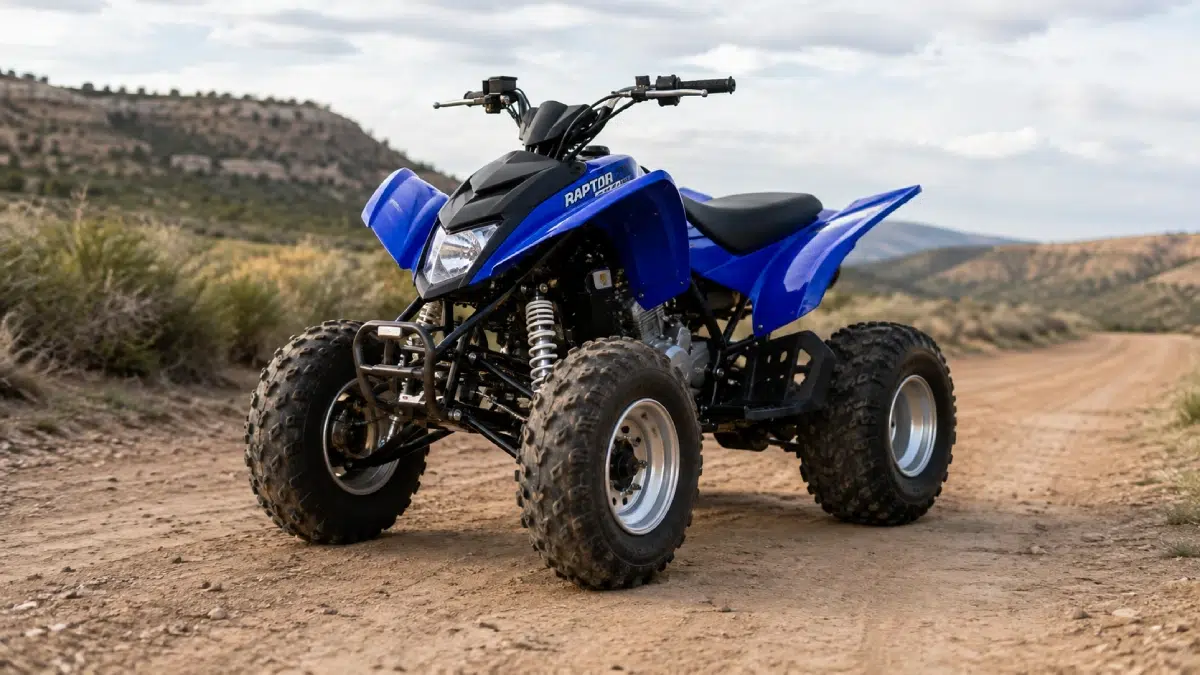
You can expect your Yamaha Raptor 250 to hit a stock top speed of about 50 to 55 mph, matching its sporty 250cc design.
Actual speed varies because rider weight, terrain, and testing methods all play a role. Some modifications like exhaust upgrades or sprocket changes can boost it further.
Heavier riders and rough ground slow you down, while performance tweaks push you faster. Curious about how these factors work together and compare to other 250cc ATVs?
Key Takeaways
- The stock Raptor 250 has a top speed typically between 50 and 55 mph.
- Real-world tests often show the Raptor 250 reaching about 51 to 54 mph.
- Rider weight and terrain can reduce the practical top speed below 50 mph.
- Common modifications like exhaust upgrades can increase top speed by around 5 mph.
- Compared to other 250cc ATVs, the Raptor 250 balances sporty speed with sharp handling.
Yamaha Raptor 250 Stock Top Speed
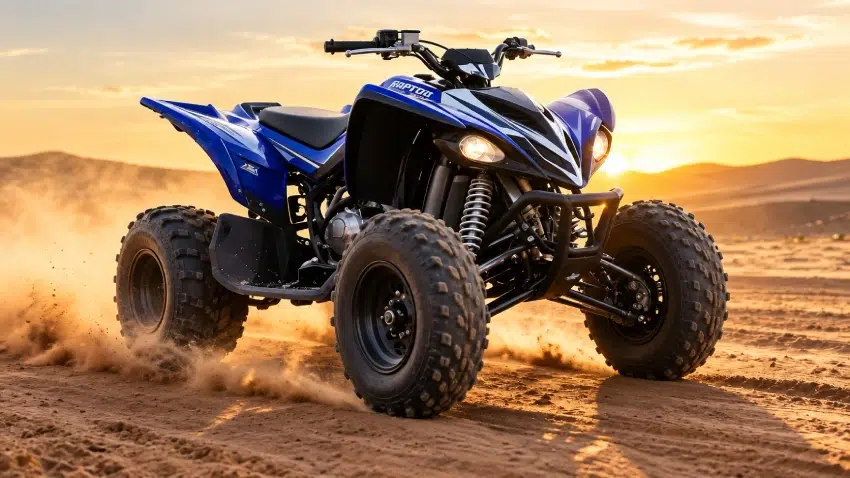
The Yamaha Raptor 250’s stock top speed generally falls between 50 and 55 mph, making it a solid performer in the 250cc ATV category.
When you ride one, expect a practical top speed near the low-to-mid 50 mph range under typical conditions. Real-world tests consistently show speeds around 51 to 54 mph, with minor variations caused by factors like wind or terrain.
While some sources claim the Raptor 250 can reach up to 60 mph, the most credible data points toward a baseline closer to 50 mph. This speed aligns well with the Raptor’s sporty design and 250cc engine capacity, offering a balance of agility and performance without pushing extreme top-speed limits.
Why Do Raptor 250 Speed Reports Differ?
Because many factors influence how the Yamaha Raptor 250 performs in real-world conditions, you’ll find a wide range of speed reports from different riders and tests.
Many factors affect Yamaha Raptor 250 speeds, leading to varied reports from riders and tests.
Differences in reported top speeds often stem from variations in gearing setups, which directly impact acceleration and max velocity.
Testing methods also matter; GPS readings can differ from dash indicators due to calibration discrepancies.
Additionally, environmental factors like wind resistance can reduce measured speeds, especially during outdoor runs.
You’ll notice some reports claiming speeds near 60 mph, while others hover around 50 mph.
These reflect testing conditions and equipment rather than inconsistencies.
Modifications further complicate the picture by pushing speeds beyond stock limits.
Understanding these technical nuances helps you interpret Raptor 250 speed reports more critically and realistically.
It’s also important to consider that gear ratios play a significant role in determining the top speed and acceleration performance of vehicles like the Raptor 250.
How Rider Weight and Terrain Change Your Raptor 250’s Speed?
When you hop on your Raptor 250, your weight directly influences how quickly it can reach its top speed. Heavier riders demand more power to overcome inertia and maintain velocity.
The Raptor’s 250cc engine generates a fixed power output. Additional mass means slower acceleration and a slightly reduced maximum speed.
Terrain also plays a critical role. Smooth, flat surfaces allow the quad to maintain momentum and reach peak velocity.
Rough, uneven, or uphill terrain increases rolling resistance and engine load, cutting top speed noticeably. Soft ground or mud further saps power through increased tire slip.
Combining higher rider weight with challenging terrain compounds these effects. This makes your Raptor 250 slower than ideal conditions suggest.
Understanding this helps set realistic expectations for your quad’s performance on varied rides. Proper speed control can help manage these variations for a safer and more enjoyable riding experience.
Speed Improvements From Common Modifications
If you’re looking to push your Raptor 250 beyond its stock capabilities, certain modifications can noticeably boost its top speed. Upgrading the exhaust system, like installing an FMF pipe, can add about 5 mph by improving exhaust flow and increasing engine efficiency.
Adjusting the gearing, specifically changing sprocket sizes, alters the final drive ratio. This enables higher top-end speeds at the cost of some low-end acceleration. Performance air filters and carburetor rejetting optimize the fuel-air mixture, enhancing power output.
More advanced Stage 1 or Stage 2 modifications, which may include porting and cam upgrades, further elevate peak speeds. Keep in mind, reaching speeds beyond 70 mph typically requires extensive engine work. These common modifications help you tailor your Raptor 250’s speed to better suit your riding style.
Additionally, selecting the right sprocket tooth count can balance torque and speed to optimize your bike’s acceleration and top-end performance.
Comparing the Raptor 250 With Other 250cc ATVs
Modifying your Raptor 250 can certainly boost its speed, but understanding how it stacks up against other 250cc ATVs helps set realistic expectations.
The Raptor 250 typically hits a stock top speed near 50–55 mph, positioning it well within the sporty 250cc class. When comparing, consider these key points:
- Utility 250cc ATVs usually max out around 40–50 mph, focusing more on torque and durability.
- Sport 250cc ATVs can reach 65–70 mph, often with enhanced gearing and engine tuning.
- The Raptor 250 offers sharp handling and competitive speed but isn’t designed for extreme top speeds like larger sport quads.
- Modifications can close the gap, but the base model balances power and control effectively.
This context helps you gauge where your Raptor fits among peers. Additionally, factors like engine performance and reliability play a crucial role in how these ATVs perform across varied terrain.
Frequently Asked Questions
What Maintenance Keeps My Raptor 250 Running at Top Speed?
To keep your Raptor 250 running at top speed, regularly check and change the engine oil. Clean or replace the air filter, and inspect the spark plug for wear.
Maintain proper tire pressure and make certain the chain is well-lubricated and tensioned correctly. Don’t forget to clean the carburetor and check the coolant level.
Routine maintenance like this prevents power loss and keeps your ATV performing at its peak.
How Does Tire Size Affect the Raptor 250’s Speed?
Changing your Raptor 250’s tire size directly impacts speed. A 10% larger tire diameter can increase top speed by roughly the same percentage.
Larger tires cover more ground per revolution, boosting speed but reducing acceleration and straining the drivetrain.
Conversely, smaller tires improve acceleration but lower top speed.
Make sure to balance tire size with gearing and suspension setup to maintain handling and avoid mechanical issues while optimizing your quad’s performance.
Can I Safely Increase the Raptor 250’s Speed Without Voiding Warranty?
You can safely increase your Raptor 250’s speed by making minor mods like upgrading the air filter or installing an FMF pipe, which some say adds about 5 mph.
Just avoid major engine work or altering the ECU, as those often void your warranty. Always check Yamaha’s warranty terms before modifying.
Stick to bolt-on parts designed for your model, and you’ll boost performance without risking coverage.
What Fuel Type Is Best for Maximum Raptor 250 Performance?
Think of premium fuel as rocket fuel for your Raptor 250’s engine. It burns cleaner and more efficiently.
You’ll want to use unleaded gasoline with an octane rating of 87 or higher to maximize performance and prevent knocking. Avoid ethanol blends above 10% as they can harm your engine over time.
Using the right fuel keeps your quad running smoothly, protecting essential components while squeezing out every bit of power on the trail.
How Does Altitude Affect the Raptor 250’s Engine Power and Speed?
You’ll notice your Raptor 250 loses engine power and speed as altitude increases because thinner air means less oxygen for combustion.
That reduced oxygen lowers fuel efficiency and throttle response, making the engine work harder.
Typically, for every 1,000 feet above sea level, expect about a 3% drop in power.
To compensate, you might need to rejet the carburetor or adjust fuel settings to maintain performance at higher elevations.
Get the Best Performance From Your Raptor 250
Now that you know the Yamaha Raptor 250’s stock top speed and how factors like rider weight, terrain, and mods play a role, you’re better equipped to push this ATV to its limits.
Remember, every tweak can add a few miles per hour, but don’t count your chickens before they hatch. Real-world results vary.
With the right approach, you’ll get the most out of your Raptor 250 and enjoy a thrilling, controlled ride every time.