
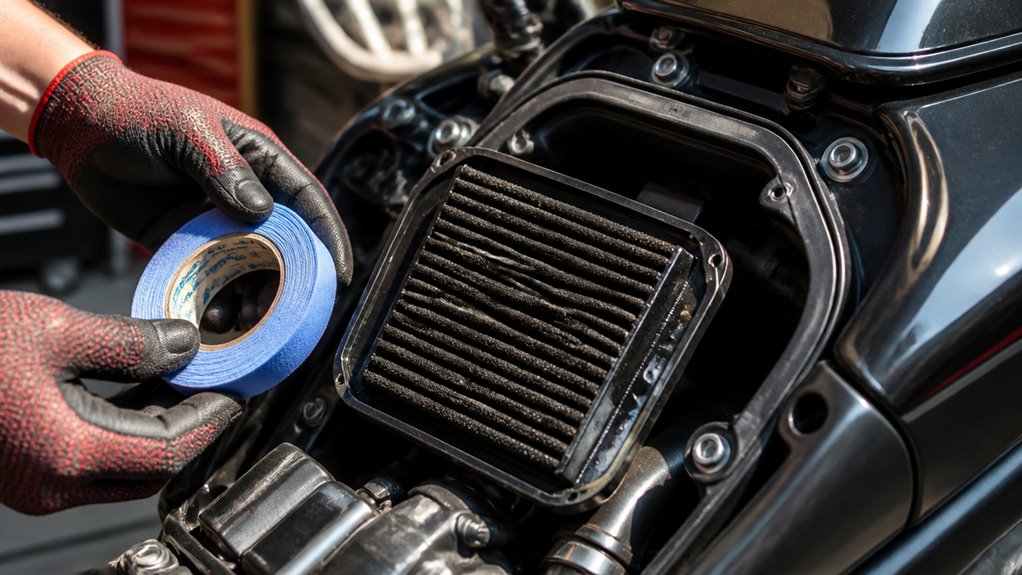
You only need to tape your motorcycle air filter if your intake design is exposed or has damaged seals, especially in wet, dusty, or off-road conditions.
Avoid taping sealed OEM airboxes, as it can restrict airflow and reduce performance.
Use heat- and moisture-resistant tape to guarantee durability. Remember, tape is a temporary fix, not a permanent solution.
Proper inspection and alternatives may better protect your intake and engine. More insights on tape types, risks, and repairs follow.
Key Takeaways
- Tape is needed if the intake is exposed and riding conditions are wet, dusty, or off-road, especially with gaps or damaged seals in the airbox.
- Avoid taping sealed OEM airboxes, as they provide sufficient protection and tape can restrict airflow or cause damage.
- Use heat- and moisture-resistant automotive or silicone-based tapes, not duct or electrical tape, to ensure durability and adhesion.
- Tape is a temporary fix to prevent debris ingress and should be removed for permanent repairs or proper sealant application.
- Overuse or improper taping can reduce engine performance, increase wear, and require regular inspection for tape deterioration.
Do You Need to Tape Your Motorcycle Air Filter?

When deciding whether to tape your motorcycle air filter, start by evaluating your bike’s intake design and riding conditions.
If your intake is exposed or you ride in wet, dusty environments, taping can block contaminants without fully sealing airflow.
However, if your bike has a sealed OEM airbox with a properly fitted filter, taping is usually unnecessary.
Tape is often used to cover accidental holes or gaps during maintenance but must tolerate heat and moisture to avoid failure.
Applying tape over a dirty or damaged filter can trap debris inside, reducing performance.
Overusing tape risks restricting airflow and engine efficiency.
Instead, inspect your filter regularly and keep it clean.
Ultimately, tape serves as a temporary solution, not a substitute for proper air intake protection or filter maintenance.
Performing regular maintenance is crucial to avoid issues such as dirt and grime buildup, which can affect engine performance, especially in extremely dirty conditions.
When Should You Tape Your Motorcycle Air Filter?
Evaluating the specific conditions and design of your motorcycle’s intake system helps determine if taping is appropriate.
You should consider taping primarily when your intake is exposed to harsh elements, like heavy rain, dust, or off-road debris that could bypass or overwhelm the filter.
Taping also makes sense if you notice gaps, holes, or damaged seals in the airbox or filter assembly that allow unfiltered air entry.
However, if your bike uses a sealed OEM airbox with a properly fitted filter, taping offers little benefit and risks restricting airflow.
Always make certain the filter is clean and dry before taping. Use heat- and moisture-resistant tape to maintain adhesion.
This is especially important when using a pod filter since it offers less protection against dirt compared to an airbox.
How Does Taping Affect Your Engine’s Performance?
Although taping can protect your air filter from contaminants, it can also restrict airflow. This may reduce engine performance and efficiency.
When you tape too much of the filter surface or use low-quality tape, your engine struggles to draw enough air. This leads to reduced power and fuel economy. Balancing protection and airflow is key.
| Effect | Description |
|---|---|
| Airflow Restriction | Tape can block air pathways |
| Power Reduction | Less oxygen lowers combustion |
| Fuel Efficiency Loss | Poor air mix wastes fuel |
| Engine Stress | Struggling engine runs hotter |
You need to ensure the tape covers only necessary areas and uses heat-resistant material. This minimizes performance impact while still protecting the intake. Improper airflow can contribute to issues like low compression, which affects your motorcycle’s engine efficiency and power.
What Are the Risks of Using Tape on Your Air Filter?
Balancing airflow and protection is important, but taping your air filter carries specific risks you need to take into account.
Improperly applied tape can restrict airflow, reducing engine performance and fuel efficiency.
If you tape a dirty or damaged filter, contaminants and moisture may become trapped inside, accelerating wear or corrosion.
Low-quality tape often fails under heat, vibration, and moisture, losing adhesion and creating gaps where unfiltered air can enter.
Over-sealing can choke the intake, limiting airflow and causing engine hesitation.
Additionally, loose tape edges can flake off, introducing debris into the intake.
To avoid these issues, make certain any tape used is heat-resistant, applied to a clean, dry filter, and inspected regularly for deterioration.
Otherwise, taping may cause more harm than benefit to your motorcycle’s engine.
Using improper materials can lead to contaminant intrusion, which can degrade engine components over time.
What Are the Best Alternatives to Taping Your Air Filter?
Effective protection for your motorcycle’s air filter goes beyond taping.
Instead, consider purpose-built rain socks or commercial waterproof covers made from hydrophobic materials.
These options are designed to block moisture without restricting airflow.
They maintain filter efficiency while preventing water and debris ingress.
Using replacement filters tailored to your OEM airbox assures proper fit and function.
This eliminates gaps that tape might attempt to seal.
For custom or accidental intake openings, apply durable sealants like silicone or JB Weld for a more permanent, heat-resistant solution.
Regular filter maintenance, including cleaning and timely replacement, also reduces contamination risks more effectively than tape.
Choosing these alternatives balances protection with performance, avoiding airflow restrictions and adhesion failures often caused by tape.
This is especially important in demanding wet or off-road conditions.
Additionally, working in a well-ventilated space during maintenance helps ensure safety and prevents inhalation of harmful fumes.
How to Repair Intake Holes Without Using Tape?
You can fix intake holes for good by using sealants like silicone or epoxy. These materials create strong, heat-resistant seals that really stand the test of time.
Just make sure you pick a sealant that works well with the type of metal or plastic your intake is made of. This is super important to ensure everything sticks properly and doesn’t cause any damage.
Also, don’t skip on prepping the surface! A clean surface makes a big difference in how well the repair holds up. And remember to give the sealant enough curing time. This will help make sure your repair is effective and doesn’t mess with airflow.
For best results, always perform repairs in a well-ventilated area to ensure safety and proper curing of the sealant.
Sealant Options Overview
When dealing with unwanted holes or gaps in your motorcycle’s intake system, using a proper sealant provides a more durable and reliable fix than tape.
Common sealants include silicone-based compounds, epoxy putty, and specialized automotive adhesives like JB Weld.
These materials bond securely to metal, plastic, or rubber surfaces, creating airtight seals that withstand heat, vibration, and moisture.
Silicone sealants offer flexibility and resist engine heat, while epoxy putty cures hard for structural repairs.
Before application, clean and dry the surface thoroughly to guarantee adhesion.
Apply the sealant evenly, filling all gaps without obstructing airflow.
Sealants also resist degradation over time better than tape, reducing maintenance frequency.
Using these options enhances intake integrity without risking the airflow restrictions or adhesive failures common with tape.
To ensure long-lasting performance, it is important to avoid using harsh solvents or acids on rubber or plastic intake components when cleaning before sealant application.
Permanent Repair Techniques
Although tape can provide a quick fix for intake holes, permanent repair techniques offer a more reliable and lasting solution that maintains peak airflow and engine protection.
You can use epoxy fillers, silicone sealants, or plastic welding to seal holes without reducing filter efficiency. These methods create durable bonds resistant to heat, vibration, and moisture, unlike tape which degrades over time.
Sometimes, removing old or damaged materials before applying repair compounds can improve adhesion and longevity, similar to techniques used when removing motorcycle grips properly.
| Method | Application | Advantages |
|---|---|---|
| Epoxy Filler | Mix and apply in hole | Strong, heat-resistant |
| Silicone Sealant | Squeeze and smooth over hole | Flexible, moisture-resistant |
| Plastic Welding | Heat and fuse plastic edges | Permanent, seamless repair |
| JB Weld | Two-part metal epoxy | Very durable, chemical-proof |
| Fiberglass Patch | Layer with resin over hole | Reinforced, high strength |
Choose the method that best fits your intake material and damage size for a lasting fix.
Material Compatibility Tips
Selecting the right repair material depends heavily on the intake’s construction and operating environment. You want a solution that seals effectively without compromising airflow or material integrity.
Instead of tape, consider these options:
- Silicone Sealant: Flexible, heat-resistant, and waterproof, silicone works well on plastic or metal intakes. Apply carefully to avoid blocking airflow paths.
- Epoxy Putty (e.g., JB Weld): Ideal for permanent fixes on metal intake parts. It bonds strongly and withstands vibration and heat.
- Plastic Weld or Adhesive: For plastic housings, use specialized plastic welds or adhesives designed to fuse similar polymers securely.
Choose materials compatible with your intake surfaces and operating temperatures. This ensures durable repairs that keep contaminants out without risking performance loss. For motorcycle suspensions, materials such as machined metal or anodized finishes offer durability and corrosion resistance crucial for long-term performance.
Which Types of Tape Work Best for Motorcycle Air Filters?
Choosing the right tape for your motorcycle air filter means balancing durability, heat resistance, and adhesion under moisture and vibration.
High-temperature automotive or HVAC foil tape works well due to its metal backing, resisting heat and providing a strong, moisture-proof seal.
Silicone-based tapes offer excellent flexibility and moisture resistance, conforming tightly to irregular surfaces without degrading under engine heat.
Avoid common duct tape or electrical tape, as they can fail quickly from heat exposure and lose adhesion from vibration and moisture.
When sealing intake gaps or holes, use tapes specifically rated for automotive or industrial environments to maintain a reliable barrier without restricting airflow.
Always make certain the filter is clean and dry before applying tape to maximize adhesion and prevent trapping contaminants inside the intake system.
For enhanced protection in harsh environments, consider using liquid electrical tape products that provide flexible, waterproof insulation and resist cracking under vibration.
Is Taping a Temporary or Permanent Fix?
When you apply tape to a motorcycle air filter, it’s important to understand that this solution is generally meant to be temporary rather than permanent.
Tape serves as a quick fix to block moisture, dirt, or small gaps but isn’t designed for long-term sealing or structural repair.
Here’s why:
- Tape can degrade under heat, vibration, and moisture, losing adhesion and allowing contaminants inside.
- Overuse may restrict airflow, reducing engine performance and efficiency.
- Tape doesn’t replace proper repairs like sealants or purpose-built covers that provide durable protection.
Use tape mainly for short-term protection during wet or dusty conditions or to cover accidental gaps temporarily.
For long-term reliability, rely on appropriate air filter covers or permanent repairs instead of tape.
How to Maintain and Inspect Tape Seals for Long-Term Protection?
Though tape is typically a temporary measure, some riders may keep it in place longer for added protection.
Tape is usually temporary, but some riders leave it on longer for extra protection.
To maintain effective tape seals, first verify the filter and surrounding surfaces are clean and dry before applying tape.
Use high-quality, heat- and moisture-resistant tape designed for automotive or HVAC use.
Regularly inspect the tape for signs of peeling, cracking, or shrinking, especially after exposure to heat, vibration, or moisture.
Replace any damaged or loose tape immediately to prevent contaminants from entering.
Avoid covering excessive filter area, which can restrict airflow.
If you detect gaps or compromised adhesion, remove the old tape, clean the area, and reapply fresh tape.
Consistent maintenance and inspection extend the tape’s protective function without risking engine performance or contamination.
Frequently Asked Questions
Can Taping My Air Filter Void My Motorcycle’s Warranty?
Taping your air filter can potentially void your motorcycle’s warranty if it’s considered a modification that affects the air intake system.
Manufacturers usually require the airbox and filter to remain unaltered to maintain warranty coverage.
If tape causes damage or blocks airflow, claims might be denied. Always check your warranty terms and consult the dealer before taping.
Using approved parts or purpose-built covers is safer for preserving warranty protection.
How Often Should I Replace the Air Filter if I Use Tape?
If you use tape on your air filter, replace the filter more frequently, typically every 5,000 to 7,000 miles or sooner if you ride in dusty or wet conditions.
Tape can trap moisture and debris, accelerating filter wear and contamination.
Always inspect the filter regularly and remove tape before cleaning or replacing it.
Prioritize proper maintenance to avoid airflow restriction and guarantee reliable engine performance.
Does Taping Affect Fuel Efficiency or Emissions Testing Results?
Yes, taping can affect fuel efficiency and emissions. If you tape over too much of the filter surface, you’ll restrict airflow, causing the engine to run rich. This reduces fuel efficiency and increases emissions.
Improper sealing might also let unfiltered air bypass the filter, harming combustion and emissions. To avoid issues, make sure tape doesn’t obstruct airflow markedly. Consider purpose-built covers for consistent performance and emissions compliance.
Can Taping Cause Moisture Buildup Inside the Airbox?
Imagine sealing a window tightly on a rainy day. You trap moisture inside.
Similarly, taping your air filter can block airflow, causing humidity to build up inside the airbox. This trapped moisture risks corrosion and filter damage.
To avoid this, make sure the tape doesn’t overly restrict airflow. Only use heat- and moisture-resistant tapes.
Better yet, opt for purpose-built covers that shield without sealing off ventilation.
What Signs Indicate My Tape Seal Is Failing During a Ride?
You’ll notice your tape seal is failing if you feel reduced engine power or throttle response, indicating restricted airflow.
Listen for unusual hissing or whistling sounds near the intake.
Inspect visually during stops; peeling, bubbling, or loose edges show degradation.
Moisture or dirt inside the airbox signals a compromised seal.
If the tape wrinkles or loses adhesion from heat and vibration, it’s time to reapply or switch to a better sealing method.
The Bottom Line on Motorcycle Air Filter Repairs
You might think taping your motorcycle air filter is a quick fix, but it’s often a temporary solution that risks engine performance and longevity.
While tape can seal intake holes in a pinch, it’s no substitute for proper maintenance or permanent repairs.
Instead of relying on tape, focus on thorough inspections and using appropriate materials designed for air filtration.
Balancing immediate convenience with long-term engine health is key. You don’t want a quick patch turning into costly damage.