
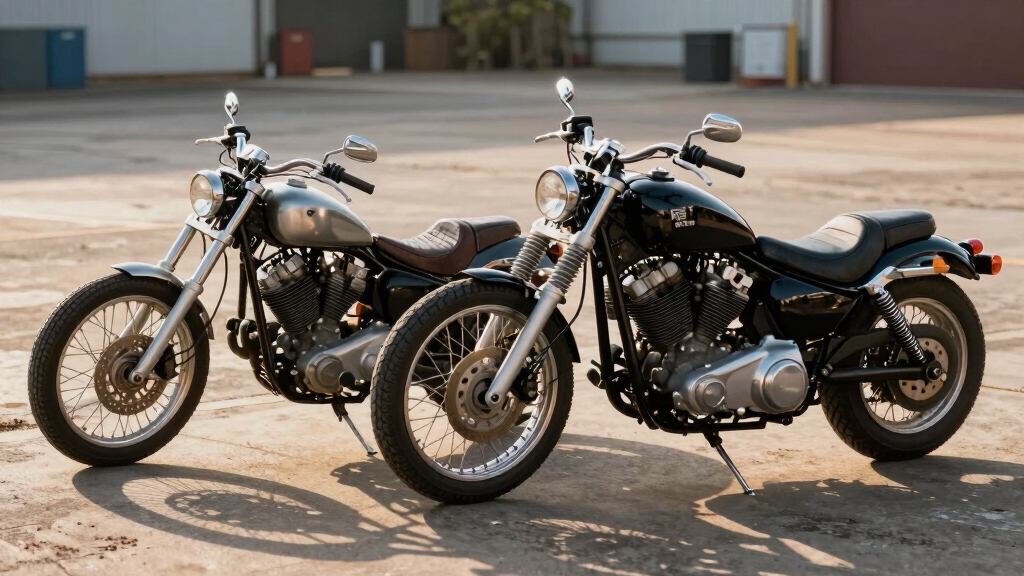
When choosing between a hardtail and softail motorcycle, you’re deciding on raw simplicity versus modern comfort.
Hardtails feature rigid frames without rear suspension, giving you an intense road feel but a rougher ride.
Softails hide rear shocks for smoother handling and better comfort, especially on long rides.
However, they come with higher maintenance and cost.
Your ideal bike depends on whether you prefer minimalist style and DIY ease or advanced suspension and touring ease.
Discover how design, upkeep, and performance truly compare.
Hardtail and Softail Motorcycles Compared: Which Ride Fits You Best?
| Feature | Hardtail Motorcycle | Softail Motorcycle |
|---|---|---|
| Frame Design | Rigid single-piece frame with no rear suspension | Hidden rear suspension inside frame |
| Ride Comfort | Rougher ride, every bump felt directly | Smoother and more comfortable ride |
| Suspension | Front suspension only | Front + rear suspension |
| Road Feel | Raw, direct road feedback | Cushioned, stable handling |
| Long Distance Riding | Less comfortable for long rides | Better for touring and highways |
| Maintenance | Simpler, fewer parts, easy DIY | More complex, needs professional servicing |
| Repair Cost | Lower maintenance cost | Higher maintenance cost |
| Initial Cost | Usually cheaper | More expensive |
| Customization | Easier for classic chopper builds | More aftermarket options available |
| Handling | Direct but harsher cornering | Stable and forgiving handling |
| Best For | Classic style lovers, short rides | Comfort seekers, long-distance riders |
| Resale Value | Niche market value | Better resale value |
Key Takeaways
- Hardtail motorcycles have a rigid rear frame without suspension, offering a raw, minimalist aesthetic and direct road feedback.
- Softail motorcycles feature hidden rear suspension, combining vintage looks with improved ride comfort and smoother handling.
- Hardtails require less maintenance due to fewer moving parts, making them more DIY-friendly and cost-effective to upkeep.
- Softails provide better stability and reduced rider fatigue, ideal for long-distance touring and urban traffic conditions.
- Softails generally cost more upfront and have higher long-term maintenance expenses due to complex suspension components.
Hardtail or Softail Motorcycles: Key Design Differences

When comparing hardtail and softail motorcycles, the most noticeable difference lies in their frame design.
Hardtails use a single-piece rigid frame where the rear wheel bolts directly onto the frame, eliminating any rear suspension components. This creates a simple, straightforward structure that appeals to riders seeking a classic, minimalist look.
Hardtails feature a rigid frame with no rear suspension, offering a classic, minimalist design.
On the other hand, softails cleverly hide their rear suspension within a separate mini frame toward the back. This two-piece design maintains the traditional hardtail silhouette but adds rear shock absorbers concealed behind the transmission.
While softails preserve the vintage aesthetic, their frame design incorporates modern technology to improve functionality without compromising style. Understanding these structural distinctions helps you appreciate how each design influences the motorcycle’s character and performance potential. Additionally, many modern Harley models feature advanced drivetrains and transmission technologies that complement their frame designs, enhancing overall ride quality and control, such as the 6-speed Cruise Drive® transmission.
Suspension Systems and Ride Comfort Compared
You’ll notice that hardtails don’t have rear suspension, which means every bump hits you directly through the frame.
This can really make long rides feel rough.
Now, softails are a bit different. They hide their rear shock absorbers, which helps smooth out the ride while still keeping that classic look.
Proper suspension and tire balance work together to provide a smoother ride and reduce rider fatigue on long trips.
Rear Suspension Differences
Experience the stark contrast in ride comfort brought by the rear suspension systems of hardtail and softail motorcycles.
You’ll notice that hardtails have a rigid frame, with the rear wheel bolted directly to it, offering no rear suspension. This design means every bump travels straight to you, making the ride raw and unfiltered.
In contrast, softails cleverly hide their rear suspension within a separate mini frame. This maintains the classic hardtail look while providing shock absorbers behind the transmission.
This setup cushions impacts and isolates vibrations effectively.
When you compare the two, hardtails favor simplicity and directness. Softails emphasize mechanical complexity for smoother rear-end movement.
Understanding these structural differences helps you appreciate how each frame affects your ride dynamics and maintenance needs.
Using a wheel chock can help stabilize motorcycles during maintenance, especially for models like hardtails without rear suspension.
Impact On Ride Comfort
The rear suspension setup plays a defining role in how comfortable your ride feels, especially over long distances or rough terrain.
With a hardtail, you’ll directly feel every bump and imperfection since the rear wheel bolts rigidly to the frame, lacking any rear shock absorption. This design offers a raw, connected sensation but sacrifices cushioning, leading to greater rider fatigue.
In contrast, a softail’s hidden rear suspension system absorbs shocks and smooths out rough surfaces, markedly reducing vibrations transmitted to you. This results in a quieter, more controlled ride that cushions impacts effectively.
While softails demand more maintenance, their dual suspension system enhances comfort substantially compared to hardtails. They’re better suited if you prioritize ride quality over mechanical simplicity.
Additionally, the rear tire’s sidewall is designed to complement the suspension by being less thick, allowing for better power delivery and traction that supports ride stability.
Long-Distance Riding Benefits
Maneuvering long distances on a motorcycle demands a suspension system that can consistently absorb road imperfections without causing rider fatigue.
With a hardtail, you feel every bump directly through the frame, which quickly wears on your body during extended rides.
In contrast, a softail’s hidden rear suspension cushions impacts, reducing vibrations and shock transferred to you.
This makes long highway stretches and uneven terrain far more comfortable.
The softail’s dual suspension setup not only improves ride quality but also enhances handling stability.
This helps you maintain control over hours of riding.
If you plan on covering significant mileage regularly, the softail’s ability to minimize fatigue and maintain comfort makes it the smarter choice compared to the rigid, unforgiving hardtail frame.
Additionally, choosing the right support equipment like a motorcycle chock during stops can further enhance safety and stability on long trips.
How Hardtail and Softail Bikes Handle on the Road?
Hardtail motorcycles often deliver a raw, unfiltered connection to the road, letting you feel every bump and imperfection through the rigid frame. This direct feedback creates an intense riding experience but can be fatiguing on rough terrain.
Softails, with their hidden rear suspension, offer smoother, more stable handling by absorbing shocks. This helps you maintain control and comfort even on uneven surfaces.
| Aspect | Hardtail | Softail |
|---|---|---|
| Road Feel | Intense, raw vibrations | Smooth, cushioned ride |
| Cornering | Less forgiving at speed | Stable, confident handling |
| Comfort | Fatigue after long rides | Reduced vibration fatigue |
| Suspension | Front only | Front and rear suspension |
| Control | Direct but harsh feedback | Balanced and steady response |
You’ll notice the difference immediately, especially on longer, bumpier rides. When performing maintenance, it’s important to lift the motorcycle safely using proper tools and techniques to avoid damage and injury.
Riding Style Guide: Which Motorcycle Is Right for You?
How do you know which motorcycle fits your riding style best? If you crave a raw, connected feel and don’t mind rough rides, a hardtail suits your taste. Its rigid frame delivers every bump directly, ideal for short, city trips or classic cruiser vibes.
On the other hand, if comfort and stability on long rides matter, a softail is your go-to. Its hidden rear suspension smooths out road imperfections, making highway cruising and cornering easier.
Consider how often and where you ride: daily urban commutes or extended touring? Also, think about handling preferences. Hardtails offer sharper feedback, while softails provide steadier control.
For riders balancing off-road capability with urban commuting, choosing a bike with versatile geometry can greatly enhance the experience.
Maintenance Needs for Hardtail and Softail Motorcycles
You know, when it comes to maintenance, hardtails really have the upper hand.
They’ve a simpler frame and don’t have rear suspension parts, which means you can often tackle repairs yourself. This not only makes it easier but also helps you save some cash in the long run.
On the other hand, softails come with that hidden rear suspension, which sounds cool but does require a bit more attention.
Because of those complex components, you’ll likely need to visit a professional more often to keep everything running smoothly.
Proper maintenance of suspension components enhances durability and reduces vibrations and excessive bouncing.
Maintenance Complexity Comparison
Although both hardtail and softail motorcycles require regular maintenance, the complexity involved varies considerably between the two.
Hardtails, with their rigid frames and absence of rear shock components, simplify upkeep. This lets you focus on basic tasks like chain lubrication and brake checks.
This straightforward design minimizes mechanical intricacies, making DIY repairs more accessible and less time-consuming.
In contrast, softails hide a more complex rear suspension system that demands careful attention to maintain peak performance.
You’ll need to regularly inspect and service shock absorbers and suspension linkages, which involve more precise adjustments and specialized knowledge.
This added complexity can increase maintenance time and costs but contributes to improved ride comfort.
Understanding these differences helps you anticipate what level of hands-on care each motorcycle demands.
Additionally, just as air brakes require regular inspection and maintenance to ensure safety and durability, the more complex components of softails similarly benefit from consistent, attentive upkeep.
Repair Frequency Differences
With maintenance complexity influencing your hands-on involvement, repair frequency also varies markedly between hardtail and softail motorcycles.
Hardtails, with their simple rigid frames and no rear suspension, typically demand fewer repairs. You’ll find fewer components prone to wear, so maintenance is less frequent.
In contrast, softails’ hidden rear suspension systems require more regular attention to keep shocks and linkages in top shape, increasing repair intervals.
Consider these differences:
Hardtails need occasional frame inspections and front fork maintenance only.
Softails require frequent suspension servicing to prevent wear-related issues.
Softail repairs may involve costly shock absorber replacements or adjustments.
Understanding these differences helps you anticipate the time and cost involved in keeping your bike road-ready.
Using a motorcycle wheel chock can also help stabilize your bike during maintenance to enhance safety and ease of repairs.
DIY Versus Professional Upkeep
When maintaining your motorcycle, the choice between DIY and professional upkeep heavily depends on the bike’s design complexity.
Hardtails, with their simple rigid frames and fewer moving parts, are well-suited for DIY repairs. You can easily handle routine tasks without specialized tools or knowledge.
Softails, however, require professional attention due to their hidden rear suspension systems that demand precise adjustment and maintenance.
| Feature | Hardtail | Softail |
|---|---|---|
| Frame Complexity | Simple rigid frame | Complex with hidden suspension |
| Maintenance Skill | DIY-friendly | Requires professional expertise |
| Repair Frequency | Lower due to fewer parts | Higher due to suspension system |
Choosing the right upkeep approach guarantees your bike performs safely and lasts longer.
Cost Differences Between Hardtail and Softail Bikes
Because softail motorcycles feature a more complex design with additional suspension components, they tend to carry a higher price tag than hardtails.
When you’re comparing costs, keep in mind that hardtails benefit from simpler frames and fewer parts, which lowers manufacturing and maintenance expenses.
On the other hand, softails require more resources and ongoing upkeep, reflecting in their initial and long-term costs.
Consider these factors:
- Manufacturing complexity: Hardtails are cheaper to produce due to rigid frames, while softails’ hidden suspension adds expense.
- Maintenance: Hardtails need less frequent repairs, saving you money over time, unlike softails with intricate shock systems.
- Initial purchase price: Expect to pay more upfront for softails because of modern suspension technology and resource-intensive builds.
Market Popularity and Usage of Hardtails Vs Softails
Although hardtail motorcycles once dominated the roads, you’ll find that softails have overtaken the market due to their superior comfort and versatility.
Softails blend classic styling with modern suspension, making them the go-to choice for riders who seek both aesthetic appeal and practical performance.
You’ll notice softails excel in various riding conditions, from urban traffic to long-distance tours, thanks to their smoother ride and better handling.
In contrast, hardtails appeal mainly to enthusiasts who prioritize simplicity and direct road feel, often valuing the nostalgic experience over daily comfort.
Today, softails dominate sales and have extensive aftermarket support, which reinforces their popularity.
Customization Options for Hardtail and Softail Motorcycles
Since customization plays a key role in motorcycle culture, understanding the options available for hardtail and softail bikes is essential.
Hardtails offer a straightforward canvas for modifications due to their simple rigid frame. This allows you to easily swap parts without worrying about suspension interference.
Hardtails provide a simple, rigid frame ideal for easy part swaps without suspension concerns.
On the other hand, softails provide more complex customization opportunities. Their hidden rear suspension and widespread aftermarket support enhance both aesthetics and comfort.
When customizing your bike, consider these factors:
Frame modifications: Hardtails let you reshape the frame for a classic chopper style. Softails maintain structural integrity with suspension adjustments.
Suspension upgrades: Softails allow for tuning shock absorbers; hardtails have limited options.
Parts availability: Softails benefit from broader aftermarket parts due to higher popularity and modern design.
Your choice depends on how much technical complexity and comfort you want in your build.
Summary: Choosing Between a Hardtail or Softail Motorcycle
Customizing your motorcycle highlights the distinct characteristics of hardtail and softail designs, helping you understand what each frame offers beyond aesthetics.
If you seek simplicity, a raw riding experience, and easier maintenance, a hardtail suits you with its rigid frame and direct road feedback.
However, if comfort, smoother handling, and long-distance capability matter, a softail’s hidden rear suspension provides superior ride quality and stability.
Consider your riding style: hardtails excel in straightforward, budget-conscious builds, while softails fit riders valuing modern suspension technology and versatility.
Keep in mind cost differences. Hardtails are more affordable, but softails come with higher maintenance.
Ultimately, your choice depends on whether you prioritize classic ride feel or advanced comfort and performance for diverse road conditions.
Frequently Asked Questions
What Historical Models First Popularized Hardtail Motorcycles?
You’ll find that early Harley-Davidson and Indian motorcycles first popularized hardtail designs, especially during the 1930s to 1950s.
These bikes featured rigid frames without rear suspension, giving riders a raw, connected feel with minimal mechanical complexity.
If you appreciate classic motorcycle heritage, those models set the foundation for the hardtail’s iconic look and simplicity.
This makes them favorites among custom builders and vintage enthusiasts even today.
How Do Hardtail and Softail Frames Affect Motorcycle Weight?
Imagine riding a vintage steam-powered motorcycle.
Hardtails have that straightforward, lightweight feel because their rigid, single-piece frame lacks rear suspension.
You’ll notice that softails, with their hidden rear shocks and two-piece frame, add weight due to extra components.
While softails weigh more, they offer better comfort and handling.
Are There Specific Safety Concerns Unique to Hardtail Motorcycles?
Yes, you should be aware that hardtail motorcycles lack rear suspension. This exposes you to harsher impacts and vibrations from road irregularities.
This can reduce control and increase fatigue, especially on rough or long rides, potentially compromising your safety.
You’ll also face more challenges in handling fast corners due to the rigid frame. So, you need to ride cautiously and maintain excellent road awareness to manage these unique safety concerns effectively.
What Materials Are Commonly Used in Softail Frame Construction?
You’ll find softail frames commonly made from high-strength steel alloys, which offer a great balance of durability and flexibility needed for housing the hidden suspension.
Sometimes manufacturers use chromoly steel for its lightweight yet strong properties, improving ride quality without sacrificing toughness.
The frames often feature precision welding and reinforced joints to handle stress from both the road and the suspension system, ensuring longevity and consistent performance.
Do Softail Motorcycles Offer Better Resale Value Than Hardtails?
Oh, sure, if you want your bike to sell for more than your vintage comic book collection, go softail.
Softails generally boast better resale value since they offer modern comfort, smoother rides, and broader appeal.
Their complex suspension and popular design keep them in demand.
Hardtails, while charmingly old-school, tend to drop in value faster due to their rough ride and niche market.
Comfort or Character: The Motorcycle Choice That Matters
Choosing between a hardtail and softail motorcycle comes down to your comfort cravings and riding rhythms.
Hardtails offer a raw, rugged ride with minimal maintenance, while softails sport smoother suspension and stylish sophistication.
Whether you’re chasing classic customization or craving cushioned comfort, understanding these distinct differences drives smarter decisions.
Dive deep into design, durability, and dynamics to discover the perfect partner for your personal path on the pavement. Choose wisely and ride wonderfully!