
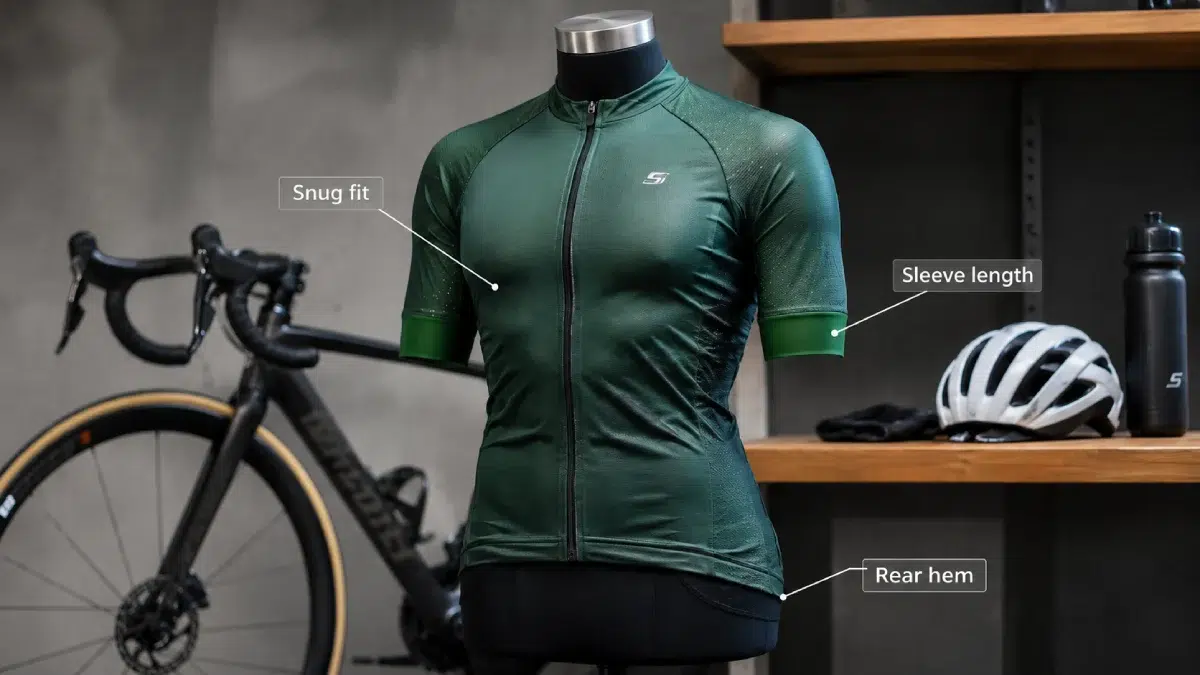
Your bike jersey should fit snugly while you’re leaned forward, ensuring no bunching, pulling, or riding up occurs.
It needs a slightly longer rear length for full lower back coverage, with sleeves and shoulders hugging without restricting movement.
Choose high-stretch, breathable fabrics that maintain shape and moisture control.
Stability features like elastic hems and pocket testing prevent shifting when loaded.
This precise fit balances aerodynamics, comfort, and function. Explore further to optimize your jersey’s performance.
Key Takeaways
- A bike jersey should fit snugly while riding, with no bunching or pulling, ensuring a stable, aerodynamic profile in a forward-leaning position.
- The back hem must be longer than the front and fully cover the lower back when bent to prevent exposure and riding up.
- Sleeves and shoulders should be snug without restricting movement, with flat seams that stay stable and don’t ride up during cycling motion.
- Waist hems and grippers should hold the jersey securely without constriction, preventing shifting or sagging even when pockets are fully loaded.
- Use high-stretch, moisture-wicking fabrics that maintain compression, ventilation, and fit retention throughout dynamic cycling movements.
Why a Snug Fit Matters for Cycling Jerseys?
A snug fit is essential for cycling jerseys because it minimizes wind resistance and keeps the fabric from flapping while you ride.
A snug cycling jersey fit reduces wind resistance and prevents fabric flap during your ride.
You want the jersey to gently hug your chest, shoulders, and waist without restricting movement. High-stretch materials provide a compressive feel at first but adapt once you’re on the bike.
This close fit supports aerodynamics and guarantees the jersey stays in place during pedaling. When you stand, the jersey might feel tight, but that’s normal—it actually fits correctly once you lean forward.
Avoid loose fabric, which causes drag and discomfort. Instead, opt for a jersey designed to maintain a stable, body-hugging profile, balancing support and flexibility to enhance your performance efficiently.
Choosing jerseys with four-way stretch fabrics ensures freedom of movement while maintaining that snug, supportive fit.
How Your Riding Position Changes Cycling Jersey Fit?
While a snug fit keeps your jersey secure and aerodynamic, how you position your body on the bike dramatically affects how the jersey should fit.
When you lean forward, your torso lengthens and your shoulders rotate, altering how the fabric stretches and sits. A jersey that feels tight standing upright can fit perfectly once you adopt your riding posture.
The sleeves and torso length must accommodate this forward bend without pulling or exposing skin. You should assess fit primarily in your riding position, as the hem needs to cover your lower back while bent over, preventing gaps.
This dynamic fit guarantees the jersey stays stable and comfortable during pedaling, maintaining peak aerodynamics and moisture management throughout your ride.
Adjust sizing based on this cycling-specific movement rather than a static standing fit. For best results, simulate riding posture when testing fit to check for bunching or pulling at the torso and sleeves.
Key Fit Factors: Length, Sleeves, and Shoulders
When you’re picking out a jersey, it’s super important to make sure the length covers your lower back without bunching up—especially when you’re riding. You don’t want to be constantly adjusting it, right?
Next up, let’s talk about the sleeves. You want them to stay put and not ride up while you’re in motion. That way, you can stay comfy and keep your aerodynamics in check.
And don’t forget about the shoulders! Check that the seams lie flat and aren’t pulling anywhere. This way, you won’t feel restricted in your upper body movement. It all adds up to a better riding experience!
Additionally, choosing gear with breathable ventilation features helps keep you cool and comfortable on longer rides.
Optimal Jersey Length
Because ideal jersey length directly affects coverage and comfort during riding, you’ll want the back hem to extend fully over your lower back when leaned forward.
This guarantees no skin is exposed between your jersey and shorts, preventing drafts and chafing.
The rear length should be slightly longer than the front to accommodate the bent position without bunching or riding up.
Avoid excess length that causes fabric to roll or fold at the waist, which can interfere with pedaling.
A properly sized jersey maintains a smooth fit, supported by elastic hems or waist grippers to keep it stable even when pockets carry essentials.
Lightweight, quick-dry materials with silicone strip grippers are often used to ensure the jersey stays in place and enhances ventilation during long rides.
Sleeve Fit Stability
As your arms move through the cycling stroke, sleeves must stay securely in place without riding up or bunching. A stable sleeve fit guarantees consistent coverage, preventing fabric from shifting and interfering with your range of motion.
Look for sleeves that gently hug your upper arms with enough elasticity to accommodate extension and flexion without excess looseness. The arm openings should provide freedom of movement without excess fabric that can bunch or flap.
High-stretch technical fabrics support this stability by conforming closely while allowing full mobility. Additionally, sleeves that maintain their position contribute to aerodynamic efficiency and overall comfort.
Avoid jerseys with sleeves that pull or twist when you reach forward, as this compromises fit and function. Prioritize a snug, stable sleeve fit that moves seamlessly with your cycling posture.
For optimal performance, consider materials that balance durability and flexibility to ensure sleeves hold their shape and function over time.
Shoulder Seam Placement
When shoulder seams align correctly with your natural shoulder line, they reduce tension and prevent fabric from pulling across your upper body during cycling.
You want the seams to sit smoothly without stretching or distorting when you’re in your riding position. If seams sit too far inward or outward, the jersey will restrict your shoulder movement or cause uncomfortable pressure points.
Proper seam placement supports a snug, aerodynamic fit that moves with you, avoiding fabric bunching or seam digging under your arms or at the neck.
Check seams both standing and leaned forward, since cycling posture shifts how the jersey stretches over your shoulders.
Accurate shoulder seam positioning guarantees unrestricted arm rotation and consistent comfort, maintaining performance and durability on every ride.
Additionally, advanced protective gear like helmets with adjustable fit systems ensure that comfort and safety are optimized alongside your cycling apparel.
Choosing Stretchy, Breathable Fabrics for Cycling Jerseys
Many cycling jerseys rely on high-stretch polyester knits or blended technical fabrics to deliver the ideal balance of flexibility and breathability.
These materials provide the stretch necessary to maintain a snug, body-hugging fit without restricting your movement. This is vital for efficient pedaling and upper-body rotation.
Look for fabrics with moisture-wicking properties that actively draw sweat away from your skin, enhancing comfort and temperature regulation.
Blended fabrics, often combined with elastane or spandex, improve recovery and fit retention after repeated stretching in your riding posture.
Additionally, technical weaves optimize airflow, reducing heat buildup.
Choosing jerseys made from such fabrics guarantees a close fit that adapts dynamically to your motion, maintains breathability, and prevents fabric sagging or bunching during your ride.
For cold-weather rides, materials with thermal fleece lining can provide essential warmth while maintaining moisture management.
Keeping Your Jersey in Place When Riding
To keep your jersey securely in place during a ride, focus on features like waist grippers and elastic hems that prevent shifting and bunching.
These components anchor the jersey around your waist, minimizing upward movement and fabric roll.
Make certain the hem fits snugly without constriction to maintain stability while pedaling.
Additionally, the cut should accommodate your on-bike posture.
A slightly longer rear length helps coverage and reduces exposure as you lean forward.
Sleeve and shoulder seams must sit correctly to avoid fabric riding up or pulling, which can disrupt fit and comfort.
A jersey that stays taut and stable supports aerodynamics and prevents distractions.
Prioritize designs with well-placed elastic features and stretch fabrics that conform to body movement without slipping or folding.
This guarantees your jersey performs reliably under dynamic cycling conditions.
For optimal comfort and durability, choosing gear with Kevlar construction can provide lightweight puncture resistance while maintaining flexibility.
Checking Jersey Fit With Loaded Back Pockets
When you load up your back pockets with your essentials, you want to make sure the jersey stays put—no shifting or twisting, please! It’s all about keeping things stable while you’re out there riding.
And hey, those pockets need to be easy to reach, even when you’re in your riding position. A well-fitted jersey strikes that perfect balance between being snug and having enough stretch to support all that weight. You definitely don’t want to sacrifice comfort or movement, right? Using gear with secure mounting systems can help maintain stability and prevent shifting during your ride.
Pocket Accessibility On Bike
Check how the jersey performs with fully loaded back pockets to guarantee it holds its shape and position during your ride.
When you reach back for essentials, the pockets should remain easily accessible without excessive stretching or distortion of the fabric.
The pockets must sit at a height that allows quick, secure access while maintaining the jersey’s aerodynamic profile.
Make certain the fabric’s stretch accommodates the load without sagging or shifting, which can interfere with your pedaling motion.
The pocket openings should be wide enough to insert items smoothly but snug enough to prevent them from falling out.
Verify that seams and elastic hems stabilize the pockets under tension.
This functional fit check confirms the jersey supports efficient, safe access to gear without compromising overall fit or comfort.
Additionally, just as brake pads require compatibility specifics for optimal performance, your jersey’s fit should be compatible with your riding style and gear load to maintain efficiency.
Stability With Loaded Pockets
Ensuring your jersey maintains stability with fully loaded back pockets confirms it can handle real-world riding conditions without compromising fit or comfort.
When you fill the pockets with essentials like tools, snacks, or a phone, the fabric should remain snug and resist shifting or twisting.
Test the fit by loading the pockets and assuming your riding position; the jersey should stay firmly in place without flapping or bunching.
Look for jerseys with elastic hems or waist grippers that prevent upward ride or sagging under weight.
The back pockets must sit within easy reach, even when loaded, allowing you to access items without disrupting your posture.
A well-fitted jersey balances stretch and support, ensuring stability and consistent aerodynamic performance throughout your ride.
Why On-Bike Comfort Matters More for Cycling Jersey Fit?
Because cycling involves a forward-leaning posture, a jersey that feels tight or short while standing can fit perfectly once you’re on the bike.
You need to assess fit primarily when you’re in your riding position, not upright. This posture affects sleeve length, torso fit, and hem coverage.
When choosing a jersey, consider these key points:
- The back hem should extend fully over your lower back when leaned forward to avoid exposure.
- Sleeves must remain stable without riding up during pedaling motions.
- The fabric’s stretch should support full arm extension without restriction.
- Shoulder seams need to align smoothly with your riding posture to prevent pulling.
Focusing on on-bike comfort guarantees your jersey stays functional and comfortable throughout your ride.
Avoiding Common Cycling Jersey Fit Mistakes
When it comes to choosing a cycling jersey, you really want to steer clear of one that’s too loose. That flapping fabric? It can create drag and become a real distraction while you’re out on your ride. Nobody wants that!
But hold on—don’t just grab the first jersey that feels snug. You want to avoid anything that feels uncomfortably tight when you’re upright. That can limit your movement and even lead to chafing. It’s all about finding that sweet spot.
Avoid Loose Flapping
Frequently, loose flapping in a cycling jersey signals an improper fit that compromises both comfort and aerodynamics. To avoid this, you need a jersey that fits snugly without restricting movement.
- Make sure the jersey gently hugs your chest, shoulders, and waist to eliminate excess fabric that can flap in the wind.
- Check the fit in your riding position, not just standing, since leaning forward changes how the fabric sits on your body.
- Opt for jerseys with high-stretch technical fabrics that conform closely to your shape while allowing full range of motion.
- Use jerseys with elastic hems or waist grippers to keep the garment stable and prevent upward or sideways shifting during pedaling.
A stable, tight fit maintains aerodynamic efficiency and prevents distractions from loose fabric.
Prevent Uncomfortable Tightness
Although a snug fit is essential for performance, an overly tight cycling jersey can restrict your breathing, limit upper-body movement, and cause discomfort during long rides.
To prevent uncomfortable tightness, prioritize fit in your riding position rather than standing upright. High-stretch fabrics can feel compressive initially but should never feel constricting when pedaling.
Avoid jerseys that dig into shoulders, neck, or arms, as these pressure points cause irritation.
| Common Fit Issue | Impact |
|---|---|
| Excessive tightness | Restricts breathing & motion |
| Shoulder seam pull | Causes discomfort, chafing |
| Short torso length | Exposes lower back |
| Tight sleeves | Limits arm mobility |
Select a jersey that balances a supportive, close fit with freedom of movement and ventilation to optimize comfort and performance.
Tips for Balancing Jersey Fit, Comfort, and Performance
When balancing jersey fit, comfort, and performance, prioritize a snug, aerodynamic fit that adapts to your riding position without restricting movement.
To achieve this, follow these tips:
- Make sure the jersey fits tighter while riding than standing. It should hug your torso without restricting breathing or arm motion.
- Check that sleeves stay in place and shoulder seams lie flat to prevent chafing and maintain aerodynamics.
- Confirm the back hem covers your lower back fully in the riding position, avoiding exposure or bunching at the waist.
- Load your pockets with essentials and verify the jersey remains stable without shifting or flapping, aided by elastic hems or waist grippers.
This approach guarantees you balance comfort with a performance-driven fit tailored to cycling-specific demands.
How to Find the Right Cycling Jersey Fit for You?
Because cycling jerseys must perform across dynamic riding positions and varying conditions, finding the right fit requires focusing on how the garment behaves both off and on the bike.
Start by evaluating fit in your riding posture. What feels tight standing may fit perfectly when leaned forward.
Make certain the jersey hugs your chest, shoulders, and waist without restriction. Use high-stretch fabric that accommodates motion while maintaining a snug profile.
Check that sleeves stay stable without riding up and that seams lie flat. The rear hem should cover your lower back when in position.
Load the back pockets and verify the jersey remains stable without twisting or flapping.
Prioritize a fit that balances close support, unrestricted movement, and secure coverage to optimize comfort, ventilation, and performance during your ride.
Frequently Asked Questions
How Do I Wash and Care for My Cycling Jersey?
You should wash your cycling jersey in cold water on a gentle cycle to protect its technical fabric.
Use mild detergent without fabric softeners, as they reduce moisture-wicking performance. Avoid bleach and harsh chemicals.
Turn the jersey inside out to preserve colors and zippers. Air dry it flat or hang it in shade; never use a dryer, which damages elasticity and fit.
Regular care keeps your jersey functional and comfortable for every ride.
Can Cycling Jerseys Be Worn in Cold or Rainy Weather?
Before smartphones, riders relied on layering to tackle cold or rainy weather. You can wear cycling jerseys in those conditions, but you’ll need additional layers like a windproof jacket or thermal base layer.
Jerseys made from moisture-wicking, quick-dry fabrics help manage sweat and keep you comfortable. Some have water-resistant treatments, but they’re not fully waterproof.
What Are the Best Brands for High-Quality Cycling Jerseys?
You’ll find top-tier cycling jerseys from brands like Rapha, Castelli, and Assos, known for precise fit and advanced fabrics.
Pearl Izumi offers durable, moisture-wicking options with excellent stretch.
Santini and Gore Wear focus on aerodynamic designs and technical textiles.
Choose based on your riding style and climate needs. These brands consistently deliver jerseys that combine performance, comfort, and durability for serious cyclists.
How Do I Choose the Right Cycling Jersey Color for Visibility?
You want to pick a cycling jersey color that stands out in traffic and low light.
Bright neon shades like yellow, orange, or green increase your visibility by reflecting more light and catching drivers’ eyes.
Avoid dark or muted colors that blend into the surroundings.
High-visibility fabrics often include reflective strips, enhancing safety during dusk or dawn rides.
Prioritize colors that balance visibility with your style and ride environment.
Are There Cycling Jerseys Designed Specifically for Women?
Yes, cycling jerseys designed specifically for women exist. They account for female body shapes with tailored cuts around the chest, waist, and hips, providing a snug yet comfortable fit.
Women’s jerseys feature adjusted sleeve lengths, shoulder widths, and seam placements to enhance movement and comfort. Fabrics and sizing accommodate female proportions, ensuring better aerodynamics and reduced fabric bunching during rides.
You’ll find options optimized for performance and fit, not just style.
Find the Perfect Balance of Comfort and Speed
You might think a loose, billowy jersey screams comfort, but in cycling, it’s the opposite. Snug fits boost performance and prevent flapping that slows you down.
Your riding position demands a jersey that moves with you, not against you. Stretchy, breathable fabrics keep you cool and in place, while precise sleeve and shoulder fits avoid chafing.
So, ditch the baggy look. Your bike and speed will thank you for a jersey that fits just right.