
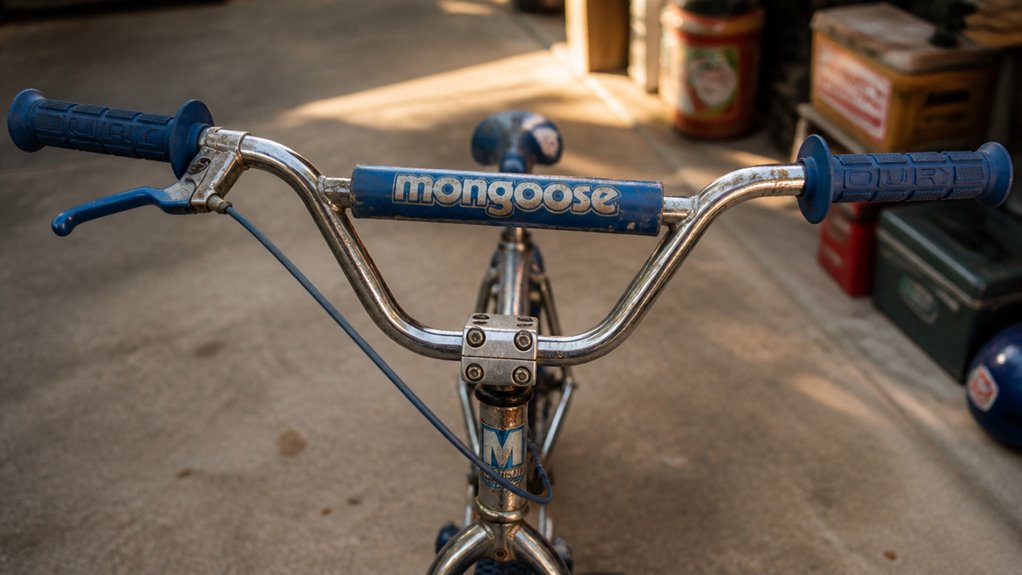
If you’re checking out BMX bars from the 1980s, you’ll find most ranged between 26 and 28 inches wide.
Freestyle bars typically sat around 27 to 28 inches to provide extra leverage and stability for tricks. Race bars were narrower, usually 25 to 26 inches, for quicker steering and lighter handling.
Bar width was measured end to end, excluding the standard 22.2 mm clamp diameter. There’s plenty more to explore about how these widths influenced riding styles and brand variations.
Key Takeaways
- Typical 1980s BMX bars ranged from 25 to 28 inches wide, with most common widths around 26 to 28 inches.
- Freestyle bars were generally wider, measuring near 27 to 28 inches for added control and leverage.
- Race bars were narrower, usually about 25 to 26 inches, prioritizing quicker steering and lighter handling.
- Bar widths were measured end-to-end, excluding the standard 22.2 mm clamp diameter.
- Replica bars today often reflect late-80s freestyle widths, typically between 27 and 29 inches.
How Wide Were BMX Bars in the 80s Compared to Today?

While BMX bars in the 1980s typically measured about 26 to 28 inches wide, today’s bars have grown wider, averaging around 30 inches. You’ll notice this increase reflects modern riders’ demand for enhanced stability and leverage.
Back then, bars were designed primarily for control and responsiveness, fitting the BMX styles and tricks of that era. If you’re comparing old-school bars to contemporary ones, understand that 1980s widths centered in the mid-to-upper 20s inches, with freestyle bars often near 27 to 28 inches.
Today, the wider dimensions provide improved handling, especially on bigger ramps and rough terrain. So, when choosing bars, keep in mind the evolution toward width for better performance, as it’s a key factor distinguishing vintage setups from current BMX geometry.
Typical 1980s BMX Bar Widths (Inches)
Understanding the typical width of 1980s BMX bars helps you appreciate how rider preferences and bike design shaped that era’s performance. Most bars ranged from 26 to 28 inches wide, striking a balance between control and maneuverability for the riding styles of the time.
The typical 1980s BMX bar width balanced control and maneuverability, reflecting the riding styles of that era.
Here’s what you should know about 1980s BMX bar widths:
Standard vintage bars commonly measured 26 to 28 inches across. Freestyle bars typically sat near 27 to 28 inches wide. Some BMX bars were narrower, around 25 inches, reflecting early variations.
Replica bars today often reflect 27 to 29 inches, capturing late-80s trends. Width was measured end to end, with a 22.2 mm clamp diameter standard.
This range was generally narrower than modern bars, emphasizing agility over stability. For riders carrying heavier loads, wider handlebars can improve control and stability, a factor that was less emphasized in the BMX designs of the 1980s.
Differences Between 1980s Freestyle and Race BMX Bars
Back in the 1980s, you’d typically find freestyle BMX bars measuring around 27 to 28 inches wide. This extra width gave riders the control they needed for tricks and vert riding, which was all the rage.
On the flip side, race BMX bars were designed differently. They were narrower and lighter, which helped optimize speed and responsiveness on the track.
Modern BMX bars often use 4130 chromoly steel for strength and performance, reflecting advancements from the 1980s designs.
Width Variations By Style
Because BMX riding demands vary, the width of handlebars in the 1980s shifted markedly between freestyle and race styles.
You’d typically find freestyle bars wider to offer better control during tricks, while race bars stayed narrower for speed and agility.
Understanding these differences helps you pick the right bar depending on your riding focus.
Freestyle bars usually measured 27 to 28 inches wide for enhanced leverage.
Race bars often ranged from about 25 to 26 inches, prioritizing lightweight and aerodynamics.
Wider freestyle bars improved stability on vert ramps and street riding.
Narrower race bars allowed faster, more responsive steering on tracks.
Some freestyle bars featured unique “YO” or yoke-style designs to aid trick execution.
These width differences reflect how BMX evolved to meet each style’s specific control needs.
Modern bike design similarly balances control and weight, as seen in aerodynamic design choices for performance optimization.
Control Needs For Freestyle
While both freestyle and race BMX bars from the 1980s shared certain design fundamentals, their widths and shapes directly responded to distinct control demands.
You’ll notice freestyle bars typically measured around 27 to 28 inches wide, wider than race bars, which often ranged closer to 25 to 26 inches.
This extra width gave you greater leverage and stability when performing tricks, stalls, and vert maneuvers, allowing precise bike control during complex movements.
Race bars, being narrower and lighter, prioritized aerodynamic positioning and quick handling over the robust control freestyle required.
Additionally, freestyle bars featured specific rises and sweeps to enhance grip comfort and maneuverability, adapting to the unique stresses of freestyle riding.
Similar to how tire clearance affects performance and control in fixie bike frames, the width and shape of BMX bars directly influence ride stability and handling precision.
Weight Differences In Bars
Consider how the weight of BMX handlebars influenced performance differences between 1980s freestyle and race bars.
Freestyle bars were typically heavier due to their wider dimensions and reinforced construction, designed to withstand the impact of tricks.
Race bars, on the other hand, prioritized lightness for speed and agility, often sacrificing some durability.
Freestyle bars weighed more because of added tubing thickness for durability.
Race bars used lighter materials and thinner tubing to reduce weight.
Heavier freestyle bars improved control during aerials and grinds.
Lighter race bars helped with quick handling and acceleration on the track.
Weight differences reflected the distinct needs of freestyle versus racing disciplines.
Understanding these nuances helps you appreciate why 1980s BMX bars varied beyond just width.
Additionally, just as BMX bars balance weight and durability, modern dirt bike grips utilize specialized materials to optimize control and comfort without compromising performance.
How 1980s BMX Bar Widths Were Measured?
When measuring 1980s BMX bar widths, you’ll find that the standard method involved recording the full width from end to end across the handlebar.
Measuring 1980s BMX bars meant capturing the full width straight across from tip to tip.
This means you measure straight across from the outermost tip on one side to the other, capturing the total span.
Typically, measurements were given in inches, with most bars ranging between 26 and 28 inches.
You’ll also notice that clamp diameter, usually 22.2 mm (7/8 inch), was a consistent reference point but not part of width measurement.
While some vintage BMX bars used different formats like center-width, the full end-to-end width remained the primary standard for clarity and consistency.
This approach helped riders and manufacturers compare bars easily across different styles and years in the 1980s BMX scene.
Why 1980s BMX Bars Were Generally Narrower Than Modern Bars?
Because BMX riding styles and bike technology evolved markedly over the decades, the narrower bars of the 1980s reflected the priorities and constraints of that era’s riders and manufacturers.
You’ll find that bars typically measured 26 to 28 inches wide, balancing control and weight with the materials available. BMX frames were smaller, and narrower bars suited tighter handling.
Manufacturing techniques limited tubing strength, discouraging overly wide bars that risked bending. Freestyle BMX was just emerging, so bar widths were still influenced by race designs.
Key reasons for narrower 1980s BMX bars include:
- Smaller frame geometries requiring compact bars
- Material strength constraints limiting bar width
- Early freestyle designs favoring moderate widths
- Less emphasis on wide leverage for tricks
- Manufacturing cost and technology restrictions
These factors kept bars narrower than today’s average 30-inch widths. Additionally, the evolution of ergonomic design and adjustable features in modern equipment reflects a broader trend toward accommodating diverse rider needs, similar to how adjustable seats and ergonomic comfort have become priorities in exercise bike design for taller users with adjustable seat positioning.
How 1980s BMX Bar Width Affected Riding Styles and Performance?
Although 1980s BMX bars were generally narrower than today’s, their width played a pivotal role in defining how riders handled their bikes during various disciplines.
When you rode with bars around 26 to 28 inches wide, you experienced a balance between control and maneuverability.
Narrower race bars allowed quicker steering and lighter handling, perfect for tight tracks.
On the other hand, freestyle bars, typically closer to 27 or 28 inches, gave you enhanced leverage and stability during tricks and vert riding.
This width range helped you maintain precision without sacrificing responsiveness.
The bar width directly influenced your ability to generate power, control balance, and absorb impacts, making it a key factor in performance tailored to the BMX style you favored throughout the decade.
Modern BMX bikes often feature 20-inch wheels, reflecting a continuation of design choices aimed at balancing stability and agility.
1980s BMX Bar Width Variations by Brand and Rider
Since rider preferences and brand design philosophies varied widely in the 1980s, BMX bar widths reflected a diverse spectrum tailored to specific needs.
BMX handlebar widths in the 1980s varied greatly, shaped by rider needs and brand philosophies.
You’ll find that top brands and riders chose widths based on discipline, control, and style. Freestyle riders favored wider bars for leverage, while racers preferred narrower, lighter setups for speed. Brand differences also emerged, reflecting unique design priorities and rider feedback.
GT and Haro often produced bars around 27 to 28 inches for freestyle dominance. Hutch leaned toward slightly narrower bars, closer to 26 inches, suiting racers.
Redline’s range spanned 25 to 27 inches, balancing freestyle and race needs. Some riders customized bars, trimming or widening to fit personal style.
Yoke-style bars, favored by vert riders, typically measured near 28 inches for control.
How Vintage BMX Bars Influence Modern Old-School Replica Designs?
Understanding the range of bar widths favored by 1980s riders and brands helps explain why modern old-school replica BMX bars often echo those dimensions.
You’ll notice many replicas stick to the 27 to 29-inch range, reflecting late-80s freestyle preferences for wider bars that offered better control and leverage.
These widths balance authenticity with practicality, capturing the feel vintage riders sought while accommodating today’s riding styles.
When you choose a replica bar, you’re getting more than just a look; you’re tapping into geometry shaped by decades of BMX evolution.
The rise and sweep angles also mirror original designs, maintaining the handling characteristics that made 80s bars unique.
Many vintage BMX frames used high tensile steel for durability, which influences the compatibility and design of bars in replica models today.
Frequently Asked Questions
What Materials Were Used to Make 1980S BMX Handlebars?
You’ll find that 1980s BMX handlebars were mainly made from chromoly steel, prized for its strength and light weight.
Some bars used high-tensile steel, which was heavier but more affordable.
Brands often preferred chromoly 4130 tubing for durability during tricks and racing.
Aluminum wasn’t common yet, so if you want authenticity, look for chromoly bars.
They deliver the classic balance of toughness and manageable weight that defined 80s BMX handlebars.
How Did BMX Bar Rise and Sweep Affect Rider Comfort?
You’ll find that BMX bar rise and sweep greatly influenced your comfort by shaping your wrist and arm position.
With rises often between 2 to 3 inches, bars lifted your grip, reducing wrist strain during tricks.
Sweeps around 9 to 12 degrees angled the bars back, promoting a natural hand position that eased fatigue.
This ergonomic design let you maintain control longer, making your rides and stunts more comfortable and precise.
Were 1980S BMX Bars Compatible With Modern Stems?
Yes, 1980s BMX bars are generally compatible with modern stems because they share the standard 22.2 mm (7/8 inch) clamp diameter.
However, you should check the stem’s clamp width and design, as some modern stems are wider or meant for different bar shapes.
Also, the rise and sweep differences might affect fit and comfort, so you might need to adjust or select stems designed for old-school geometry to guarantee proper handling.
How Did BMX Bar Width Influence Trick Difficulty in the 80S?
Think of BMX bar width like the wingspan of a bird. It directly affects your control and balance during tricks.
In the 80s, wider bars (around 27-28 inches) gave you more leverage and stability, making complex tricks easier to manage.
Narrower bars required quicker, sharper movements but offered less control.
Your choice influenced trick difficulty by balancing precision with stability. This helped you land smoother or challenge your limits depending on width.
What Were Popular BMX Handlebar Brands in the 1980S?
You’d find popular 1980s BMX handlebar brands like Haro, GT, and Redline leading the pack.
Haro set trends with their innovative designs, while GT offered sturdy bars favored by racers.
Redline’s bars were lightweight and precise, perfect for freestyle riders.
Other favorites included Hutch and Skyway, known for durability and style.
These brands shaped BMX culture, giving you options tailored to racing, freestyle, or vert riding back then.
How Wide Were BMX Handlebars in the 1980s?
If you’re curious, 1980s BMX bars typically ranged from 24 to 26 inches wide. This was significantly narrower than today’s 28 to 30 inches.
This narrower width gave riders more agility and control suited for the tight tricks and racing styles of that era.
Understanding these dimensions helps you appreciate how BMX design evolved, blending vintage precision with modern performance to suit diverse riding styles and preferences.