
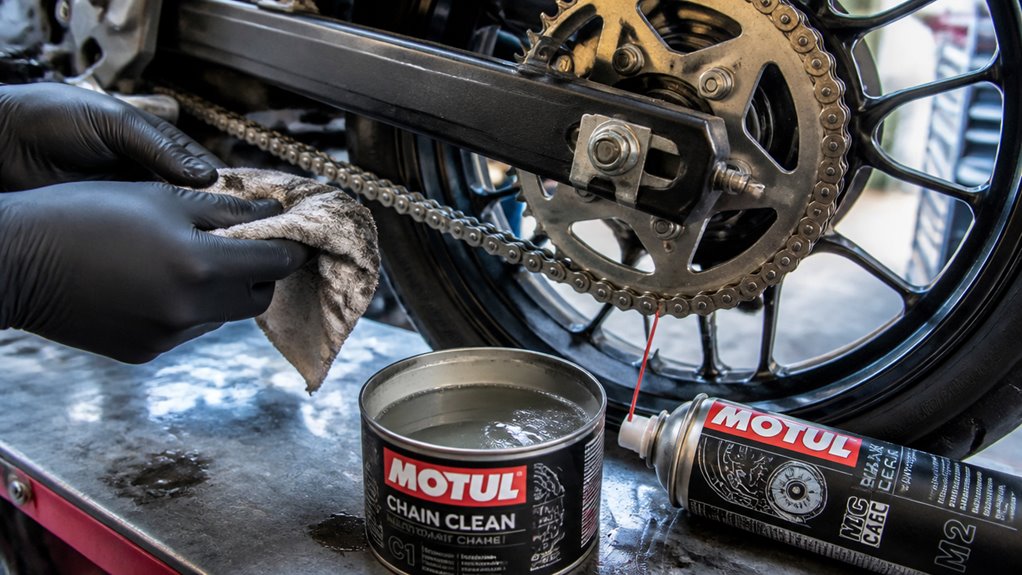
Chain cleaner and brake cleaner are not the same. You should use chain cleaner specially formulated to protect sealed chains and their rubber O-rings.
It uses milder solvents that preserve lubrication and seals. Brake cleaner contains harsh solvents that aggressively remove grease but can degrade rubber seals and strip essential lubrication, risking premature wear.
Always choose chain cleaner for routine chain maintenance to guarantee longevity and performance. Understanding their differences helps you apply each product correctly and safely.
Key Takeaways
- Chain cleaner uses milder solvents designed to preserve rubber O-rings and internal lubrication in sealed chains.
- Brake cleaner contains stronger, harsher solvents that aggressively remove grease but can damage rubber seals and strip lubrication.
- Chain cleaner is recommended for routine maintenance of sealed motorcycle and bicycle chains to protect seals and extend chain life.
- Brake cleaner is intended for heavy-duty degreasing of brake components and metal parts, not for regular chain maintenance.
- Using brake cleaner on chains risks seal damage and lubrication loss, requiring immediate re-lubrication if applied.
Chain Cleaner vs Brake Cleaner: Which Should You Use?

While both chain cleaner and brake cleaner can remove grease and grime effectively, you should choose chain cleaner for routine maintenance to protect your chain’s seals and lubrication.
Chain cleaners are formulated with solvents like kerosene that dissolve dirt without compromising nitrile O-rings and dynamic seals in chains.
In contrast, brake cleaners employ stronger solvents designed to strip brake fluid and heavy grease from metal parts but risk degrading rubber and plastic seals.
This makes them unsuitable for regular chain care.
If you use brake cleaner on your chain, you must re-lubricate immediately to prevent friction and corrosion.
Ultimately, chain cleaner preserves captured internal lubrication and seal integrity, ensuring longer chain life.
Brake cleaner’s aggressive chemistry compromises these critical components, limiting its use to brake assemblies and non-sealed metal parts.
For best results and safety, always follow proper disposal guidance to avoid environmental contamination when using these cleaners.
Understanding Chain Cleaner and Its Function
Choosing the right cleaner for your chain guarantees both effective grime removal and seal preservation.
Chain cleaners are specifically formulated to dissolve chain lube, dirt, and road grime without damaging the chain’s O-rings or rubber seals.
Chain cleaners effectively remove lube and grime while safeguarding your chain’s O-rings and rubber seals.
These seals, often made from nitrile, retain internal lubrication crucial for chain longevity.
Chain cleaners use gentler solvents, often kerosene-based, that clean thoroughly while preserving these dynamic seals.
Unlike harsher solvents, chain cleaners avoid stripping essential lubrication inside sealed links, preventing premature wear.
When you use a dedicated chain cleaner, you maintain the balance between removing external contaminants and protecting internal components.
This targeted formulation makes chain cleaners the preferred choice for routine maintenance on motorcycle and bicycle chains.
It ensures peak performance and extended chain life.
For best results, always ensure the chain is completely dry and free of contaminants before applying any lubricants or protective coatings to maintain optimal surface integrity.
How Brake Cleaner Differs From Chain Cleaner?
When it comes to cleaning, you might be wondering why brake cleaner and chain cleaner are so different. Brake cleaner is designed with stronger solvents that really strip away grease and brake fluid from metal parts. However, it’s important to note that these potent chemicals can actually damage rubber and plastic seals.
On the flip side, chain cleaners have milder formulations. They’re specifically made to protect nitrile O-rings and other dynamic seals found in chains. This is a big deal because using the wrong cleaner can lead to damage and reduce your chain’s lifespan. Unlike chain cleaners, brake cleaner’s strong solvents are not suitable for systems with rubber and plastic seals.
Chemical Formulation Differences
Because brake cleaner and chain cleaner serve different purposes, their chemical formulations reflect distinct priorities in solvent strength and material compatibility.
Brake cleaners typically contain stronger solvents like chlorinated hydrocarbons or acetone. These are designed to rapidly dissolve brake fluid, grease, and oil on metal parts.
In contrast, chain cleaners often use milder, petroleum-based solvents such as kerosene. These effectively remove grime without degrading nitrile O-rings or other rubber seals.
This difference is pivotal since chain cleaners must preserve internal lubrication and prevent seal damage during dynamic movement.
Brake cleaners’ aggressive solvents risk making rubber brittle and stripping necessary lubrication.
Chain cleaners prioritize chemical gentleness to maintain chain integrity.
Understanding these formulation distinctions helps you select the appropriate cleaner for your maintenance task.
This ensures component longevity and peak performance.
Many chain cleaners now incorporate biodegradable ingredients to minimize environmental impact while maintaining cleaning efficiency.
Seal Compatibility Issues
When you clean a chain, the solvent’s effect on seals is critical. These components maintain internal lubrication and protect against contaminants.
Brake cleaners often contain aggressive solvents that can degrade the nitrile or EPDM rubber seals used in chains. This can cause brittleness or premature failure.
Chain cleaners, however, are formulated to be gentler, preserving seal integrity and trapped lubrication. Using brake cleaner risks stripping essential grease, accelerating wear and corrosion.
Key considerations include:
- Dynamic chain seals require solvents that don’t cause swelling or cracking.
- Brake cleaner solvents can penetrate seals, compromising lubrication.
- Chain cleaners typically use petroleum-based solvents safer for rubber.
- Repeated brake cleaner use shortens seal lifespan.
- Proper seal compatibility guarantees chain durability and performance.
Choosing the right cleaner safeguards your chain’s seals and extends service life. Many brake cleaners are designed with acid-free chemistries to reduce damage on delicate surfaces but still may not be safe for rubber seals.
Why Chain Cleaner Is Safer for Sealed Chains?
Although both chain cleaner and brake cleaner dissolve grease effectively, chain cleaner is specifically formulated to protect the delicate seals found in sealed chains.
Sealed chains rely on nitrile O-rings and rubber seals that maintain internal lubrication vital for chain longevity. Chain cleaners use milder solvents, often kerosene-based, which remove external contaminants without degrading these dynamic seals.
Brake cleaners, in contrast, contain harsher chemicals that can penetrate or dry out seals, causing brittleness and accelerated wear.
By preserving the integrity of the seals and their trapped lubricant, chain cleaner minimizes friction and corrosion risks.
When you choose chain cleaner, you guarantee effective grime removal while safeguarding seal materials and the chain’s internal lubrication system. This extends the chain’s service life and maintains peak performance.
For optimal maintenance, it is also important to regularly drain and clean components, similar to how you would drain a motorcycle carburetor to prevent performance issues.
When to Use Chain Cleaner vs Brake Cleaner?
When it comes to maintaining your bike, knowing when to use chain cleaner versus brake cleaner is super important. You’ll want to use chain cleaner regularly for your sealed chains. It’s designed to protect those O-rings and keep everything lubricated without causing any damage.
On the other hand, brake cleaner is a bit more aggressive. It’s really best saved for brake parts and heavy-duty metal cleaning, especially when you don’t have to worry about seal compatibility.
Using the wrong cleaner can affect brake performance, so always choose the right product for the job.
Ideal Applications
Because chain cleaners and brake cleaners serve distinct purposes, choosing the right product depends on the specific maintenance task and component involved.
You should use chain cleaner when you want to preserve chain seals and internal lubrication while removing surface grime. Brake cleaner suits situations requiring aggressive removal of brake fluid, grease, or contaminants on brake assemblies and metal parts.
Consider these ideal applications:
Use chain cleaner for routine motorcycle or bicycle chain maintenance to protect O-rings and seals.
Apply brake cleaner for fast, thorough degreasing of brake discs, pads, and calipers.
Opt for chain cleaner when cleaning sealed chains to avoid damaging rubber components.
Employ brake cleaner to remove heavy, stubborn grease from metal surfaces.
Avoid brake cleaner on chains unless immediate re-lubrication follows.
Regular lubrication every 20 riding hours is essential to maintain chain performance after cleaning.
Material Compatibility
When selecting between chain cleaner and brake cleaner, understanding their chemical compatibility with various seal materials is essential to prevent damage.
Chain cleaners are formulated to be safe on nitrile O-rings and other rubber seals in chains, preserving the internal lubrication critical to chain longevity.
Brake cleaners, while effective at removing grease, often contain harsher solvents that can degrade dynamic seals like those on chains.
These solvents can make rubber brittle and accelerate wear. Since chain seals move with the links, they’re more vulnerable to aggressive solvents than static brake system seals made from EPDM.
Using brake cleaner on chains risks stripping essential lubrication and damaging seals.
Chain cleaners balance cleaning power with material preservation.
For routine chain maintenance, you should choose chain-specific cleaners to protect seals and maintain optimal-performing chain function.
Regular maintenance, including cleaning and inspection, is crucial to ensure chain retention and durability when using any cleaning product.
Maintenance Frequency
Regularly maintaining your chain guarantees peak performance and longevity. Knowing when to use chain cleaner versus brake cleaner is essential.
You should rely on chain cleaner for routine maintenance to protect seals and preserve lubrication. Brake cleaner is best reserved for heavy-duty degreasing or cleaning brake components, not for frequent chain use.
Consider these guidelines for maintenance frequency:
Use chain cleaner every 300-600 miles or after riding in wet, dirty conditions. Avoid brake cleaner on chains regularly to prevent seal degradation.
Apply brake cleaner only for quick removal of stubborn grime or brake parts. Always re-lubricate chains immediately after any brake cleaner use.
Prioritize dedicated chain cleaners for consistent, safe lubrication preservation. This approach guarantees optimal chain durability and performance without risking damage.
If grips become worn or loose, proper removal methods like using a grip adhesive remover can help maintain overall motorcycle safety and control.
Best Practices for Using Chain Cleaner and Lubricants Safely
Although chain cleaners and lubricants serve distinct roles, applying them correctly guarantees peak chain performance and longevity.
First, always use a chain cleaner specifically formulated for sealed chains to avoid damaging O-rings and rubber seals.
Apply the cleaner evenly, allowing it to penetrate grime without prolonged exposure that could degrade seals.
After rinsing and drying, immediately apply an appropriate chain lubricant to replenish internal grease and reduce friction.
Avoid brake cleaner for routine chain maintenance, as its harsh solvents can accelerate seal wear and corrosion.
Use lubricants designed for your chain type, such as motorcycle or bicycle-specific formulas, and apply sparingly to prevent attracting dirt.
Finally, wear gloves and work in a well-ventilated area to safeguard your safety while handling these chemical products.
Frequently Asked Questions
Can Brake Cleaner Damage Motorcycle Paint or Finishes?
Yes, brake cleaner can damage motorcycle paint or finishes because it contains strong solvents designed to strip grease and brake fluid.
If you spray it on painted or plastic surfaces, it may cause discoloration, dullness, or even softening of the finish.
To protect your bike’s appearance, avoid contact with painted areas or cover them before use.
Always rinse thoroughly if accidental overspray occurs.
Is It Safe to Use Chain Cleaner on Bicycle Derailleur Components?
Yes, you can safely use chain cleaner on bicycle derailleur components. Chain cleaners are formulated to remove grease and grime without damaging rubber seals or plastics commonly found on derailleurs.
However, avoid harsh solvents like brake cleaner, which can degrade these materials.
After cleaning, make sure you lubricate moving parts properly to maintain smooth function and prevent corrosion.
Using a bike-specific chain cleaner helps protect your components while keeping them efficient.
How Often Should I Replace Seals Damaged by Harsh Cleaners?
You should replace seals damaged by harsh cleaners as soon as you notice signs of wear, brittleness, or leakage.
Damaged seals compromise lubrication retention and allow contaminants in, accelerating chain or component failure.
Regular inspections after cleaning help you catch early seal degradation.
If you use aggressive solvents, check seals more frequently, typically every few months, and replace them immediately to maintain peak performance and avoid costly repairs.
Are There Eco-Friendly Alternatives to Traditional Chain Cleaners?
You can definitely find eco-friendly alternatives to traditional chain cleaners that perform like a dream while being gentle on the planet.
These biodegradable degreasers use plant-based solvents and water-soluble formulas, reducing toxic runoff and harsh fumes.
They effectively remove grime without compromising chain seals or lubrication.
Can Chain Cleaner Be Used for Cleaning Other Bike Parts Besides Chains?
You can use chain cleaner on some other bike parts, but it’s best to avoid delicate components like rubber seals or painted surfaces.
Chain cleaners are formulated to dissolve grease on metal parts without harming O-rings or seals. For components like derailleurs or cassette cogs, chain cleaner works well.
However, avoid applying it to brake parts or plastic where it might cause damage.
Always rinse thoroughly and re-lubricate chains afterward for peak performance.
Brake Cleaner or Chain Cleaner? Know the Difference
When maintaining your bike, choosing the right cleaner matters. Studies show that using brake cleaner on your chain can degrade seals by up to 30%, risking damage.
Chain cleaner is specifically formulated to remove grime without harming sealed components, making it the safer choice. Always use chain cleaner for regular maintenance and reserve brake cleaner for brake parts only.
Following these guidelines guarantees peak performance and longevity for your bike’s drivetrain.
1 thought on “Is Chain Cleaner the Same as Brake Cleaner: What to Know”