
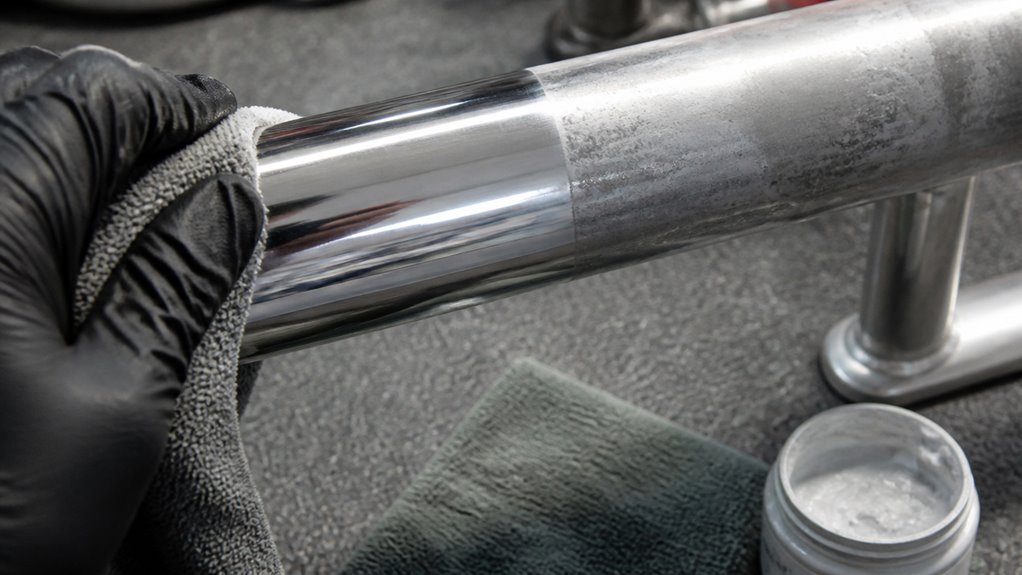
To remove oxidation from aluminum effectively, first identify its severity. Light oxidation responds well to mild acids like vinegar or baking soda paste. Moderate oxidation may require longer vinegar soaks or cream of tartar abrasives.
Heavy oxidation demands mechanical abrasion combined with aluminum-specific polishes. Always rinse thoroughly with filtered water, dry completely, and apply a protective coating immediately after to prevent recurrence. You’ll find detailed methods for each step and common pitfalls to avoid in a thorough approach ahead.
Key Takeaways
- Use mild acids like white vinegar or lemon juice with salt to dissolve light oxidation gently without damaging the aluminum surface.
- For moderate oxidation, soak items in undiluted vinegar for 30–60 minutes or apply cream of tartar paste for controlled abrasion.
- Employ chemical cleaners formulated for aluminum when household acids fail, following safety guidelines and thorough rinsing to protect the metal.
- Remove heavy oxidation using fine sandpaper or steel wool with consistent pressure, then polish with aluminum-specific metal polish for shine restoration.
- Immediately rinse, dry thoroughly, and apply a protective aluminum coating post-cleaning to prevent re-oxidation and extend surface longevity.
Identifying Aluminum Oxidation Severity

Start by carefully examining the aluminum surface to determine the oxidation severity. This guides your cleaning approach.
Begin by thoroughly inspecting the aluminum surface to assess oxidation severity, which directs your cleaning method.
Inspect for color changes: light oxidation appears as thin, whitish layers. Moderate oxidation shows denser, textured white patches.
Heavy oxidation manifests as thick, rough, and sometimes pitted surfaces. Use tactile assessment to differentiate; light oxidation feels smooth, while moderate to heavy feels coarse or gritty. Evaluate the oxidation’s extent, noting if it’s localized or widespread.
Assess the substrate’s condition, checking for corrosion or metal loss under heavy oxidation. Accurate identification helps you select appropriate removal methods. This optimizes cleaning efficiency and preserves aluminum integrity.
Document your findings systematically for process control. Tailor chemical or mechanical treatments precisely to the oxidation level.
For effective cleaning while preserving the aluminum surface, consider using pH-neutral cleaners designed to prevent fading and tarnishing during oxidation removal.
Light Aluminum Oxidation Removal Methods
After evaluating the oxidation severity on your aluminum surface, you can apply targeted methods to remove light oxidation effectively.
Use mild acids like white vinegar or lemon juice with salt to dissolve thin oxide layers without damaging the metal. Soaking for 15–20 minutes in straight vinegar softens superficial white patches.
Baking soda paste acts as a gentle abrasive, clearing oxidation while preserving surface integrity. These approaches guarantee controlled oxidation removal without aggressive abrasion or chemical exposure.
For more persistent grease and grime on aluminum, consider using a biodegradable degreaser formulated for gentle yet effective cleaning.
| Method | Application | Effectiveness |
|---|---|---|
| White vinegar | Soak 15–20 min or wipe diluted mix | Dissolves thin oxide layers |
| Lemon juice + salt | Apply paste, rub gently | Mild abrasion for light spots |
| Baking soda paste | Spread paste, scrub softly | Abrasive without metal damage |
| Diluted vinegar | Wipe with 1 tbsp vinegar in 2 cups water | Breaks down surface oxidation |
| Soft cloth/washcloth | Use with solutions | Prevents scratching |
Moderate Aluminum Oxidation Treatment Options
Address moderate aluminum oxidation by employing stronger acid treatments and targeted mechanical cleaning techniques.
You’ll want to use undiluted white vinegar to maximize the removal of textured oxidation. Soaking small items in straight vinegar for 30 minutes dissolves thicker oxide layers effectively. For heavily oxidized surfaces, extend soaking to 45–60 minutes.
Applying a cream of tartar paste (1 tbsp cream of tartar to 0.5 tbsp water) offers controlled abrasion without damaging the metal. Additionally, pairing a commercial aluminum brightener with a Scotch-Brite pad enhances the removal of moderate oxidation by combining chemical and mechanical actions.
- Soak in undiluted vinegar (30–60 minutes)
- Apply cream of tartar paste for localized treatment
- Use commercial brightener with Scotch-Brite pad
- Avoid harsh abrasives that risk surface damage
Because aluminum has higher corrosion resistance than steel, these treatments help preserve the metal’s surface integrity during cleaning.
Chemical Cleaners for Stubborn Aluminum Oxidation
When moderate oxidation resists vinegar and mechanical methods, chemical cleaners become necessary to tackle stubborn aluminum oxidation.
Chemical cleaners are essential for removing stubborn aluminum oxidation when vinegar and scrubbing fall short.
You’ll find acid-based cleaners at hardware stores specifically formulated to dissolve bulk oxide layers and loosen surface contaminants effectively.
Alkaline cleaners also work well for breaking down tenacious oxidation, especially on painted or bare aluminum.
Commercial oxidation removers outperform household acids like vinegar or lemon juice, targeting deep, entrenched oxide.
Follow manufacturer instructions closely, as dwell times typically range from 30 seconds to 2 minutes to avoid substrate damage.
Dilution ratios vary between 4:1 and 20:1 depending on oxidation severity.
Always guarantee proper handling and protective equipment.
Chemical treatments offer precise control over oxidation removal without aggressive abrasion, preserving aluminum’s integrity while restoring surface condition efficiently.
However, care must be taken since aluminum is prone to faster wear if its protective liner or surface is compromised during cleaning.
Mechanical Abrasion Techniques for Heavy Oxidation
Tackle heavy aluminum oxidation by employing mechanical abrasion methods that physically remove stubborn oxide layers. These techniques are essential when chemical cleaners alone can’t restore the surface. Choose the right abrasive tool to avoid unnecessary damage.
- Use 100-grit or finer sandpaper to aggressively remove thick oxidation without excessively scratching the metal.
- Employ steel wool or wire brushes for manual abrasion of rough oxide patches, balancing effectiveness with surface preservation.
- Apply metal polish formulated for aluminum alongside gentle scrubbing to lift tarnished areas during abrasion.
- Utilize an orbital buffer fitted with a foam cutting pad to efficiently strip heavy oxidation while restoring surface shine.
Each method demands controlled pressure and consistent motion to optimize removal and maintain aluminum integrity. For added protection during abrasive processes, consider using heavy-duty fabrics to safeguard surrounding components and surfaces.
Rinsing and Drying Aluminum After Cleaning
Consistently rinsing aluminum thoroughly after cleaning is vital to remove residual chemicals and prevent mineral deposits from tap water.
Thorough rinsing of aluminum after cleaning removes chemicals and prevents mineral buildup from tap water.
You should use clean, filtered water to avoid introducing minerals that can cause spotting or accelerate oxidation.
Continue rinsing until the water runs clear and there’s no slippery feel from leftover cleaning agents.
After rinsing, immediately dry the aluminum with a soft, non-abrasive towel to prevent water spots and reduce the risk of re-oxidation.
For intricate surfaces or crevices, utilize clean compressed air to expel moisture effectively.
If you’ve used chemical cleaners, a final wipe with acetone on a lint-free cloth guarantees removal of any remaining contaminants.
This rinsing and drying protocol is critical for preserving the aluminum’s surface integrity prior to any further treatment or use.
Additionally, selecting materials like high-carbon steel frame in bike construction demonstrates the importance of durable and corrosion-resistant components for long-lasting performance.
Applying Protective Coatings to Prevent Oxidation
Apply protective coatings immediately after cleaning to create a barrier that inhibits new oxidation on bare aluminum surfaces.
Once the surface is thoroughly rinsed and dried, you need to act quickly to maintain its integrity. Protective coatings reduce exposure to moisture and oxygen, essential factors in oxidation.
Follow these steps for optimal application:
- Make sure the aluminum surface is completely dry and free of contaminants.
- Apply a thin, even layer of aluminum-specific protective coating or sealant.
- Use a lint-free cloth or foam applicator to spread the coating uniformly.
- Allow the coating to cure as per manufacturer’s instructions before handling or exposure.
This process greatly prolongs the aluminum’s lifespan by minimizing oxidation onset. Protective coatings are especially important for metals like carbon steel, which are vulnerable to moisture and require ongoing maintenance to prevent corrosion.
Polishing and Restoring Shine to Aluminum Surfaces
Polishing aluminum surfaces requires careful technique to restore their original luster without causing damage.
Begin by applying a specialized aluminum polish in thin, even coats using a foam polishing pad.
Work in overlapping passes at medium speed to guarantee uniform abrasion and avoid uneven finishes.
After initial polishing, switch to a foam finishing pad to remove micro-marring and enhance surface smoothness.
Consistent pressure and controlled motion optimize shine restoration while preventing excessive metal removal.
Prior to polishing, make certain the aluminum is thoroughly cleaned and dried to avoid embedding contaminants.
Once polished, rinse with filtered water and dry completely to prevent water spots and re-oxidation.
This methodical approach maximizes reflectivity and surface integrity, essential for durable, high-quality aluminum finishes.
Additionally, ensuring the surface is free from contaminants before treatment improves paint adhesion and overall finish quality.
Common Aluminum Oxidation Removal Mistakes to Avoid
Although removing aluminum oxidation may seem straightforward, many common mistakes can compromise the metal’s integrity and appearance. Avoid these pitfalls to guarantee effective and safe cleaning:
- Using abrasive tools indiscriminately: Steel wool or coarse sandpaper can scratch and damage polished surfaces.
- Over-soaking in acidic solutions: Excessive dwell time with vinegar or commercial cleaners may etch or weaken aluminum.
- Neglecting thorough rinsing: Residual chemicals or minerals from tap water can cause spotting and accelerate re-oxidation.
- Skipping protective coatings post-cleaning: Failing to seal the surface immediately invites rapid oxide layer redevelopment.
- Choosing acid-free formulas can protect sensitive aluminum finishes while effectively removing oxidation without causing damage.
Frequently Asked Questions
Can Aluminum Oxidation Cause Health Risks if Ingested?
Aluminum oxidation itself isn’t highly toxic if ingested in small amounts, but you shouldn’t consume it deliberately.
The oxide layer is chemically stable and generally inert, so it poses minimal direct health risks.
However, ingesting large quantities of aluminum compounds, especially from contaminated sources, may lead to health issues like neurotoxicity or kidney problems.
You should avoid ingesting oxidized aluminum and follow safety guidelines to minimize exposure and ingestion risks.
How Often Should Aluminum Be Cleaned to Prevent Oxidation?
Think of your aluminum like a protective shield exposed to the elements. To prevent oxidation, you should clean it every three to six months, depending on exposure severity.
Frequent rinsing with filtered water and drying after cleaning minimizes mineral deposits and moisture buildup. In harsh environments, increase cleaning frequency to monthly.
Regular maintenance interrupts oxidation’s progression, preserving aluminum’s integrity and appearance through timely removal of surface contaminants and early oxide layers.
Are There Eco-Friendly Alternatives to Chemical Aluminum Cleaners?
Yes, you can use eco-friendly alternatives like white vinegar, lemon juice, and baking soda to remove aluminum oxidation effectively.
These mild acids and abrasives break down oxide layers without harsh chemicals.
For light to moderate oxidation, soak or apply these substances with a cloth or paste.
They minimize environmental impact while providing sufficient cleaning power.
Remember to rinse thoroughly with filtered water and dry immediately to prevent re-oxidation.
Can Oxidation Removal Damage Painted Aluminum Surfaces?
Yes, oxidation removal can damage painted aluminum surfaces if you use abrasive methods like sandpaper, steel wool, or harsh chemical cleaners.
These can strip or scratch the paint layer, compromising its protective qualities.
To avoid damage, use mild acids such as diluted vinegar or lemon juice and gentle cleaning tools like soft cloths.
Always test on a small area first and avoid prolonged soaking or aggressive mechanical abrasion that risks deteriorating the paint finish.
What Safety Gear Is Recommended During Aluminum Oxidation Removal?
You might think gloves and goggles are optional, but during aluminum oxidation removal, they’re essential.
Always wear chemical-resistant gloves to protect your skin from acids and abrasives.
Safety goggles shield your eyes from splashes and debris.
A respirator or mask prevents inhaling fumes or dust, especially when sanding or using chemical cleaners.
Ventilate your workspace well.
Neglecting this gear risks chemical burns, respiratory issues, or eye injuries.
Precise protection guarantees safe, effective cleaning.
How to Clean, Polish, and Protect Oxidized Aluminum
When tackling aluminum oxidation, remember: prevention is better than cure. You’ve seen how light methods suit mild oxidation, while stubborn cases need chemical or mechanical action.
Skipping steps like thorough rinsing or protective coatings only invites oxidation back faster. Think of your aluminum as a delicate machine; neglect invites rust’s slow dance.
By applying these techniques precisely, you’ll restore and preserve your aluminum’s integrity. This ensures it stays functional and visually sharp for years to come.