

You can safely use a 3-wheel mobility scooter if you understand its sharper turns and narrower base may make it less stable, especially on uneven terrain or quick turns.
Stay cautious by slowing down before corners, avoiding abrupt moves, and choosing flat, smooth surfaces.
Use scooters with anti-tip wheels and maintain them regularly for added security.
If you have balance concerns or often face rough ground, a more stable option might suit you better.
Here’s what else to keep in mind for confident riding.
Key Takeaways
- 3-wheel mobility scooters offer greater maneuverability but have a narrower base, increasing tipping risk, especially on uneven or rough terrain.
- Anti-tip wheels and low center of gravity designs improve stability and safety during sharp turns or on uneven surfaces.
- They are safest on flat, smooth surfaces like sidewalks or indoor areas and less ideal for steep slopes or rough terrain.
- Users should control speed, avoid abrupt turns, and plan routes to reduce tipping risks and enhance stability.
- Regular maintenance of brakes, tires, and safety features is essential to ensure reliable and safe scooter operation.
3-Wheel vs 4-Wheel Scooters: Safety Comparison
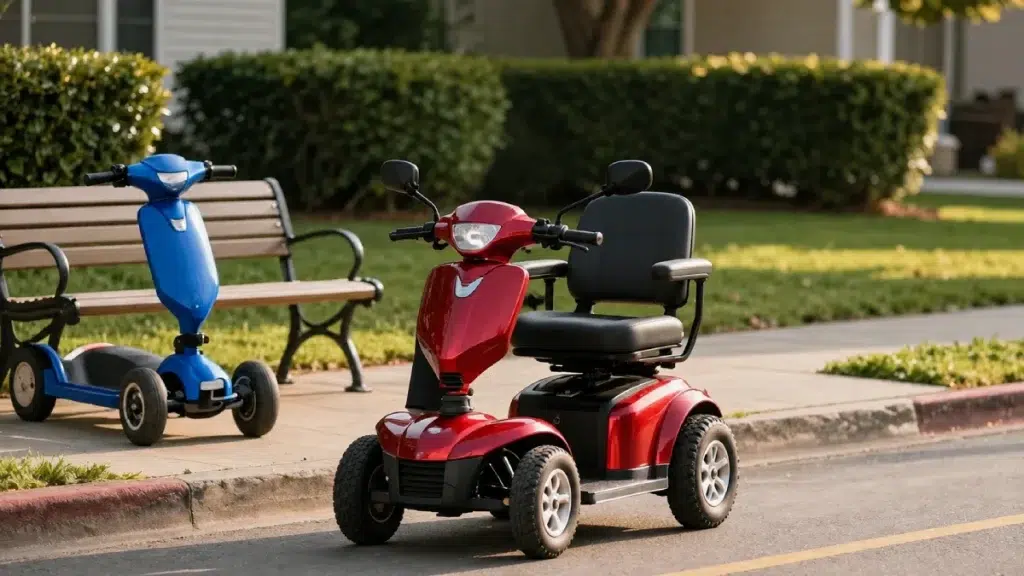
When choosing between 3-wheel and 4-wheel mobility scooters, understanding their safety differences can help you make the best decision for your needs.
A 3-wheel scooter offers greater maneuverability, making it easier to navigate tight spaces. This is great if you move around crowded or compact areas.
However, this comes with a trade-off: 3-wheel scooters tend to have a narrower base, which can affect stability. This is especially true on uneven terrain or during sharp turns.
In contrast, 4-wheel scooters provide a wider, more stable platform. This reduces the risk of tipping but sacrifices some agility.
Whichever you pick, prioritize proper maintenance and follow the manufacturer’s guidelines. Use the scooter within its design limits to stay safe and confident every time you ride.
Many 3-wheel scooters also incorporate anti-tip wheels and suspension to enhance stability and safety on varied terrains.
Why 3-Wheel Scooters Can Be Less Stable?
Choosing a 3-wheel scooter means you gain better maneuverability, especially in tight spaces, but it also means accepting some trade-offs in stability.
Opting for a 3-wheel scooter enhances maneuverability but requires mindful handling due to reduced stability.
The three-point design narrows your scooter’s base, making it easier for the center of gravity to shift outside your support zone. This can increase tipping risk, especially during sharp turns or on uneven ground.
You might find yourself feeling uneasy when negotiating curbs or slopes.
You may also be worried about sudden movements causing imbalance.
Additionally, you might feel hesitant on rough or uneven surfaces.
Understanding these challenges helps you use your scooter safely.
Staying aware of your environment, managing speed, and making smooth turns will support your stability and confidence every time you ride.
Many three-wheel models, like the Pride Mobility Travel Pro Premium, feature a sharp turning radius which enhances maneuverability but requires caution to maintain balance.
Best Terrain for 3-Wheel Mobility Scooters
Smooth, flat surfaces offer the safest and most comfortable terrain for your 3-wheel mobility scooter. These conditions minimize tipping risks and help maintain control, allowing you to move confidently.
Rough, uneven, or wet terrains increase instability and can lead to accidents, so it’s best to avoid them when possible. Knowing where your scooter performs best helps you plan safer routes.
| Terrain Type | Safety Notes |
|---|---|
| Smooth Pavements | Ideal for stability and comfort |
| Uneven Grounds | Increases tipping risk |
| Wet or Slippery | Reduces traction, avoid if possible |
Sticking to flat, well-maintained paths keeps you safer and guarantees a smoother ride every time. The use of lightweight components in many modern scooters also enhances maneuverability on these preferred surfaces.
How Speed and Turning Affect 3-Wheel Scooter Safety?
Maneuvering your 3-wheel mobility scooter safely means paying close attention to how fast you go and how sharply you turn.
These scooters have a narrower base, so speeding or making sudden turns can easily tip you over.
With a narrower base, sudden turns or speeding can quickly cause your scooter to tip over.
To keep yourself secure, always slow down before corners and avoid abrupt steering.
Remember, your safety depends on controlling your speed and turning gently.
Here’s what to keep in mind:
Slow, steady speeds give you time to react and prevent falls.
Sharp or sudden turns increase tipping risk, especially on uneven ground.
Planning your route helps you avoid tight spots where quick turns are necessary.
Additionally, scooters with anti-tip wheels provide enhanced stability, especially when navigating turns or uneven terrain.
Safety Features That Reduce Tipping Risk
You know, if you want to cut down on tipping risks with your 3-wheel scooter, it’s a good idea to go for models that have anti-tip wheels and a low center of gravity. These features really help keep you stable while you’re riding.
And don’t forget about maintenance! Keeping your scooter in tip-top shape ensures that the brakes, tires, and other parts are working properly. This is super important for your overall stability.
Regular checks and simple adjustments can really make a big difference in your safety every time you take it out for a spin. So, take a moment to give it some love, and you’ll be set for a safer ride!
Also, before transporting your scooter, it’s essential to inspect and clean scooter to maintain its safety features and prevent damage during transit.
Anti-Tip Wheel Benefits
Frequently, anti-tip wheels serve as a crucial safety feature that can markedly reduce the risk of tipping on a 3-wheel mobility scooter.
They provide extra stability by preventing sudden falls during sharp turns or uneven terrain, helping you feel more secure and confident while you move.
These small but effective additions can make a big difference in your daily mobility experience.
With anti-tip wheels, you’ll benefit from:
- Enhanced balance that prevents frightening falls
- Increased confidence to navigate varied surfaces safely
- Peace of mind knowing your scooter resists tipping hazards
In addition, regular maintenance and timely resets using the mobility scooter reset button can ensure all safety features, including anti-tip wheels, function properly.
Low Center Gravity
Although 3-wheel mobility scooters offer great maneuverability, their narrower base can make tipping a concern. A low center of gravity helps keep you steady.
By positioning heavy components like the battery and motor close to the ground, manufacturers lower the scooter’s center of gravity. This improves stability during turns and on uneven surfaces.
This design helps prevent the scooter from tipping when you navigate tight corners or encounter small obstacles. Still, it’s important to stay aware of your speed and avoid sudden movements.
Even a low center of gravity can’t eliminate all tipping risks. Choosing a model with this feature and using it carefully gives you greater confidence and safety while moving around. Additionally, scooters with anti-tip wheels and reliable braking systems provide enhanced protection against tipping hazards.
Regular Maintenance Importance
Keeping your 3-wheel mobility scooter in top condition plays a big role in reducing tipping risks and enhancing overall safety.
When you commit to regular maintenance, you’re protecting yourself from unexpected accidents and ensuring smooth, stable rides every time.
Here’s what you should focus on:
- Check brakes and tires regularly to maintain reliable stopping power and traction.
- Inspect anti-tip wheels and frame integrity for stability and support.
- Keep battery and electrical systems in good shape to avoid sudden power loss.
Neglecting these tasks can increase the chance of tipping or losing control.
Taking a few moments for upkeep not only prolongs your scooter’s life but also gives you peace of mind knowing it’s safe to use.
Your safety depends on how well you care for your scooter.
Additionally, maintaining the battery generator system ensures continuous power and reduces downtime, which is crucial for extended mobility and safety.
Matching 3-Wheel Scooters to Your Needs
When it comes to safety, picking the right 3-wheel scooter is crucial. You want one that not only matches your weight but also suits the environments you navigate every day. If you use a scooter that’s beyond its weight limit or take it over rough terrain, it can really increase the risk of tipping over. Models with features like motor power and stability enhancements are better equipped to handle inclines and reduce safety risks.
User Weight Compatibility
Selecting a 3-wheel mobility scooter that matches your weight is essential for both safety and performance. Using a scooter beyond its weight limit increases the risk of tipping and reduces your control, making every ride less secure.
To protect yourself and maximize comfort, always check the manufacturer’s weight recommendations before deciding.
Keep these key points in mind:
Overloading your scooter can strain its frame and brakes, leading to potential failures. A properly matched scooter guarantees smoother handling and better battery efficiency.
Feeling confident and stable while riding helps you enjoy greater independence and peace of mind.
Additionally, choosing a scooter with a suitable weight capacity & durability ensures long-term safety and reliability.
Environment Suitability
Although 3-wheel mobility scooters offer excellent maneuverability, their safety and performance depend heavily on matching the scooter to the environments you’ll commonly navigate.
If you mostly travel on flat, smooth surfaces like sidewalks or indoor spaces, a 3-wheel scooter can serve you well.
However, if you face uneven terrain, steep slopes, or crowded areas, you’ll need to proceed with caution or consider a more stable model.
Wet or rocky conditions increase tipping risks, so avoid them when possible.
Always plan your routes to minimize sharp turns on rough ground and reduce speed for better control.
Matching your scooter to your typical environment helps you stay safe while enjoying its maneuverability.
This ensures it supports your mobility without compromising stability.
Essential Maintenance for 3-Wheel Mobility Scooters
When you keep your 3-wheel mobility scooter well-maintained, you reduce the risk of accidents and extend its lifespan.
Regular checks help you feel confident and safe every time you ride.
Prioritize inspecting key parts to avoid unexpected breakdowns or hazards.
Focus on these essentials:
Brakes and tires: Make certain they respond well and have good tread for stable control.
Battery health: Charge properly and replace when performance drops to avoid sudden stops.
Frame and screws: Tighten loose parts to prevent wobbling or instability during use.
Taking these steps shows you care about your safety and independence.
With routine maintenance, your scooter stays reliable, letting you move freely without worry.
How Your Riding Habits Affect Scooter Safety
Your riding habits really impact how safe your 3-wheel scooter is. You know, things like controlling your speed and making smooth turns can make a big difference.
Plus, staying aware of obstacles around you? That’s crucial for preventing tipping and collisions.
Speed Control Importance
Since speed directly impacts how well you can control your 3-wheel mobility scooter, keeping your pace slow and steady is essential for your safety.
Riding too fast increases the risk of tipping or losing control, especially on uneven surfaces. You want to feel confident, not rushed, every time you use your scooter.
Remember, your speed affects how quickly you can react to obstacles or changes in terrain. Here’s why controlling your speed matters:
It helps prevent sudden jerks that can tip your scooter, protecting your balance. Slower speeds give you time to plan safe routes, reducing anxiety. Maintaining a steady pace keeps you in control, so you can enjoy your independence safely.
Smooth Turning Techniques
Mastering smooth turning techniques plays a crucial role in keeping you safe while using a 3-wheel mobility scooter.
Because these scooters have a narrower base, sharp or sudden turns can easily shift your center of gravity, increasing the risk of tipping.
To stay stable, slow down well before you turn and steer gently, avoiding abrupt movements.
Practice gradual, wide turns when possible, especially on uneven or sloped surfaces.
Remember, maintaining control means anticipating your path and adjusting speed accordingly.
Smooth steering not only reduces tipping chances but also helps you navigate tight spaces confidently.
By adopting these habits, you’ll protect yourself from falls and guarantee a safer, more comfortable ride every time.
Your careful approach directly impacts your safety and the scooter’s performance.
Obstacle Awareness Benefits
Smooth turning helps keep you balanced, but it’s only part of staying safe on a 3-wheel mobility scooter.
Being aware of obstacles around you protects you from unexpected bumps or tipping hazards. When you stay alert and adjust your speed and route, you build confidence and reduce risks.
Remember, your riding habits directly affect safety.
Keep these in mind:
Scan ahead for uneven surfaces, curbs, and debris to avoid sudden stops or swerves.
Slow down near tight spaces or crowded areas to maintain control and reaction time.
Use your scooter’s lights and reflective gear in low visibility to stay visible to others.
Protective Gear and Accessories for Safer Riding
You’ll often find that wearing appropriate protective gear markedly boosts your safety when riding a 3-wheel mobility scooter. A helmet offers essential head protection, especially since these scooters can tip more easily during sharp turns.
Wearing the right protective gear, like a helmet, significantly enhances safety on 3-wheel mobility scooters.
Wearing closed-toe shoes with good grip helps you maintain control when operating the scooter or braking. Reflective clothing or accessories increase your visibility, particularly in low-light conditions or busy environments.
Consider gloves to improve your grip and protect your hands. Additionally, accessories like anti-tip wheels and reliable lighting systems enhance scooter stability and visibility, reducing accident risks.
Regularly check these features to make certain they’re in good working order. By choosing the right gear and accessories, you take practical steps to protect yourself and enjoy safer rides every time.
When a 3-Wheel Scooter Might Not Be the Best Choice?
Although 3-wheel scooters offer great maneuverability, they mightn’t be the best fit if you have severe balance issues or need extra stability on uneven terrain.
Your safety depends on choosing the right scooter for your needs and environment.
If you often face challenging conditions, a 3-wheel scooter could increase your risk of tipping or losing control.
Consider avoiding a 3-wheel scooter if you navigate rough, uneven surfaces frequently.
If you have difficulty maintaining balance during turns, or if you require a more stable base for peace of mind, a 4-wheel scooter or alternative mobility aid might better support your comfort and safety.
Always match your scooter choice to your personal needs and surroundings to stay secure and confident.
Frequently Asked Questions
How Do Weather Conditions Impact the Safety of 3-Wheel Scooters?
Weather conditions can markedly affect your 3-wheel scooter’s safety.
Wet or icy surfaces reduce traction, increasing your risk of slipping or tipping.
Muddy, uneven, or rocky terrain can make controlling your scooter harder and raise instability.
You’ll want to avoid riding in heavy rain or snow and be extra cautious on slopes or ramps.
Always check weather forecasts and plan your route to stay safe in tricky conditions.
Can 3-Wheel Scooters Be Used Safely in Crowded Urban Areas?
If you find yourself negotiating busy sidewalks, you can use a 3-wheel scooter safely, but you’ll need to stay extra alert.
Their maneuverability helps in tight spots. Yet crowded urban areas demand slow speeds, careful turns, and constant attention to pedestrians and obstacles.
Wearing reflective gear and using lights boosts your visibility. Regular maintenance and planning your route to avoid heavy traffic can make your ride smoother and safer in bustling settings.
What Are the Best Practices for Storing a 3-Wheel Mobility Scooter?
To store your 3-wheel mobility scooter safely, keep it in a dry, covered area away from extreme temperatures and moisture to protect its battery and electronics.
Charge the battery regularly, even when not in use, to maintain battery health.
Clean the scooter before storage, check tire pressure, and make sure brakes work well.
Avoid placing heavy objects on it, and cover it with a breathable cloth to prevent dust buildup.
Regular maintenance helps it stay reliable.
How Often Should the Battery Be Charged and Replaced for Safety?
Did you know that regularly charging your scooter’s battery can extend its life by up to 30%? You should charge the battery after every use or at least once a week, even if unused, to keep it healthy.
Replace the battery every 12-24 months, depending on usage and performance. Staying on top of charging and replacing guarantees your scooter runs safely and reliably, preventing unexpected power loss while you’re out and about.
Are There Specific Training Programs for New 3-Wheel Scooter Users?
Yes, there are specific training programs designed for new 3-wheel scooter users.
These programs help you learn safe handling, turning, and speed control tailored to your scooter’s unique stability features.
They often cover obstacle navigation and maintenance basics, boosting your confidence and safety.
Check with local mobility centers or healthcare providers; they often offer classes or one-on-one sessions.
Don’t hesitate to seek training; it makes your rides safer and more enjoyable.
Improve Your Safety on a 3-Wheel Scooter
You’ll want to know that studies show 3-wheel scooters are about 30% more prone to tipping than 4-wheel models.
That doesn’t mean they’re unsafe; it just means you need to ride carefully, avoid sharp turns, and keep up with maintenance.
By choosing the right terrain and using safety gear, you can enjoy the freedom they offer while staying secure.
Remember, your habits and awareness make all the difference in staying safe on a 3-wheel scooter.