
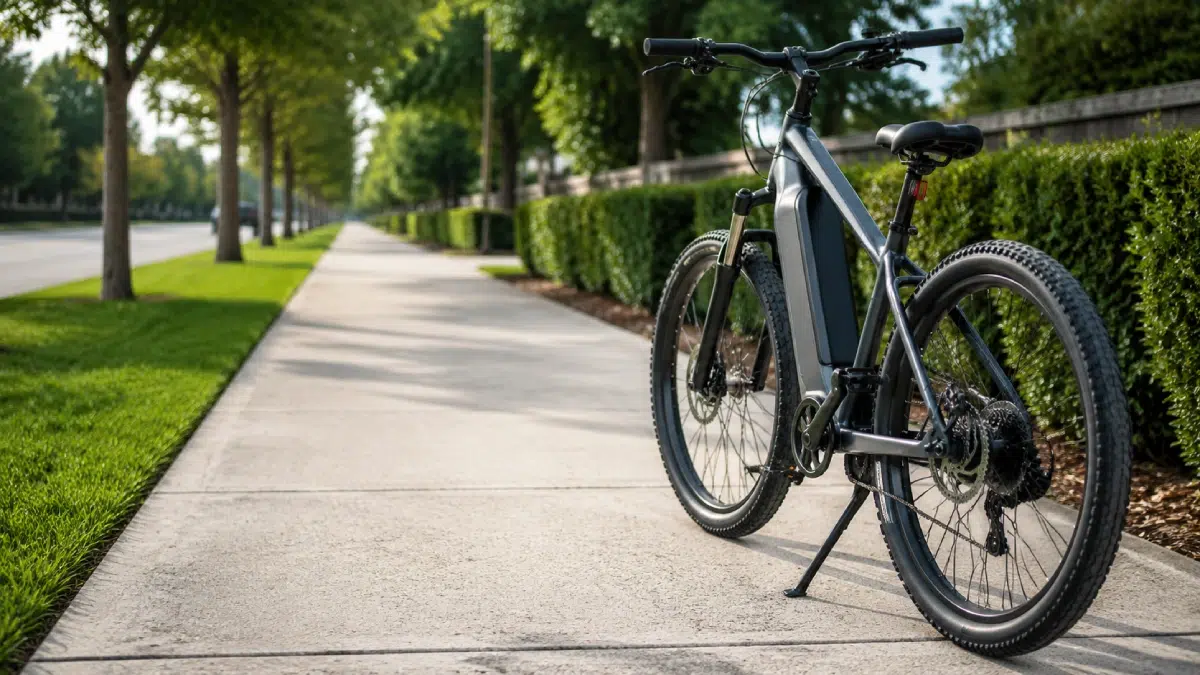
You can ride your electric bike on sidewalks only if local or state laws explicitly permit it, as rules vary by location and e-bike class.
Usually, Class 1 and 2 e-bikes (limited to 20 mph assistance) have more sidewalk privileges. Class 3 models are often banned due to safety concerns.
Pay close attention to posted signage and local speed limits. Stricter local ordinances often override broader laws. Understanding these nuances will help clarify your legal riding options.
Key Takeaways
- Sidewalk riding rules for e-bikes vary widely by location and are governed primarily by local and state laws, not national standards.
- Class 1 and 2 e-bikes (20 mph max assist) are more likely allowed on sidewalks than Class 3 e-bikes (28 mph max assist).
- Many cities ban e-bike sidewalk use outright or restrict it with posted signs, especially in busy urban or business districts.
- When allowed on sidewalks, riders must yield to pedestrians, maintain low speeds (typically below 10 mph), and follow local safety rules.
- If sidewalk riding is prohibited, use bike lanes or roads where e-bike use is generally permitted and safer.
What Are the Basic Rules for Riding E-Bikes on Sidewalks?
When riding an e-bike on sidewalks, you need to understand that the rules vary widely depending on your exact location, as local and state laws govern access rather than any nationwide standard.
E-bike sidewalk rules differ greatly by location, governed mainly by local and state laws, not a national standard.
Most states restrict e-bikes from sidewalks, treating them primarily as pedestrian spaces. Some allow sidewalk use only under specific conditions or in less congested areas.
Local ordinances can be even stricter, especially in downtown or business districts. Posted signs may override broader regulations.
To stay compliant, you must check city, county, and state codes closely. Remember, many areas require you to yield to pedestrians and may impose speed limits or other restrictions.
When in doubt, opting for bike lanes or roads instead of sidewalks is the safest legal choice. Additionally, safety gear like helmets and lighting may be required depending on local laws, so always verify helmet and lighting requirements before riding.
How Do E-Bike Classes Affect Sidewalk Riding Laws?
E-bike classes play an essential role in determining where and how you can ride on sidewalks. Laws often hinge on the bike’s specifications and capabilities.
Typically, Class 1 and Class 2 e-bikes, limited to 20 mph assistance, face fewer restrictions and may be allowed on sidewalks where permitted.
Conversely, Class 3 e-bikes, which assist up to 28 mph, are usually prohibited due to higher speeds and safety concerns.
Legal frameworks often reference these classifications alongside local speed limits and motor types to assess suitability for sidewalk use.
To comply, you must verify if your location’s regulations adopt these class definitions.
Consider any additional conditions, such as yielding to pedestrians or limits in high-traffic zones.
Ignoring class distinctions risks fines and endangers pedestrian safety.
Many jurisdictions also prohibit sidewalk riding to protect pedestrians, with some states allowing exceptions under specific speed limits or conditions, reflecting variations in sidewalk riding laws.
Which States and Cities Allow E-Bikes on Sidewalks?
Although regulations vary widely, you’ll find that only a handful of states and cities explicitly allow riding e-bikes on sidewalks under specific conditions.
Florida, for example, permits sidewalk riding statewide but often requires riders to yield to pedestrians.
Colorado allows Class 1 and 2 e-bikes on sidewalks adjacent to roads with speed limits above 20 mph, reflecting a nuanced approach tied to local traffic conditions.
California generally restricts sidewalk use except in limited local exceptions.
New York City bans sidewalk riding outright, enforcing pedestrian right-of-way and speed limits on streets instead.
Remember, local ordinances can impose stricter rules than state laws, especially in dense urban zones.
Before riding, you should always verify city and county codes, as posted signage may override broader regulations, ensuring compliance and pedestrian safety.
It is also important to note that many jurisdictions require riders to maintain a low speed, typically around 6-10 mph, when riding on sidewalks to enhance safety for pedestrians.
When Are E-Bikes Allowed or Restricted on Sidewalks Locally?
You’ve got to keep in mind that local sidewalk rules can often take precedence over state laws, especially in busy urban areas where there are lots of pedestrians.
It’s really important to pay attention to your e-bike’s class, too. For instance, Class 1 and Class 2 bikes might be allowed in places where Class 3 bikes are off-limits.
And don’t forget, if you’re out in rural or suburban areas, the sidewalk policies are usually a lot more relaxed compared to the stricter rules you’ll find in the city.
Many cities also impose sidewalk speed limits and may require riders to yield to pedestrians while maintaining a safe clearance.
State Vs. Local Laws
When maneuvering sidewalk regulations, it’s essential to recognize that local laws often impose stricter rules than state statutes, especially in densely populated or commercial areas.
You should always verify city or county codes before riding your e-bike on sidewalks.
Here are key points to take into account:
- Local ordinances may outright ban e-bikes on sidewalks, even if state law permits limited use.
- Signage in specific zones can override general sidewalk rules, restricting or allowing access.
- Business districts and high-pedestrian corridors commonly enforce tougher restrictions to protect foot traffic.
- Enforcement varies but can include fines, so understanding local policy prevents legal issues.
Additionally, many jurisdictions specifically exclude electric scooters and other micro-mobility devices from bicycle-specific laws, creating a legal gray area for e-bike sidewalk use.
Ultimately, you’ll want to prioritize official local guidance over broader state policies to guarantee compliance and safety.
E-Bike Class Impact
Since e-bike regulations often hinge on classification, understanding how Class 1, 2, and 3 e-bikes differ is essential for determining sidewalk access.
Local policies frequently restrict Class 3 e-bikes due to their higher top speed. Class 1 and 2 bikes may be allowed under specific conditions. These distinctions influence whether you can legally ride on sidewalks as municipalities tailor rules based on safety and traffic concerns.
| E-Bike Class | Max Assisted Speed | Sidewalk Access Policy |
|---|---|---|
| Class 1 | 20 mph | Often allowed, especially in low-speed zones |
| Class 2 | 20 mph | Allowed in some areas, restrictions apply |
| Class 3 | 28 mph | Usually prohibited on sidewalks due to speed |
Check local codes carefully. Classification directly impacts your sidewalk riding rights. Additionally, understanding the range limitations and battery capacities of e-bikes can help riders choose appropriate models that comply with local regulations and usage patterns.
Urban Versus Rural Rules
Although e-bike sidewalk regulations vary widely, urban areas typically impose stricter restrictions compared to rural or suburban settings due to higher pedestrian traffic and safety concerns.
When evaluating local rules, you should consider:
- Urban zones often ban e-bikes on sidewalks, especially in business districts, prioritizing pedestrian safety.
- Rural or suburban areas may allow sidewalk riding, particularly where roads have higher speed limits or lack bike lanes.
- Local ordinances sometimes require e-bikes to yield to pedestrians or limit speeds on sidewalks.
- Posted signage can override general rules, so always check for specific instructions at your location.
To navigate these differences, consult city, county, and state codes carefully.
When in doubt, opt for bike lanes or roads to avoid legal conflicts and promote safety.
Additionally, many jurisdictions prohibit sidewalk riding due to the increased risk of collision with pedestrians and limited reaction time at typical e-bike speeds.
How Do Speed Limits and E-Bike Classes Affect Sidewalk Access?
How exactly do speed limits and e-bike classifications shape your ability to ride on sidewalks?
Your access often depends on both factors, which local laws use to balance safety and mobility.
Typically, Class 1 and Class 2 e-bikes, capped at 20 mph assisted speed, have more sidewalk privileges where allowed.
In contrast, Class 3 e-bikes, capable of 28 mph, face stricter bans due to higher risk.
Some jurisdictions tie sidewalk permissions to adjacent road speed limits. For example, they may permit sidewalk riding only if the road speed exceeds 20 mph.
Authorities rely on e-bike class labels and manufacturer specs to enforce these rules.
Understanding your e-bike’s class and the local speed regulations is pivotal.
These policies aim to protect pedestrians by limiting faster e-bikes on sidewalks.
Additionally, torque sensor technology in many e-bikes provides smoother, more natural power delivery, enhancing rider control and safety on mixed-use paths like sidewalks through responsive pedal-assist.
What Safety Tips Should You Follow When Riding on Sidewalks?
You should always prioritize pedestrian safety when riding an e-bike on sidewalks, as these spaces are primarily designed for foot traffic.
To navigate sidewalks responsibly, follow these key safety tips:
- Yield to pedestrians. Always give right of way to those on foot and slow down noticeably near crowded areas.
- Use audible signals. Ring a bell or call out before overtaking to alert pedestrians and avoid surprises.
- Maintain a safe speed. Keep your speed low, ideally below 10 mph, to reduce collision risk and comply with local limits.
- Stay vigilant and predictable. Watch for obstacles, keep a steady path, and respect posted signage on sidewalk use.
Additionally, securing your e-bike with high-quality locks when parked helps prevent theft and ensures your vehicle remains safe.
How Are E-Bike Sidewalk Rules Enforced and What Are the Penalties?
Enforcing e-bike sidewalk rules usually falls to local law enforcement. They keep an eye out by patrolling areas and responding to complaints from the community. It’s not just a casual glance, though—officers are actively looking for compliance with the rules.
When it comes to penalties, they can really vary. Fines typically range from $50 to $500. The specific amount you might face can depend on a few factors, like where you are, the class of your e-bike, and whether you’ve had previous offenses.
To prevent theft or damage while transporting your e-bike, it’s important to properly lock the bike rack to your vehicle before riding.
Enforcement Methods Overview
Although enforcement approaches vary widely by jurisdiction, authorities typically rely on a combination of patrols, surveillance, and community reporting to monitor e-bike sidewalk compliance.
When you ride, enforcement often involves:
- Targeted patrols by local police or transportation officers focusing on high-pedestrian areas.
- Use of video surveillance or mobile cameras to identify violations.
- Encouraging pedestrians to report unsafe e-bike sidewalk use via hotlines or apps.
- Collaboration with community groups to increase awareness and self-policing.
These methods aim to balance pedestrian safety with e-bike rider rights.
Enforcement intensity depends on local policy priorities, sidewalk congestion, and documented incidents.
Knowing these mechanisms helps you understand how regulations are upheld and why adherence matters beyond just avoiding penalties.
Common Penalty Types
Enforcement efforts rely heavily on penalties to encourage compliance with e-bike sidewalk regulations.
When authorities catch you riding where it’s prohibited, they typically issue fines, which can range from $50 to $500 depending on the jurisdiction and severity of the violation.
Some areas impose escalating penalties for repeated offenses to deter habitual noncompliance.
Besides monetary penalties, law enforcement may confiscate your e-bike temporarily in rare cases or require mandatory safety courses.
Police officers often rely on local ordinances specifying allowable speed limits, e-bike classes, and designated areas.
In areas with high pedestrian traffic, enforcement is stricter to mitigate safety risks.
Factors Influencing Fines
Because e-bike sidewalk regulations vary widely, the severity and likelihood of fines depend on several key factors, including the local legal framework, the specific class of e-bike involved, and the context of the violation.
Enforcement often hinges on these elements:
- Local ordinances: Stricter rules in business or pedestrian-heavy districts increase fine amounts.
- E-bike classification: Class 3 e-bikes usually face harsher penalties due to higher speeds.
- Violation circumstances: Reckless riding or failure to yield to pedestrians can escalate fines.
- Signage and posted rules: Ignoring posted restrictions can lead to immediate citations.
You should always verify your city and state’s precise code to understand potential penalties, which typically range from $50 to $500.
This ensures you stay compliant and avoid costly fines.
What Are the Best Alternatives to Riding E-Bikes on Sidewalks?
When traversing areas where sidewalk e-bike riding is restricted or unsafe, you should prioritize designated bike lanes, multi-use paths, or low-traffic roads as your primary alternatives.
These options align better with local regulations and reduce conflicts with pedestrians.
Bike lanes often have specific signage and infrastructure that legally support e-bike use, especially for Class 1 and Class 2 models.
Multi-use paths provide shared space designed for both cyclists and pedestrians, often with speed and right-of-way rules to enhance safety.
Low-traffic roads offer a practical alternative when bike lanes or paths aren’t available, provided you comply with speed limits and yield requirements.
Always consult your city or state code to confirm which routes are permissible, as local ordinances can vary widely and override broader state policies.
Frequently Asked Questions
How Can I Find Specific E-Bike Sidewalk Laws for My Neighborhood?
To find specific e-bike sidewalk laws for your neighborhood, start by checking your city and county government websites for local ordinances.
Look for sections on bicycles, e-bikes, sidewalks, or pedestrian pathways. Consult your state’s transportation or motor vehicle department for statewide rules and e-bike classifications.
Review posted signs in your area, and consider contacting local law enforcement or transportation offices for clarifications.
Always verify if special district rules apply, especially in business or high-pedestrian zones.
Are There Differences in Sidewalk Rules for E-Bike Riders of Different Ages?
Yes, you’ll often find age-based differences in e-bike sidewalk rules.
Some jurisdictions restrict younger riders from using sidewalks on higher-class or faster e-bikes, aiming to reduce accident risks.
You might see minimum age requirements for riding certain e-bike classes or mandatory helmet use.
Always analyze local laws carefully, since age-specific rules can vary widely and intersect with e-bike classification, speed limits, and sidewalk access policies.
Can E-Bike Sidewalk Rules Change Seasonally or During Special Events?
Yes, e-bike sidewalk rules can change seasonally or during special events. Local authorities might impose temporary restrictions to reduce pedestrian conflicts in crowded or high-traffic periods, like festivals or holidays.
You should always check for posted signs or official announcements before riding. Staying informed about these temporary rules helps you avoid fines and guarantees safety.
When in doubt, opting for bike lanes or roads is usually safer and legally sound.
Do Insurance Policies Cover Accidents Involving E-Bikes on Sidewalks?
Oh sure, your insurance policy definitely loves paying for e-bike sidewalk crashes. Said no insurer ever.
In reality, coverage varies widely; many standard policies exclude sidewalk e-bike accidents or classify them under different terms.
You need to scrutinize your policy’s language on personal liability, property damage, and medical expenses.
Some providers offer endorsements for e-bikes, but you must explicitly disclose sidewalk use to avoid claim denial.
Always verify with your insurer before riding.
How Do Motor Types Influence E-Bike Classification Beyond Sidewalk Legality?
Motor types influence e-bike classification by determining power delivery and control mechanisms. This affects speed limits and legal treatment.
Pedal-assist motors typically classify as Class 1 or 2, allowing lower speeds and broader access.
Throttle-based motors often place e-bikes in higher classes due to faster acceleration and top speeds.
This classification impacts regulations beyond sidewalks, including helmet laws, speed caps, and allowed riding zones. Understanding motor type helps you navigate compliance effectively.
Stay Legal and Safe When Riding an E-Bike on Sidewalks
When considering riding your e-bike on sidewalks, it’s wise to navigate the patchwork of local rules and e-bike classifications carefully.
Sidewalks aren’t always the smoothest path for e-bikes. Some places welcome you, while others gently steer you toward alternatives.
By understanding speed limits and respecting pedestrian space, you’ll ensure your ride stays as seamless as a well-oiled chain.
Balancing safety with convenience helps you avoid unintended detours into legal trouble.