

You get identical 12-speed semi-wireless Di2 shifting performance with both 105 Di2 and Ultegra Di2.
However, Ultegra saves about 300 grams using lighter, premium materials for better weight and stiffness.
105 Di2 focuses on durability and cost-efficiency, offering wider cassette ranges for varied terrain.
Brake feel subtly differs due to machining and materials.
If you want detailed insights on weight impact, gearing setups, and value trade-offs, there’s more to explore on how these groupsets match your ride priorities.

- RIGHT BRAKE/SHIFT LEVER 12V SHIM IDR.105 Di2 ST-R7170
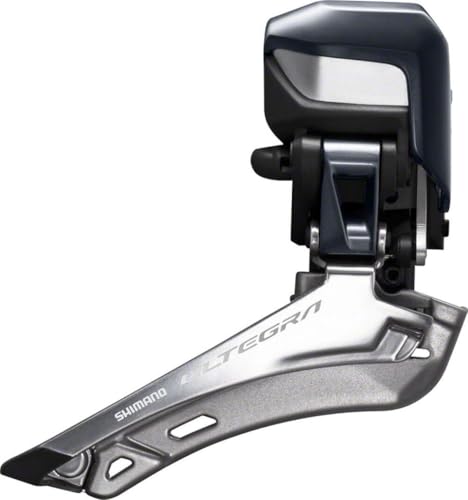
- Material: aluminum
- Mount Type: braze-on
- Gearing: top gear 46-53T
Key Takeaways
- Both 105 Di2 and Ultegra Di2 offer identical 12-speed electronic shifting performance and customization via Shimano’s E-TUBE app.
- Ultegra Di2 is approximately 300 g lighter due to premium materials and advanced machining, benefiting competitive and long-distance riders.
- 105 Di2 prioritizes robust construction and value, using heavier materials and simpler finishes at a lower price point.
- 105 Di2 offers wider cassette ranges (up to 11-36T) for easier climbing, while Ultegra favors tighter gearing for speed and aggression.
- Brakes on Ultegra provide crisper modulation with lighter materials, whereas 105 Di2 brakes have wider clearance and quieter operation.
105 Di2 vs Ultegra Di2: Side-by-Side Comparison
| Feature | Shimano 105 Di2 | Shimano Ultegra Di2 |
|---|---|---|
| Groupset Positioning | Cost-effective electronic groupset | Premium performance-oriented groupset |
| Shifting System | 12-speed semi-wireless Di2 | 12-speed semi-wireless Di2 |
| Shifting Performance | Crisp, precise, and reliable | Identical electronic shifting precision |
| Shifting Responsiveness | Fast and consistent | Fast and consistent |
| Battery Life | Around 1,000 km per charge | Around 1,000 km per charge |
| App Customization | Shimano E-TUBE app support | Shimano E-TUBE app support |
| Weight | Approximately 300 g heavier | Approximately 300 g lighter |
| Construction Materials | Heavier materials with simpler finishes | Lighter alloys and refined composites |
| Component Quality | Robust construction focused on durability and value | Premium materials and refined component construction |
| Crankset Options | 50/34T and 52/36T | 50/34T, 52/36T, and 46/36T |
| Cassette Options | 11-34T and 11-36T | 11-30T and 11-34T |
| Climbing Performance | Wider gearing makes steep climbs easier | Tighter gearing suits performance-focused riding |
| Speed Performance | Versatile gearing for everyday riding | Tighter ratios support aggressive, speed-focused riding |
| Crankset Construction | Focuses on versatility and cost efficiency | Lighter, stiffer cranksets enhance power transmission |
| Brake Feel | Fast initial contact and wider control zone | Slightly crisper feel and refined tactile feedback |
| Brake Pad Clearance | Approximately 10% wider clearance, helping reduce noise | Narrower clearance compared with 105 Di2 |
| Brake Materials | Robust, practical construction | Lighter, more premium materials |
| Price | Approximately $1,890 | Approximately $2,400 |
| Main Value | Same electronic shifting performance at a lower price | Additional investment delivers weight savings and premium refinement |
| Maintenance | Battery checks, firmware updates, and contact cleaning | Nearly identical maintenance requirements |
| Component Compatibility | Can be mixed with compatible Ultegra R-series components | Can be mixed with compatible 105 Di2 R-series components |
| Aesthetics | Matte black finish with simpler detailing | Matte black finish with more refined textures and branding |
| Best For | Budget-conscious riders, climbing, and everyday performance | Competitive riders, weight savings, and premium component quality |
What’s the Real Difference Between 105 Di2 and Ultegra Di2?

When comparing Shimano 105 Di2 and Ultegra Di2, the core differences come down to weight, materials, and price rather than shifting performance.
Both are 12-speed electronic groupsets sharing Shimano’s semi-wireless Di2 architecture, delivering identical crisp and precise shifting with long battery life.
Both groupsets offer 12-speed electronic shifting with Shimano’s semi-wireless Di2 system for precise performance.
The Ultegra R8100 is roughly 300 grams lighter due to higher-grade materials and refined component construction, impacting overall build weight.
Shimano positions 105 Di2 as the cost-effective alternative that retains the same electronic functionality at a lower price point.
You’ll find both groupsets use similar shifter designs and electronic customization via the E-TUBE app.
Ultimately, the practical tradeoff is cost versus weight and material quality, not a significant difference in electronic shifting behavior or system reliability.
For enhanced safety and control, upgrading to hydraulic disc brakes is recommended for both groupsets, as they provide stronger and more consistent stopping power.
How Does the Weight Gap Affect Your Ride and Performance?
Beyond the electronic shifting equivalence, the approximately 300-gram weight difference between Shimano 105 Di2 and Ultegra Di2 can influence your ride dynamics, especially under performance-driven conditions.
This weight gap primarily stems from Ultegra’s use of lighter materials and refined component construction.
When climbing or accelerating, shedding these grams reduces rotational mass and overall system inertia. This allows you to exert less energy for the same output.
Over long distances or competitive scenarios, the cumulative effect improves responsiveness and efficiency.
However, for casual riders or flatter terrain, this difference is less perceptible.
The 105 Di2’s slightly heavier build won’t compromise reliable performance but may modestly affect peak climbing speed and acceleration sharpness.
Ultimately, your sensitivity to this weight gap depends on your riding style and performance priorities.
Additionally, pairing these groupsets with lightweight wheelsets such as carbon fiber options can further enhance the benefits of reduced weight and improved ride efficiency.
Shifting Feel and Electronics: 105 Di2 Vs Ultegra Di2
Experience seamless precision with both Shimano 105 Di2 and Ultegra Di2, as they share the same advanced electronic shifting platform delivering crisp, reliable gear changes.
You’ll notice identical responsiveness and accuracy from their mechanized front and rear derailleurs, powered by a semi-wireless cockpit and a seat-tube-mounted battery.
Both systems offer best-in-class battery life, around 1,000 km per charge, and support customization via Shimano’s E-TUBE PROJECT Cyclist app.
While Ultegra Di2 uses lighter materials, the shifting feel and electronic function remain consistent across both groupsets.
This means you won’t sacrifice performance with 105 Di2’s lower price point; it matches Ultegra’s shifting precision and reliability under varied riding conditions, reinforcing Shimano’s hybrid electronic design philosophy.
Additionally, choosing components compatible with a bike’s road-oriented geometry ensures optimal shifting performance and rider ergonomics.
Best Cassette and Gearing Options for Your Riding Style
When choosing the right cassette and gearing for your riding style, it’s essential to consider what you need for your specific demands. For instance, if you’re leaning towards climbing, the 105 Di2 offers a wider range, like the 11-36T cassette, which makes those steep inclines a bit easier.
On the other hand, if speed is your game, you might find that the Ultegra Di2 tends to stick with tighter ranges that help you maintain that pace. Both options come with compact cranksets, like the 50/34T or 52/36T, which are super versatile.
But here’s the kicker: 105’s larger cassettes give you lower gearing, making it easier to spin those pedals at a high cadence on tough climbs. So, take a moment to think about what’s more important for you: climbing efficiency or keeping that higher speed. That’ll help you nail down the best gearing setup for your rides! Additionally, choosing the right chainring material, such as 7075 T6 aluminium, can improve durability and shifting precision for your drivetrain.
Cassette Range Differences
When selecting between Shimano 105 Di2 and Ultegra Di2, understanding cassette range differences is essential to optimizing your gearing for specific riding conditions.
The 105 Di2 offers broader cassette options, including 11-34T and 11-36T, catering better to climbing and low-cadence scenarios.
Conversely, Ultegra Di2 focuses on tighter ranges like 11-30T and 11-34T, suited for performance-oriented riders on varied terrain.
Consider these points:
- 105 Di2’s wider cassette range improves climbing efficiency and endurance.
- Ultegra Di2’s narrower range favors smoother cadence shifts and speed.
- Both support compact cranksets (50/34T, 52/36T), but 105’s larger cassettes provide more gear versatility.
Choose based on your terrain and cadence preference. 105 Di2 suits steep climbs; Ultegra Di2 excels in aggressive, speed-focused riding.
Additionally, pairing cassette range with appropriate chainring size helps balance climbing ease and top-end speed for your riding style.
Crankset Options Explained
Following the cassette range selection, choosing the right crankset complements your gearing strategy by influencing cadence efficiency and power output.
Both 105 Di2 and Ultegra Di2 offer compact (50/34T) and mid-compact (52/36T) cranksets. Ultegra additionally features a 46/36T option for more nuanced cadence control.
Your choice hinges on terrain and pedaling style. Compact setups favor higher cadence and climbing, while mid-compact balances speed and endurance.
The 105 Di2’s cranksets align with its broader cassette range, targeting versatility and lower cadence optimization.
Ultegra’s lighter, stiffer cranksets enhance power transmission, benefiting riders prioritizing performance.
Ultimately, matching crank arm length and chainring size to your physiology and riding goals optimizes drivetrain efficiency and reduces fatigue.
Integrating a torque sensor system with your drivetrain can further enhance pedaling efficiency by providing responsive assistance that matches your pedal force.
Climbing Versus Speed Choices
Balancing climbing efficiency against top-end speed demands careful selection of cassette and gearing configurations tailored to your riding style.
Shimano 105 Di2 offers wider cassette ranges, up to 11-36T, ideal if you prioritize climbing or prefer lower cadence spinning.
Ultegra Di2, conversely, leans toward tighter ranges like 11-30T or 11-34T, catering to riders focused on speed and cadence control.
Consider these three points to optimize your setup:
- Choose a wider cassette (e.g., 11-36T) with 105 Di2 if you tackle steep gradients frequently.
- Opt for Ultegra’s tighter cassette if maintaining high cadence and aerodynamic speed is your goal.
- Match crankset chainrings (compact vs. mid-compact) to your cassette for seamless gear progression.
This strategic combination guarantees your gearing complements your terrain and performance objectives precisely. Additionally, selecting the right brake pad materials can enhance your overall riding experience by balancing durability, heat resistance, and noise levels.
Brake and Component Differences: 105 Di2 Vs Ultegra Di2
You’ll notice that the 105 Di2’s brakes have a fast initial contact and a wider control zone. This design aims to reduce noise by increasing the pad-to-rotor clearance. Pretty neat, right?
On the flip side, the Ultegra Di2 uses lighter, more premium materials. This not only enhances the overall refinement of the components but also helps with weight savings.
For optimal performance on carbon rims, pairing these brakes with pads like the SwissStop FlashPro Black Prince can improve modulation and heat resistance.
Brake Performance Comparison
Experience precise braking control with both Shimano 105 Di2 and Ultegra Di2, though subtle differences set them apart.
You’ll notice 105 Di2 offers a fast initial contact point and a wider control zone, enhancing modulation and confidence. Its 10% wider pad-to-rotor clearance reduces brake noise, a practical advantage during long rides.
Ultegra Di2, on the other hand, employs lighter, more premium materials, affording a slightly crisper brake feel with lower weight.
Key differences include:
- 105 Di2 prioritizes noise reduction and control range for everyday reliability.
- Ultegra Di2 focuses on refined tactile feedback with lighter brake components.
- Both deliver consistent stopping power, but Ultegra’s material quality optimizes performance for demanding riding.
You’ll find both groupsets highly capable, with performance nuances driven by component refinement. Additionally, upgrading to components with CNC aluminum alloy can further enhance weight savings and durability, complementing the braking performance of either groupset.
Material Quality Differences
Although both Shimano 105 Di2 and Ultegra Di2 share similar design principles, the material quality in Ultegra components is noticeably superior. This contributes to reduced weight and enhanced durability.
Ultegra employs lighter alloys and refined composites in critical parts such as derailleurs, brake calipers, and shifters. This results in an approximate 300-gram weight savings over 105 Di2.
This weight reduction is achieved without compromising structural integrity, enhancing performance for weight-conscious riders. Additionally, Ultegra’s brake components feature more advanced machining and tighter tolerances, improving modulation and longevity.
While 105 Di2 retains robust construction suited for reliable performance, its use of heavier materials and simplified finishing means it’s less optimized for aggressive weight savings. Choosing Ultegra means opting for premium materials that elevate both component lifespan and ride quality. Moreover, the use of CNC machining and anodized finishes in Ultegra components further enhances durability and corrosion resistance.
105 Di2 Vs Ultegra Di2: Value Comparison
Choosing between 105 Di2 and Ultegra Di2 often hinges on balancing cost against performance priorities.
You’ll find 105 Di2 offers Ultegra-level electronic shifting at a notably lower price, around $1,890 versus $2,400 for Ultegra.
The extra investment in Ultegra mainly secures:
- Approximately 300 grams weight savings, benefiting performance-focused riders.
- Premium materials and refined component construction.
- Slightly higher-end brake and part quality.
If your goal is precise electronic shifting without paying for weight reduction or premium build, 105 Di2 delivers superior value.
However, when weight and part refinement are critical, Ultegra justifies its cost.
Ultimately, 105 Di2 is the cost-efficient choice for electronic groupset functionality.
Ultegra targets riders who prioritize lighter assemblies and component sophistication.
Key Factors for Choosing 105 or Ultegra Di2
When evaluating 105 Di2 versus Ultegra Di2, you need to weigh factors such as weight, cost, component quality, and cassette gearing options.
Ultegra Di2 saves roughly 300 grams thanks to lighter materials and more refined construction. This matters if you prioritize performance.
Cost is a decisive factor. 105 Di2 delivers the same electronic shifting precision at a markedly lower price, offering better value if weight isn’t paramount.
Component quality differs subtly. Ultegra uses premium materials and slightly enhanced brake design, while 105 maintains reliable, crisp shifting with a wider brake pad clearance to reduce noise.
Gearing choices also influence selection. 105 Di2 supports larger cassette ranges (up to 11-36T), favoring climbing, whereas Ultegra focuses on tighter ratios (up to 11-34T) for aggressive riding styles.
Your choice depends on balancing these technical tradeoffs precisely.
Who Should Pick 105 Di2 Vs Ultegra Di2?
If you prioritize electronic shifting precision without a premium weight penalty, 105 Di2 offers a compelling balance of performance and value. You should pick 105 Di2 if you want:
For precise electronic shifting without extra cost or weight, 105 Di2 strikes the perfect balance.
- Cost efficiency combined with Shimano’s advanced Di2 shifting system.
- Wider cassette gearing options (up to 11-36T) for climbing versatility.
- Reliable brake performance with reduced noise and enhanced control.
Conversely, Ultegra Di2 suits you if you focus on weight savings. It’s about 300g lighter and features premium materials that refine component durability and aesthetics.
Ultegra’s lighter construction benefits performance-focused riders who prioritize bike weight over budget.
Frequently Asked Questions
Can 105 Di2 and Ultegra Di2 Components Be Mixed on One Bike?
Yes, you can mix 105 Di2 and Ultegra Di2 components on one bike since both groupsets share the same 12-speed electronic shifting platform.
They’re compatible within Shimano’s R-series ecosystem.
However, be mindful of weight and material differences. Ultegra parts are lighter and more refined.
Mixing won’t impact shifting performance noticeably, but for peak aesthetics and component synergy, matching groupsets is usually preferred.
How Easy Is It to Upgrade From Mechanical to Di2 Electronic Shifting?
Upgrading from mechanical to Di2 electronic shifting is straightforward but requires specific components: Di2-compatible shifters, derailleurs, battery, wiring, and junction units.
You’ll need to replace your mechanical cables with electronic wiring and install a battery, typically inside the seat tube.
The process demands precise setup and firmware updates via Shimano’s E-TUBE software.
With proper tools and knowledge, you can efficiently convert your bike, achieving crisp, reliable electronic shifting.
What Maintenance Differences Exist Between 105 Di2 and Ultegra Di2?
Maintaining these groupsets is like tuning a finely crafted instrument. Both demand precision.
You’ll find their upkeep nearly identical: check battery life, update firmware via Shimano’s E-TUBE app, and clean electronic contacts.
Ultegra’s lighter materials might need gentler handling to avoid wear, but neither requires more frequent servicing.
Are There Color or Aesthetic Differences Between the Two Groupsets?
You won’t find major color differences between the two groupsets. Both share a sleek, matte black finish that emphasizes a modern, high-tech look.
However, Ultegra Di2 components often feature slightly more refined surface textures and subtle branding details, giving them a premium aesthetic.
While the visual disparity is minimal, Ultegra’s enhanced material finish and lighter construction lend it a more polished, race-ready appearance compared to 105 Di2.
How Compatible Are 105 Di2 and Ultegra Di2 With Different Bike Frames?
You’ll find both 105 Di2 and Ultegra Di2 highly compatible with most modern road bike frames designed for electronic shifting.
Their semi-wireless architecture, with wireless shifters and wired derailleurs, requires internal routing for battery and derailleur wires.
- RIGHT BRAKE/SHIFT LEVER 12V SHIM IDR.105 Di2 ST-R7170
- Material: aluminum
- Mount Type: braze-on
- Gearing: top gear 46-53T
Find the Right Di2 Drivetrain for Your Riding Style
Choosing between 105 Di2 and Ultegra Di2 isn’t just a decision; it’s a performance revolution.
While Ultegra shaves grams and offers razor-sharp shifts, 105 Di2 delivers near-pro precision at a fraction of the cost.
The weight difference might feel like carrying a feather versus a paperclip.
But the real game-changer is your riding style and budget.
Pick wisely, because your drivetrain isn’t just components; it’s the heartbeat of every ride, demanding your strategic precision.
Last update on 2026-11-08 / Affiliate links / Images from Amazon Product Advertising API