
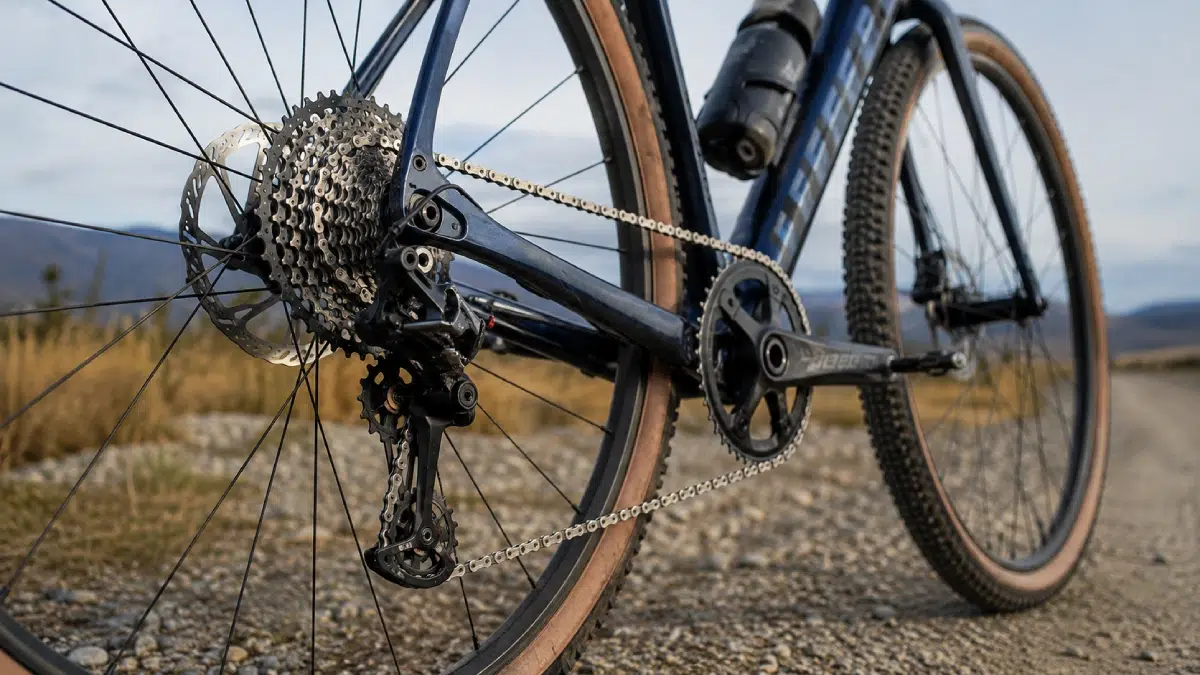
For gravel biking, choose between 1x and 2x drivetrains based on your terrain and simplicity preference. A 1x setup with a wide-range cassette suits rough, technical trails by reducing mechanical issues and improving chain retention.
Opt for chainring sizes from 36T to 42T for climbing and mixed terrain balance, paired with cassettes from 11–42T for versatile gearing. Stronger riders or faster flats benefit from larger chainrings and tighter cassette ranges.
Explore the best combinations to fine-tune your ride’s efficiency and control.
Key Takeaways
- 1x drivetrains simplify shifting and improve chain retention, ideal for rough, technical gravel terrain and reliability.
- Smaller chainrings (36T–40T) paired with wide-range cassettes enable easier climbing and better traction on steep, loose trails.
- Larger chainrings (44T–48T) combined with tighter cassette ranges suit faster, flatter gravel routes requiring higher top-end speed.
- Wide-range cassettes (e.g., 11–42T or 11–46T) provide versatile gearing for mixed terrain without front shifting.
- Choose gearing to balance cadence control, terrain type, and rider strength for efficient power transfer and ride comfort.
1x or 2x Gravel Gearing: Which One’s Right for You?
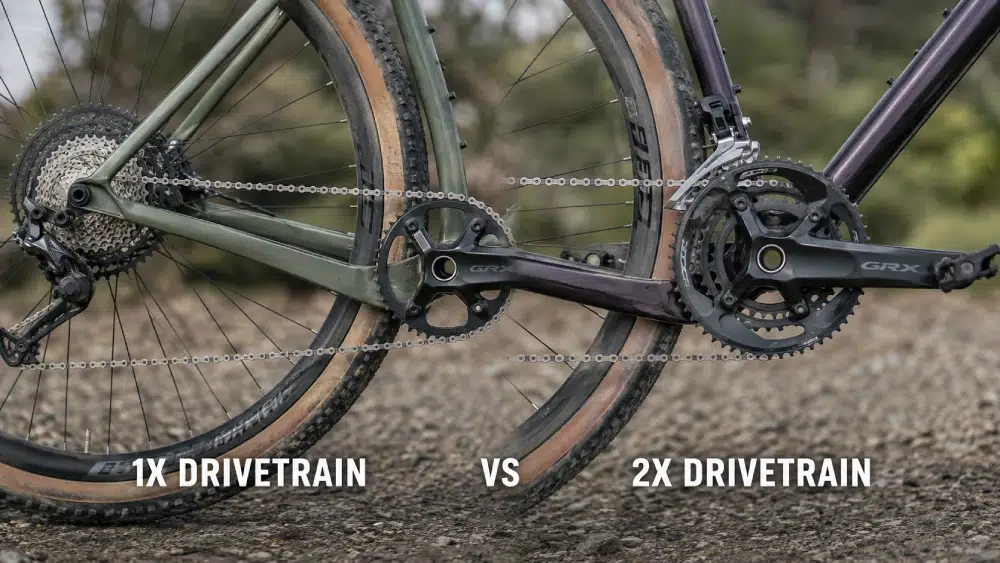
How do you decide between 1x and 2x gravel gearing? You’ll weigh terrain, speed demands, and cadence tolerance.
A 1x setup uses a single chainring paired with a wide-range cassette, simplifying shifting and reducing front derailleur complexity.
It’s ideal for rough, technical terrain where chain retention and fewer mechanical issues matter most.
Conversely, a 2x setup offers two chainrings and a narrower cassette range, providing smaller gear steps and a wider overall gear span.
This allows you to maintain a more precise cadence, especially useful in mixed terrain or faster group rides.
Your choice hinges on whether you prioritize simplicity and reliability or fine-tuned cadence control and gear range breadth.
There’s no one-size-fits-all; match the system to your riding conditions and cadence preferences.
Additionally, integrating a multi-speed drivetrain can enhance efficiency and control across varied gravel terrains.
How Chainring Size Shapes Gravel Gearing Performance?
Selecting the right chainring size dramatically influences your gravel bike’s gearing performance, affecting both climbing efficiency and top-end speed.
Choosing the optimal chainring size is key to balancing climbing ability and top-end speed on your gravel bike.
Smaller chainrings, typically in the 36T to 40T range, provide lower gear ratios that help you maintain traction and cadence on steep, loose climbs by increasing torque.
Conversely, larger chainrings, from 44T up to 48T, offer higher gear ratios that enable faster speeds on flats and descents but demand more effort on climbs.
A 40T chainring strikes a versatile balance suitable for mixed terrain, while a 38T favors climbing.
A 46T or larger suits stronger riders on flatter routes. Choosing chainring size requires considering your typical terrain and riding style.
It directly sets the baseline for your gear range before cassette selection fine-tunes climbing and speed performance.
For riders concerned with tire performance and reliability on varied terrain, selecting the right inner tube material and valve type, such as butyl rubber tubes, can also impact overall ride quality and durability.
Picking the Best Cassette for Climbing and Speed
When you’re picking out a cassette, it’s important to focus on wide-range options. These give you those low gears you’ll need for those steep climbs. But don’t forget about high-end speed!
You want to find a balance in your cassette’s gear spread that fits your terrain and riding style perfectly.
Think about how you ride. Do you prefer smooth cadence shifts? If so, that’s something to keep in mind while you’re selecting your cassette.
Getting the right one can really optimize your climbing efficiency and help you maintain speed during those faster sections. Happy riding!
Regular cleaning and proper lubrication of your cassette are essential to maintain its performance and longevity, especially after muddy rides where dirt buildup is common.
Wide-Range Cassette Benefits
Because gravel riding often involves steep climbs and varied terrain, choosing a wide-range cassette can markedly enhance your bike’s versatility.
A cassette with a broad gear spread, often ranging from 11 to 42 or even 50 teeth, provides the low gears needed for technical climbs while still offering higher gears for faster sections.
This range reduces the need for multiple front chainrings, simplifying shifting and improving chain retention, especially on rough surfaces.
With wider steps between gears, you gain climbing efficiency and maintain cadence without excessive cadence jumps.
Additionally, wide-range cassettes help you adapt to unpredictable terrain without compromising speed or torque.
When selecting your cassette, consider your typical ride profiles and terrain to optimize performance and comfort across all conditions.
Ensuring your cassette is compatible with a sealed bearing system in the drivetrain can improve durability and maintain smooth shifting in harsh gravel conditions.
Balancing Climbing And Speed
Wide-range cassettes give you the low gears needed for tough climbs and the high gears for faster stretches. Finding the right balance between climbing ease and top-end speed requires careful cassette selection.
You want a cassette that provides enough low-end range to maintain traction and cadence on steep, loose terrain without forcing you to grind. Simultaneously, it should offer sufficiently high gears to avoid spinning out on fast descents and pavement sections.
Often, this means choosing a cassette with a broad range, such as an 11-42T or 11-46T, paired with an appropriately sized chainring. Balancing these factors guarantees you preserve efficient cadence shifts while adapting to mixed terrain demands.
This optimization enhances both torque control on climbs and power delivery on flats or descents. Additionally, selecting the correct chain width to match your cassette and drivetrain components helps prevent premature wear and maintains smooth performance.
Cassette Selection Tips
Choose a cassette that matches your terrain and riding style to optimize both climbing ease and top-end speed.
For steep, technical climbs, prioritize wide-range cassettes with large sprockets (e.g., 11-42T or 11-46T) to maintain cadence and torque control without overspending effort.
If you ride mostly flats or fast gravel, opt for tighter gear spacing like an 11-28T or 11-32T cassette to enable smooth cadence shifts and higher speeds.
In 1x setups, a wider cassette reduces front shifting complexity while offering sufficient range.
For 2x setups, narrower cassette ranges complement smaller chainring jumps, enhancing efficiency.
Always balance your cassette choice with your chainring size and strength to avoid excessive grinding or spinning out.
This tailored approach guarantees peak performance across varied gravel routes.
Additionally, selecting components with compatible sizes and proper tooth counts ensures smooth power transfer and reduces drivetrain wear, as emphasized in sprocket and chain compatibility.
Combining Chainring and Cassette for Your Ride
Balancing your chainring size with cassette range directly shapes your bike’s gear versatility and performance on varied terrain.
When you choose a smaller chainring, like a 38T, pairing it with a wide-range cassette enhances low-end torque for steep climbs.
Conversely, a larger chainring, such as 44T or 46T, combined with a narrower cassette suits faster, flatter rides by offering higher top speeds and tighter gear steps.
If you prefer a 1x setup, opt for a wide cassette to cover broad terrain without front shifting.
In a 2x system, the interplay between two chainrings and a narrower cassette creates smaller gear increments, improving cadence control.
Your final combination should balance climbing ease, top-end speed, and cadence smoothness based on your strength and typical routes.
Additionally, selecting lighter drivetrain components, such as a 520 chain and sprocket, can improve acceleration and throttle response on varied terrain.
Matching Gravel Gearing to Your Terrain
Maneuvering different terrain demands gearing that matches the specific challenges you’ll face. You’ll want lower gears for steep, loose climbs to maintain traction and control. Higher gears suit fast, flat sections. Balancing chainring size and cassette range is key to optimizing your bike’s performance on gravel.
Consider these terrain-driven gearing needs:
Rugged, hilly trails require wide-range cassettes with smaller chainrings (36T–40T) for torque. Fast, rolling gravel favors larger chainrings (44T–46T) and tighter cassette steps. Mixed surfaces benefit from moderate chainring sizes (40T–42T) and balanced cassette spreads.
Long climbs demand very low gears to manage cadence without grinding. Predominantly flat routes allow for higher top-end gears to avoid spinning out.
Matching your gearing precisely to terrain guarantees efficient power transfer and sustained cadence. Additionally, choosing components compatible with your bike’s hub and drivetrain standards ensures smooth shifting and reliable performance across varied conditions, especially when considering options like cassette compatibility and axle standards.
Adjusting Gravel Gearing for Rider Strength and Style
Tailor your gravel bike’s gearing to match your strength and riding style for peak performance and comfort.
Customize your gravel bike’s gearing to suit your strength and riding style for optimal performance and comfort
If you’re a stronger rider or prefer faster speeds on flatter terrain, opt for larger chainrings (44T–48T) combined with tighter cassette ranges to maintain cadence and top-end speed.
Conversely, if climbing steep, loose trails challenges you or you favor endurance, choose smaller chainrings (36T–40T) paired with wide-range cassettes that provide low gears for controlled torque and manageable cadence.
Your choice between 1x and 2x setups hinges on your preference for simplicity versus gear range finesse.
1x suits rough terrain and vibration resistance, while 2x offers closer gear steps for precise cadence control on mixed routes.
Always balance gear range and step size to complement your physical capacity and riding demands.
Consider also that tire choices, such as those with aggressive tread patterns, can influence your bike’s overall traction and handling on varied surfaces.
Frequently Asked Questions
How Often Should I Replace My Gravel Bike Chain and Cassette?
You should replace your gravel bike chain roughly every 1,000 to 2,000 miles, depending on riding conditions and maintenance.
If you ride in muddy or gritty terrain, inspect it more often and replace sooner. Measure chain stretch regularly with a chain checker tool to avoid excessive wear on the cassette.
Typically, replace your cassette every two chain replacements. If you notice skipping or poor shifting, it’s time to swap it out.
What Tire Width Best Complements Gravel Bike Gearing?
You’ll find that tire widths between 38mm and 45mm best complement gravel bike gearing. This range balances rolling efficiency and traction, allowing you to maintain cadence and control on varied terrain.
Narrower tires (around 35-38mm) suit faster, smoother routes, while wider tires (42-45mm) enhance grip on loose or rough sections. They match lower gearing by improving climbing traction and stability without sacrificing speed on flatter stretches.
Can Electronic Shifting Improve Gravel Bike Performance?
Electronic shifting can improve your gravel bike performance like a finely tuned orchestra: precise, swift, and reliable.
You’ll experience consistent, crisp gear changes even in rough terrain or under vibration, reducing missed shifts and chain drops. This lets you maintain peak cadence and focus on the trail.
Plus, electronic systems often allow customizable shifting patterns and easier maintenance. This helps you adapt quickly to varying terrain and riding styles for better overall efficiency.
How Does Bike Weight Affect Gearing Choice?
Bike weight directly impacts your gearing choice by influencing how much effort you’ll need to climb or accelerate.
Heavier bikes demand lower gearing to maintain a manageable cadence on steep, loose terrain, preventing premature fatigue.
Conversely, lighter bikes allow you to use higher gears since less power is needed to overcome inertia and gravity.
Are There Benefits to Custom Gear Ratios for Gravel Riding?
Yes, custom gear ratios offer significant benefits for gravel riding. They let you tailor chainring and cassette sizes to your specific terrain, strength, and cadence preferences, optimizing climbing ease and top-end speed.
You can balance low-end torque for steep climbs with efficient gearing for fast sections. Custom setups reduce fatigue by avoiding grinding or spinning out.
Ultimately, they provide smoother cadence shifts and better performance across varied surfaces.
Gravel Bike Gearing: Find the Right Setup for Your Ride
Choosing the right gravel bike gearing boils down to your terrain, riding style, and strength.
Whether you go 1x or 2x, focus on chainring size and cassette range to optimize climbing and speed.
Remember, the proof is in the pudding. Testing combinations on your usual routes reveals what truly works.
Tailoring your setup guarantees efficient power transfer and smooth shifting, giving you control and confidence on every ride.