
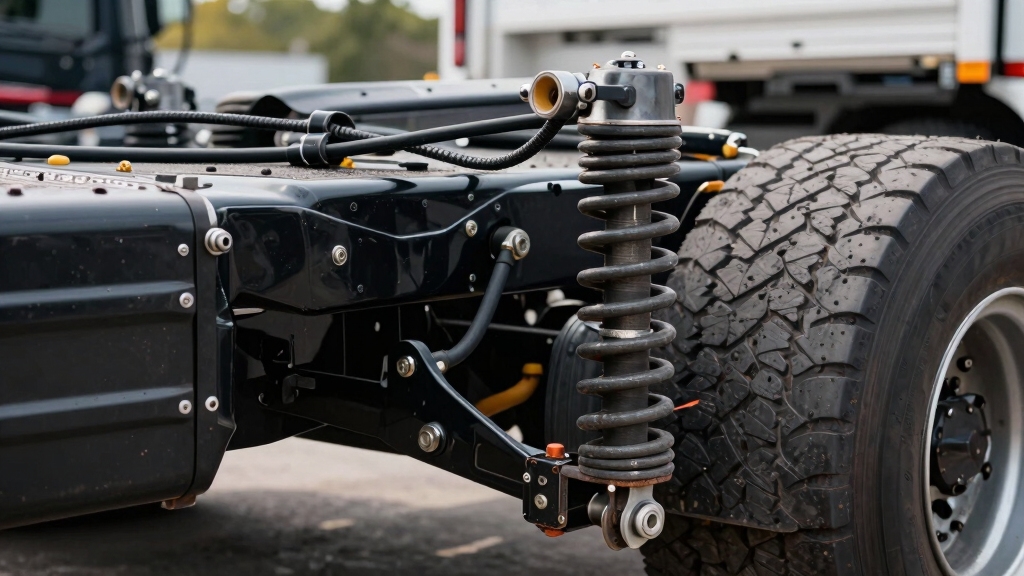
If you want superior ride quality, air ride suspension uses pressurized airbags to adapt to varying loads and terrain. This reduces vibration and improves payload capacity.
Springs offer fixed resistance with quicker, simpler installation but transmit more vibration and lack adaptability. Air systems require specialized maintenance and add system weight, though they help optimize weight distribution.
Choosing air ride means weighing comfort and performance benefits against complexity. Explore further to understand which suspension suits your trailer’s needs best.
Key Takeaways
- Air ride suspensions use pressurized airbags for dynamic ride height and cushioning adjustments, unlike fixed steel or composite leaf springs.
- Air suspensions provide smoother rides with adjustable stiffness and automatic leveling, while spring suspensions deliver firmer, less adaptable rides.
- Air systems adapt to varying payloads and terrain, improving ride quality and payload capacity; springs perform best within a fixed payload range.
- Air suspensions require specialized maintenance of compressors, airbags, valves, and air lines, whereas spring suspensions need regular mechanical part inspections.
- Spring suspensions are lighter and simpler but transmit more vibration and offer less consistent ride comfort compared to air ride systems.
Air Ride Suspension vs Springs: Comparison Table
| Feature | Air Ride Suspension | Spring Suspension |
|---|---|---|
| How It Works | Uses pressurized rubber airbags with compressors and valves to adjust ride height and cushioning dynamically | Uses fixed steel or composite leaf springs for static resistance |
| Ride Comfort | Smoother ride with better shock absorption and reduced vibration | Firmer ride with more vibration transfer |
| Adaptability | Automatically adjusts to changing loads and terrain | Fixed stiffness with limited adaptability |
| Payload Handling | Handles varying payloads efficiently by adjusting air pressure in real time | Performs best within a fixed payload range |
| Weight Distribution | Optimizes axle weight distribution automatically | Limited load balancing capability |
| Ride Height Control | Adjustable ride height and automatic leveling | No ride height adjustment |
| Performance on Rough Roads | Superior cushioning and stability on uneven terrain | More bounce and vibration on rough surfaces |
| System Weight | Heavier due to compressors, tanks, and air lines | Lighter overall system |
| Installation Complexity | Complex installation requiring specialized expertise | Simpler and faster installation |
| Installation Time | Around 3 hours | Around 30 minutes |
| Maintenance Requirements | Requires monitoring airbags, compressors, valves, and air lines | Requires inspection of bushings, springs, and alignment |
| Maintenance Cost | Specialized but generally less frequent maintenance | More frequent mechanical repairs and adjustments |
| Durability | Durable airbags but sensitive to leaks and compressor issues | Strong mechanical design but prone to bushing wear and fatigue |
| Fuel Efficiency | Can improve efficiency through better aerodynamics and reduced bouncing | Minimal fuel efficiency benefits |
| Initial Cost | Higher upfront cost | Lower purchase cost |
| Long-Term Value | Better for comfort, cargo protection, and variable loads | Better for budget-conscious and simple operations |
| Best Use Cases | Fragile cargo, variable loads, long-haul transport, premium ride quality | Heavy consistent loads, basic utility trailers, lower-cost operations |
| Major Drawback | Higher complexity and repair costs | Reduced comfort and adaptability |
| Major Advantage | Excellent ride quality and load adaptability | Simplicity and lower cost |
How Air Ride and Spring Suspensions Work?

Although both air ride and spring suspensions serve to absorb shocks and support vehicle loads, they operate through fundamentally different mechanisms.
Air suspensions use pressurized, expandable rubber airbags controlled by compressors and valves to dynamically adjust ride height and cushioning.
Air suspensions utilize pressurized rubber airbags with compressors and valves for dynamic ride height and cushioning adjustments.
In contrast, spring suspensions rely on fixed steel or composite leaf springs shaped in semi-elliptical packs that provide static resistance without adaptability.
You’ll find that air suspension systems incorporate on-board compressors, air tanks, and valve manifolds to maintain precise pressure automatically.
This enables real-time adjustments to load and terrain.
In contrast, spring suspensions deliver constant resistance based solely on their mechanical design, lacking the ability to alter stiffness or height under varying conditions.
This fundamental technological divergence defines their operational capabilities and impacts performance characteristics.
For motorcycles, using a wheel chock can provide additional stability during maintenance or transport, which complements suspension performance.
How Suspension Affects Ride Comfort and Vibration?
Understanding the operational differences between air and spring suspensions sets the stage for analyzing their impact on ride comfort and vibration.
Air suspension uses pressurized, expandable airbags that dynamically adjust to absorb shocks, reducing vibration and maintaining floor levelness. This adaptability results in superior damping characteristics, especially on rough terrain, ensuring a smoother, more stable ride.
In contrast, spring suspensions rely on fixed-resistance steel or composite leaf springs that transmit more vibration and bounce into the vehicle, as they can’t adapt to changing conditions.
Consequently, you’ll experience increased vibration and less consistent ride comfort with springs.
Air suspension’s automatic pressure modulation minimizes impact forces and vehicle oscillations, which reduces maintenance costs. Ultimately, choosing air suspension enhances ride quality by actively controlling vibrations, while spring suspension offers a simpler but less refined ride experience.
This is similar to how air brake systems use pressurized air to provide adaptive, fail-safe control under varying operational demands.
How Payload and Weight Impact Air Ride vs. Spring Suspensions?
When you’re dealing with payloads between 30,000 and 45,000 pounds, spring suspensions really shine. They’ve a lighter system weight, which helps them perform efficiently.
On the flip side, air ride suspensions are a bit heavier, but they bring something special to the table. They automatically adjust air pressure to match varying weights, which means they can adapt to changes in load.
This not only enhances ride quality but also lets you maximize your payload capacity. By offsetting the suspension weight with that improved load support, you get the best of both worlds! Additionally, factors like mechanical limits and load variation influence suspension performance and durability in heavy-duty applications.
Payload Weight Range
Since payload weight directly influences suspension performance, choosing between air ride and spring suspensions depends largely on the load range you anticipate.
Spring suspensions perform ideally within a fixed payload range, typically between 30,000 and 45,000 pounds. They offer predictable resistance but limited adaptability.
In contrast, air ride suspensions dynamically adjust to varying loads, providing consistent support and ride quality regardless of weight fluctuations.
Consider these critical factors:
Spring suspensions have fixed stiffness, limiting performance outside their ideal payload range.
Air suspensions automatically modulate air pressure to match load variations in real time.
Payload weight outside the spring range can cause excessive wear or compromised ride comfort.
Air ride systems enhance payload capacity by maintaining optimal suspension response across diverse weights.
Understanding these distinctions helps you select the suspension best suited to your operational payload needs.
Proper installation and regular maintenance are crucial to ensure optimal suspension performance and longevity.
Suspension System Weight
Balancing payload capacity with suspension system weight plays a crucial role in trailer performance and efficiency.
You’ll find that standard steel spring suspensions weigh about 50-75 pounds less than air suspension systems, which impacts overall trailer tare weight.
However, air suspension offers significant weight savings on tri-axle trailers, allowing you to add more payload without exceeding gross vehicle weight limits.
This advantage becomes critical when transporting heavy materials where every pound counts.
Although air suspension’s added components, like compressors, air tanks, and valve manifolds, increase system weight, its ability to adjust support dynamically based on load optimizes weight distribution across axles.
Conversely, spring suspensions provide fixed resistance, limiting your ability to adapt to varying payloads.
This limitation can compromise ride quality and handling under fluctuating weights.
Additionally, selecting components with optimized materials, such as high-strength steel, can enhance durability without excessively increasing system weight.
Load Adaptability Benefits
How does load variability influence suspension performance in trailers? When you deal with fluctuating payloads, air ride suspensions adapt dynamically, while spring suspensions remain fixed. This impacts ride quality and load distribution. Air systems adjust air pressure automatically, optimizing support regardless of weight changes. Springs provide consistent resistance, best suited for steady loads between 30-45k lbs.
Consider these load adaptability benefits:
Air suspension customizes ride height and support on the fly, improving stability.
Spring suspension’s static nature limits responsiveness to varying weights.
Air systems reduce chassis stress by maintaining levelness under uneven cargo.
Springs are lighter but add no load flexibility, risking uneven wear and compromised handling.
Choosing air suspension enhances performance and payload versatility under variable loading conditions. Additionally, like hydraulic brakes that offer rapid response and adaptability, air suspensions provide dynamic adjustment capabilities that improve overall ride control and safety.
How Maintenance Differs Between Air Suspension and Springs?
You know, air suspension systems really stand out because they use these tough, extra-hard rubber airbags. They’re built for durability and can handle a lot of wear over time, which means you won’t have to worry about replacing them as often.
On the flip side, spring suspensions can be a bit more high-maintenance. They tend to experience mechanical wear, especially in parts like the trunnion and isolator bushings. This wear can lead to frequent replacements and the need for realignment, which can get a little annoying.
When you look at the overall maintenance costs, spring suspensions usually end up being pricier. That’s mainly due to those ongoing part failures and adjustments you have to keep making. So, if you’re weighing your options, it’s worth considering how much upkeep you’re willing to handle! Proper maintenance also includes regularly balancing your tires to ensure better handling and reduce wear on suspension components.
Air Suspension Durability
Although air suspension systems are built with durable, extra-hard rubber airbags designed for extended performance on rough terrains, they still require vigilant maintenance to prevent failures.
You must regularly inspect airbags for cracks or leaks because degradation compromises system integrity. Maintaining proper air pressure is vital to avoid premature wear.
Air lines and valves need routine checks to prevent blockages or leaks. Additionally, onboard compressors demand periodic servicing to guarantee consistent performance.
Key maintenance tasks include:
- Visual inspection of airbags for damage or wear
- Monitoring and adjusting air pressure levels
- Checking air lines and valves for leaks or blockages
- Servicing compressors and related components
Adhering to these steps preserves air suspension durability and prevents costly failures.
Proper maintenance routines are just as critical for air suspensions as regular bleeding procedures are for hydraulic brake systems to ensure reliable performance.
Spring Suspension Wear
Spring suspensions demand consistent attention to components like trunnion bushings and isolator bushings, which wear over time and require timely replacement to maintain proper alignment and ride quality.
Unlike air suspensions that leverage fewer moving parts and durable rubber airbags, spring setups endure constant mechanical stress, accelerating bushing degradation.
You’ll need to regularly inspect these bushings for wear and replace them to prevent misalignment and excessive vibration.
Additionally, leaf springs themselves can suffer fatigue cracks or corrosion, mandating periodic checks.
This contrasts with air suspension’s self-adjusting system, which minimizes component wear.
Your maintenance approach for springs is more hands-on and frequent, focusing on mechanical part integrity, alignment, and cushioning efficiency to sustain peak performance under varying load conditions.
It is also critical to ensure proper torque and thread direction on axle nuts to maintain bearing preload and prevent premature failure in spring suspension systems, as improper tightening can lead to bearing damage and reduced safety.
Maintenance Cost Comparison
Maintenance costs frequently differ between air suspension and spring systems due to their distinct mechanical complexities and wear patterns. Air suspensions incorporate airbags, compressors, valves, and air lines, which demand specialized maintenance and occasional component replacement.
Springs, being simpler, require less technical maintenance but experience higher wear in bushings and alignment issues, leading to recurring expenses. When considering maintenance, keep in mind:
Airbags may fail and need replacement, though their durable rubber extends service life.
Spring suspensions develop worn trunnion and isolator bushings requiring periodic service.
Air suspension’s fewer moving parts generally reduce long-term maintenance frequency.
Spring systems incur more frequent adjustments and higher cumulative maintenance costs over time.
Understanding these differences helps you anticipate maintenance budgets aligned with system complexity and usage. Additionally, regular preventive maintenance such as inspections and timely servicing can significantly extend the lifespan and reliability of both suspension types.
How Installation Complexity Differs for Air and Spring Systems?
When comparing installation complexity, air suspension systems demand substantially more time and technical expertise than spring suspensions.
You’ll spend about three hours installing airbag suspension kits because they include numerous components like compressors, air tanks, valve manifolds, and air lines.
Installation also requires replacing factory shocks, struts, and springs with specialized air struts containing rubber bladders, which calls for precise fitting and calibration.
In contrast, rubber spring suspension kits are straightforward with fewer parts, allowing you to complete installation in roughly 30 minutes.
Their fixed steel or composite leaf springs don’t require the intricate setup air systems do.
Ultimately, air suspension installation demands specialized knowledge and careful attention to ensure proper function, while spring systems offer a simpler, quicker process suitable for routine applications.
When Is Air Suspension Worth the Extra Cost?
Although air suspension systems come with higher upfront and maintenance costs, they prove worth the investment for operators prioritizing ride quality, adaptability, and payload optimization.
You’ll benefit most when your operation demands precise load support and consistent ride height adjustments, which traditional springs can’t provide.
Consider air suspension if you need:
- Enhanced shock absorption on variable loads for cargo protection
- Automatic leveling to maintain floor evenness regardless of weight changes
- Reduced vibration, lowering trailer wear and maintenance expenses
- Added payload capacity from weight savings, critical in heavy material transport
This system’s dynamic response outperforms static springs by adjusting air pressure in real time.
It offers superior comfort and load adaptability that justify the extra expense for specialized or demanding transport needs.
Which Suspension Performs Better in Rough or Heavy-Duty Conditions?
Because rough and heavy-duty conditions demand consistent shock absorption and load stability, air ride suspension outperforms traditional spring systems by dynamically adjusting air pressure to absorb impacts and reduce vibration.
You’ll benefit from its on-the-fly adaptability, which maintains floor levelness and smooth ride quality, even under varying cargo weights and uneven terrain.
In contrast, spring suspensions provide a static resistance that can’t compensate for sudden jolts or heavy loads, leading to increased vibration transfer and structural stress.
While springs may be lighter and simpler, their fixed damping characteristics limit performance in harsh environments.
Air suspension’s advanced use of pressurized airbags and automated pressure control delivers superior cushioning, reduces maintenance costs from wear, and enhances durability, making it the technically superior choice for sustained heavy-duty operation.
How to Choose Between Air Ride Suspension and Springs for Your Trailer?
Understanding the performance differences in rough or heavy-duty conditions helps frame the decision-making process for selecting the right suspension system.
You’ll want to evaluate the specific demands your trailer will face, considering load variability, ride comfort, and maintenance capabilities.
Focus on these key factors:
- Load adaptability: Air ride adjusts pressure dynamically; springs are fixed and less versatile.
- Weight considerations: Springs are lighter, but air suspensions can increase payload by saving tare weight.
- Maintenance needs: Air systems require specialized upkeep; springs involve more frequent mechanical part replacements.
- Installation complexity: Spring systems install quickly; air suspensions need expert installation due to multiple components.
Frequently Asked Questions
Can Air Suspension Systems Be Retrofitted to Older Trailers?
Yes, you can retrofit air suspension systems to older trailers, but it requires specialized knowledge and expertise.
You’ll need to replace factory shocks, struts, and springs with air struts containing rubber bladders.
Installation involves multiple components and typically takes around three hours.
While more complex and costly than spring replacements, retrofitting grants you adjustable ride height and improved load support.
This makes it a smart upgrade for enhanced comfort and adaptability.
What Are Common Signs of Air Suspension Failure?
If you notice your trailer sagging on one side or uneven ride height, it’s a common sign of air suspension failure.
You’ll also feel increased vibration and bouncing, indicating airbag leaks or compressor issues.
Listen for hissing sounds from escaping air or check if the compressor runs excessively.
These symptoms coincide with reduced load support and compromised ride quality, signaling you need prompt inspection and repair to avoid further damage.
How Does Temperature Affect Air Suspension Performance?
Temperature affects air suspension performance by influencing air pressure inside the airbags.
When it gets cold, air contracts, reducing pressure and potentially causing a stiffer ride or lowering the suspension height.
In hot conditions, air expands, increasing pressure and possibly making the ride firmer or raising the suspension.
You need to monitor and adjust the system’s pressure regularly to maintain ideal ride quality and avoid stress on components due to temperature fluctuations.
Are There Warranty Differences Between Air and Spring Suspensions?
You’ll find air suspensions often come with more extensive warranties covering airbags, compressors, and valves due to their complexity.
Spring suspensions typically offer simpler, shorter warranties focused on leaf springs alone.
While air systems demand specialized maintenance, manufacturers back them longer, reflecting their advanced technology.
Springs, though robust and low-tech, have limited coverage, emphasizing replacement of worn parts.
Your choice impacts warranty scope, cost, and long-term reliability assurances.
Can Air Suspension Improve Fuel Efficiency in Trailers?
Yes, air suspension can improve fuel efficiency in trailers by maintaining ideal ride height and reducing aerodynamic drag.
By automatically adjusting air pressure based on load and road conditions, it minimizes rolling resistance and prevents excessive bouncing. This results in smoother rides and less energy wasted.
While the energy to power compressors slightly offsets gains, overall, you’ll see better fuel economy, especially on long hauls with variable cargo weights.
Air Ride Suspension Delivers Smoother Rides and Better Load Protection
When deciding between air ride suspension and springs, consider your specific needs. For example, a delivery company hauling fragile electronics found air suspension markedly reduced cargo damage due to smoother rides. This justifies the higher cost.
If you prioritize comfort and vibration reduction under varying loads, air rides excel. However, for consistent heavy loads and simpler maintenance, springs might be more practical. Analyze your payload, terrain, and budget to make an informed suspension choice.
1 thought on “Air Ride Suspension vs Springs: Pros, Cons & Key Differences”