
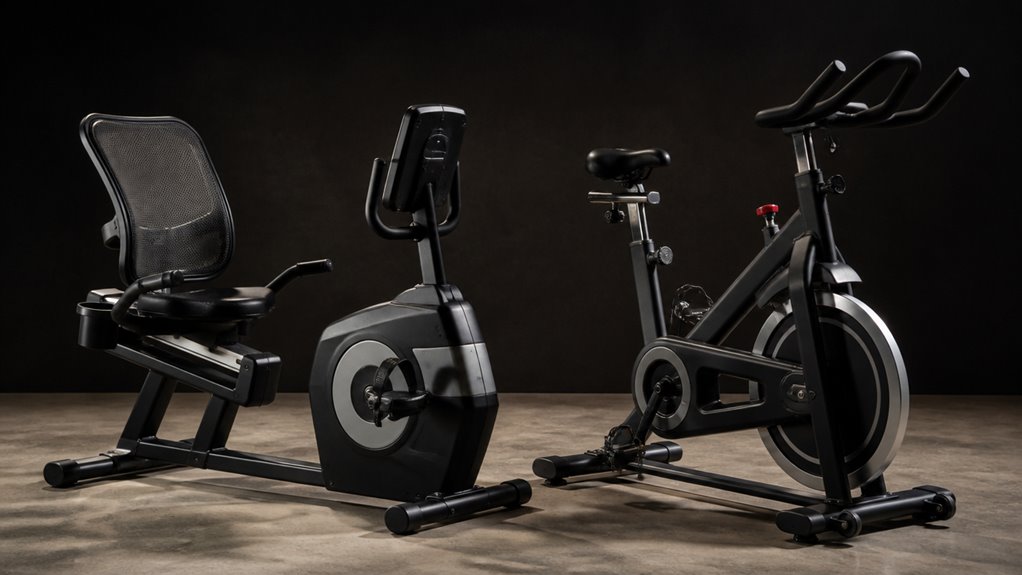
If you want low-impact, back-friendly exercise with comfort and stability, a recumbent bike’s reclined seat and support reduce joint strain. It helps maintain spinal alignment.
For higher-intensity, calorie-burning workouts that engage your core and legs dynamically, a spin bike’s forward-leaning position and compact design push endurance and strength gains.
Your choice depends on space, fitness goals, and comfort needs. Explore further to understand which bike perfectly matches your workout style and lifestyle.
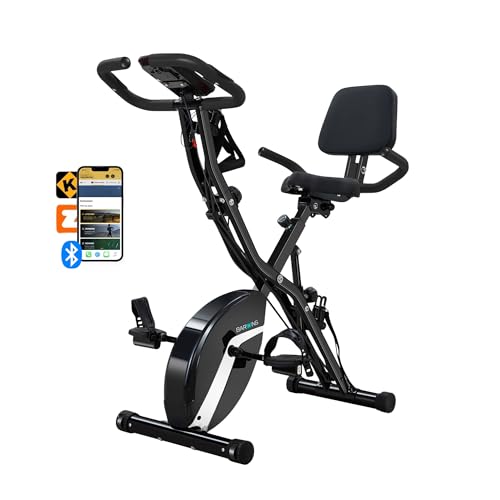
- 【EXERCISE BIKE WITH BLUETOOTH & FITNESS APP】 A stationary connected via Bluetooth, paired with…
- 【FOLDABLE EXERCISE BIKE】 16-8-2-3: 16 Levels adjustable magnetic resistance. 8 Seat height…
- 【16-LEVEL MAGNETIC RESISTANCE FOR HOME WORKOUT】Designed for quiet home workouts, the indoor…
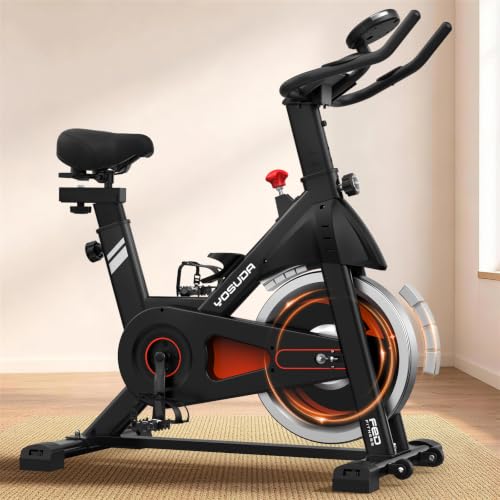
- …
- 【Ultra-Quiet & Smooth】 Our indoor exercise bike features an upgraded magnetic resistance system…
- 【Rock-Solid Stability & Safety】 With a reinforced wide-base frame, heavy-duty steel, and a solid…
Key Takeaways
- Recumbent bikes offer a reclined, back-supported position that reduces lower back and joint strain for comfortable, low-impact workouts.
- Spin bikes mimic outdoor cycling with a forward-leaning stance, engaging core and upper body for high-intensity, calorie-burning sessions.
- Recumbent bikes are bulkier with larger footprints, while spin bikes are compact and fit better in smaller spaces.
- Spin bikes are generally more affordable but require more frequent maintenance compared to durable, low-maintenance recumbent bikes.
- Recumbent bikes suit endurance and rehabilitation, whereas spin bikes are ideal for strength, HIIT, and fat loss training.
Recumbent Bike or Spin Bike: Feature-by-Feature Comparison
| Feature | Recumbent Bike | Spin Bike |
|---|---|---|
| Riding Position | Reclined with back support | Upright, forward-leaning |
| Comfort | Excellent | Moderate |
| Back Support | Built-in backrest | None |
| Joint Impact | Low | Moderate |
| Workout Intensity | Moderate | High |
| Primary Muscle Focus | Quadriceps, hamstrings, glutes | Legs, glutes, core |
| Calorie Burn | Moderate | Higher (up to 600 calories/hour) |
| Best For | Rehabilitation, endurance, seniors | HIIT, weight loss, strength training |
| Core Engagement | Low | High |
| Balance Requirement | Minimal | Higher |
| Home Gym Space | Larger footprint | Compact |
| Upfront Cost | Higher | Lower |
| Maintenance | Lower | Higher |
| Beginner Friendly | Excellent | Good |
| Best User | People with joint or back concerns | Fitness enthusiasts seeking intense workouts |
| Main Advantage | Comfortable, low-impact exercise with excellent back support | High-intensity workouts with greater calorie burn |
| Main Drawback | Takes up more space and offers lower workout intensity | Less comfortable and places more stress on joints and lower back |
Design and Riding Positions: Recumbent vs. Spin Bikes

When comparing recumbent and spin bikes, the design and riding positions play a crucial role in your overall experience and performance.
On a recumbent bike, you sit in a reclined position with back support, which reduces strain on your lower back and joints.
This setup promotes comfort during longer sessions, making it ideal if you value a relaxed, ergonomic posture.
Conversely, spin bikes position you upright, similar to riding a road bike, demanding active engagement of your core and upper body.
This design enhances intensity and mimics outdoor cycling, helping you build strength and stamina.
Understanding these distinct designs empowers you to optimize your workouts, whether you prioritize comfort or performance.
This ensures every ride aligns with your fitness goals and physical needs.
Recumbent bikes often feature ergonomic seating that includes reclined seats and backrests, improving comfort and reducing joint pressure during rides.
Which Bike Is Right for You? Key Differences and Uses
How do you decide which bike suits your fitness journey best? It depends on your goals and preferences.
If you want low-impact cardio with stability, a recumbent bike is ideal. For high-intensity training and muscle toning, a spin bike challenges your endurance and strength. Knowing these key differences helps you pick the right fit.
Recumbent bikes often feature adjustable seats designed to accommodate taller users comfortably, ensuring proper leg extension during workouts.
| Feature | Recumbent Bike | Spin Bike |
|---|---|---|
| Intensity | Moderate, steady | High, variable |
| Target Muscles | Lower body, less core | Lower body + core, more power |
| Best Use | Rehabilitation, endurance | HIIT, strength, fat loss |
Choose the bike that aligns with your fitness level and motivation to maximize your results.
Comfort and Body Impact: How Each Bike Affects Your Back and Joints
You know, when it comes to comfort and how a bike affects your body, the recumbent bike really shines. Its reclined seat offers fantastic back support, which can take a lot of pressure off your spine. On the other hand, the spin bike requires you to maintain a more upright posture, and that can sometimes lead to straining your lower back.
Now, let’s talk about your joints. The recumbent bike is a great choice if you’re worried about knee or hip stress because it significantly reduces impact. This makes it a solid option for anyone with joint concerns. So, when you’re deciding which bike to go for, keep these differences in mind. Choosing the right one can really help protect your body and make your workouts a lot more comfortable! A professional bike fitting with dynamic assessments can further optimize your position to reduce joint and muscle stress.
Back Support Differences
Although both recumbent and spin bikes provide excellent cardiovascular workouts, their impact on your back and joints differs markedly due to their design.
When you choose a recumbent bike, you benefit from a wide, supportive backrest that cradles your spine. This promotes proper posture and reduces strain on your lower back.
This support helps you maintain comfort during longer sessions, especially if you have pre-existing back issues.
In contrast, spin bikes lack backrests, requiring you to engage your core and maintain an upright or slightly forward-leaning posture. While this can enhance core strength, it may place more pressure on your lumbar region if your form slips.
Understanding these back support differences empowers you to pick the bike that aligns best with your comfort needs and fitness goals.
Choosing the right bike saddle with pressure relief features can further enhance comfort and reduce joint strain during your rides.
Joint Stress Comparison
Managing joint stress effectively is crucial when choosing between a recumbent bike and a spin bike. The recumbent bike offers a more ergonomic seating position that reduces pressure on your knees, hips, and lower back by distributing your weight evenly. This design minimizes joint strain, making it ideal if you have pre-existing joint issues or want low-impact exercise.
On the other hand, spin bikes require you to lean forward, placing more load on your wrists, knees, and lower back. This can increase joint stress, especially during intense sessions. However, spin bikes allow for more dynamic movement and higher resistance, which can strengthen joints if used carefully.
Wearing adjustable protective gear like shin guards designed for mobility and comfort can also help reduce joint strain during intense cycling workouts.
Ultimately, choose the bike that aligns with your joint health and fitness goals to guarantee sustainable, pain-free workouts.
Muscle Targeting and Workout Intensity Compared
When you choose between a recumbent bike and a spin bike, the way each machine targets your muscles and the intensity of your workouts can differ markedly.
Choosing between a recumbent and spin bike changes your muscle focus and workout intensity significantly.
A recumbent bike primarily engages your quadriceps, hamstrings, and glutes with a seated, reclined position. It offers a steady, low-impact workout that’s perfect for endurance and moderate calorie burn.
On the other hand, a spin bike demands more from your entire lower body and core, especially when you stand and pedal. This intensifies muscle engagement and cardiovascular challenge.
Spin bikes deliver higher workout intensity, allowing you to push harder, build strength, and burn more calories in less time.
Choose based on your fitness goals: steady, controlled muscle work or dynamic, high-intensity training that drives results fast.
For enhanced workout feedback and power assistance, some advanced exercise bikes now incorporate torque sensor technology to provide more natural and responsive resistance.
Space and Setup: What Fits Best in Your Home Gym
Choosing the right bike for your home gym depends heavily on the space you have available and how you plan to set it up.
Recumbent bikes tend to be bulkier due to their reclined seat and extended frame, requiring a larger footprint. If your space is limited, measure carefully to ensure it fits without crowding your workout area.
Spin bikes, on the other hand, are more compact and versatile, fitting easily into tighter corners or multipurpose rooms. They’re also simpler to move if you need to rearrange.
Consider your room’s layout, ceiling height, and ventilation. By choosing a bike that complements your space, you maximize comfort and workout efficiency. This sets you up for consistent, enjoyable training sessions at home.
Additionally, considering equipment with compact foldable designs can further enhance space efficiency and ease of storage in a home gym.
Cost and Maintenance: What to Expect With Each Bike
After figuring out which bike fits best in your space, it’s important to take into account the ongoing costs and upkeep involved.
Recumbent bikes generally come with a higher upfront price due to their larger frames and added comfort features. However, they tend to require less maintenance because their design reduces wear on components.
Recumbent bikes have higher upfront costs but lower maintenance due to their durable, comfortable design.
Spin bikes usually cost less initially but demand more frequent upkeep, especially if you push their mechanical resistance systems hard. Both bikes benefit from regular cleaning and occasional lubrication, but spin bikes’ exposed parts might need more attention.
You should budget for replacement parts like pedals or belts, depending on your usage. Knowing these factors helps you plan your investment wisely and keeps your workouts uninterrupted and safe.
Additionally, considering the durability and weight capacity of your equipment can impact long-term maintenance and replacement costs.
Who Should Choose a Recumbent Bike vs. a Spin Bike?
Although both recumbent and spin bikes offer effective cardiovascular workouts, you should consider your fitness goals, physical condition, and personal preferences when deciding which one suits you best.
If you want low-impact exercise that protects your back, a recumbent bike is ideal. On the other hand, if you aim for high-intensity training and improved cycling technique, a spin bike fits perfectly.
Ask yourself:
- Do you need extra back support or comfort during workouts?
- Are you targeting weight loss with intense sessions?
- Do you prefer a seated, relaxed position or a forward-leaning stance?
- Is versatility for various training styles important to you?
Choose the bike that fuels your motivation and aligns with your body’s needs for lasting fitness success. Recumbent bikes often feature adjustable seating positions that help maintain spinal alignment and reduce back strain during exercise.
Frequently Asked Questions
Can I Use a Recumbent or Spin Bike for Physical Therapy?
Yes, you can definitely use both recumbent and spin bikes for physical therapy.
They offer low-impact exercise that helps build strength and improve mobility.
A recumbent bike provides extra back support, making it easier if you have balance or joint issues.
A spin bike challenges your endurance and muscle tone more intensely. Choose based on your comfort and therapy goals.
Always consult your therapist to tailor the workout safely and effectively.
Are There Specific Brands Known for Durable Recumbent Bikes?
Yes, brands like Schwinn, Nautilus, and Sole Fitness are known for durable recumbent bikes.
They use high-quality materials and strong frames, ensuring long-lasting performance.
You’ll find models with smooth resistance systems and comfortable seating that support your workout goals.
Don’t settle for less; invest in a reputable brand that offers warranties and excellent customer service.
This way, you’ll get reliability and value for your money every time you ride.
How Do Recumbent and Spin Bikes Differ in Calorie Burn?
You can burn around 40-50% more calories on a spin bike than a recumbent bike during the same workout time.
That’s because spin bikes engage more muscle groups with an upright, intense position, boosting your heart rate higher.
If you want maximum calorie burn and intense cardio, spin bikes push you harder.
But if you’re after a lower-impact, steady burn, recumbent bikes keep you comfortable while still torching calories effectively.
Can I Connect Either Bike to Fitness Apps or Devices?
Yes, you can connect many modern bikes to fitness apps and devices, but it depends on the model. Look for bikes with Bluetooth or ANT+ compatibility; they’ll sync with apps like Zwift, Peloton, or Garmin.
This connection lets you track progress, join virtual rides, and stay motivated. If connectivity is key for you, choose a bike designed for smart integration to maximize your workout experience and stay on top of your fitness goals.
What Safety Tips Should I Follow When Using These Bikes?
Did you know that improper bike setup causes over 60% of exercise-related injuries?
To stay safe, always adjust the seat and handlebars to fit your body perfectly.
Warm up before you start pedaling hard and wear proper footwear to avoid slipping.
Keep your movements controlled and avoid sudden, jerky motions.
Stay hydrated and listen to your body. If you feel pain or dizziness, stop immediately and rest.
Safety first keeps you on track!
- 【EXERCISE BIKE WITH BLUETOOTH & FITNESS APP】 A stationary connected via Bluetooth, paired with…
- 【FOLDABLE EXERCISE BIKE】 16-8-2-3: 16 Levels adjustable magnetic resistance. 8 Seat height…
- 【16-LEVEL MAGNETIC RESISTANCE FOR HOME WORKOUT】Designed for quiet home workouts, the indoor…
- …
- 【Ultra-Quiet & Smooth】 Our indoor exercise bike features an upgraded magnetic resistance system…
- 【Rock-Solid Stability & Safety】 With a reinforced wide-base frame, heavy-duty steel, and a solid…
Choose the Best Exercise Bike for Your Fitness Goals
Choosing between a recumbent and spin bike depends on your goals and comfort.
Did you know spin bikes can burn up to 600 calories per hour? This makes them ideal for intense workouts.
If joint support and lower back comfort matter most, a recumbent bike is your best bet.
Assess your space, fitness level, and preferences. Then commit confidently.
Whichever you pick, stay consistent, push your limits, and transform your fitness journey with focus and dedication.
Last update on 2026-10-08 / Affiliate links / Images from Amazon Product Advertising API