
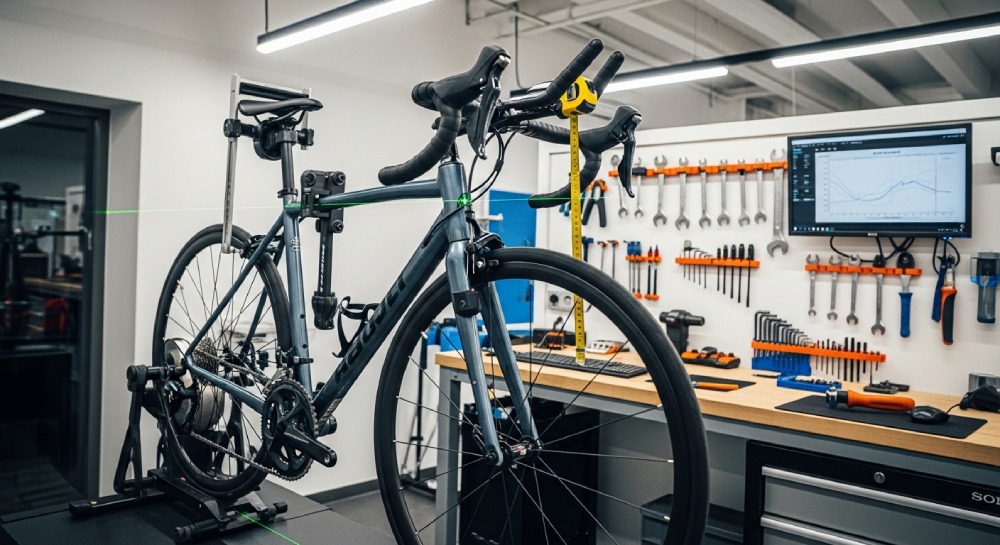
You’ll typically pay $50 to $150 for a basic bike fit, which covers saddle height, handlebar position, and cleat alignment. This is ideal for casual riders.
Professional fits range from $250 to $500+, offering 1.5 to 3-hour sessions with motion capture and biomechanical analysis. These are suited for serious cyclists.
Virtual fittings cost $35 to $75 yearly but lack real-time precision. Additional fees for retrofits or custom tweaks may apply.
Understanding these factors will help you pick the right fit for your needs.
Key Takeaways
- Basic bike fits cost between $50 and $150, focusing on saddle height, handlebar position, and cleat alignment.
- Professional fittings range from $250 to $500+, offering dynamic assessments and advanced motion capture technology.
- Virtual or subscription-based fittings cost $35 to $75 annually, suitable for DIY adjustments without real-time feedback.
- Add-ons or retrofit adjustments typically cost between $100 and $350 for custom changes after initial fitting.
- Prices vary by location, fitter expertise, technology used, and included services, with urban centers and certified fitters charging more.
How Much Does a Basic Bike Fit Usually Cost?
Basic bike fits typically cost between $50 and $150, depending on your location and the mechanic’s expertise.
When you opt for a basic fit, expect the mechanic to adjust saddle height, handlebar position, and cleat alignment to improve comfort and efficiency.
Many bike shops include this service free with new bike purchases, but standalone fits fall within this price range.
For casual riders, shops like Bell offer commuter fits around $79.99, focusing on general posture and ride comfort.
Entry-level fits often last 30-60 minutes and involve straightforward measurements without advanced motion analysis.
Keep in mind, basic fits generally don’t cover performance optimization or extensive biomechanical assessments.
This keeps your costs moderate while ensuring your bike suits your body dimensions and riding style for everyday cycling.
Proper frame size and fit are essential for optimal control, comfort, and to reduce fatigue and injury risk during long rides, especially on touring bikes with steel frames.
Professional Bike Fitting Prices Explained
If you’re looking to optimize your cycling performance beyond general comfort adjustments, professional bike fitting services provide an all-encompassing approach tailored to your biomechanics.
These fits typically range from $250 to $500, influenced by the fitter’s expertise, location, and technology used.
Expect session lengths between 1.5 to 3 hours, involving motion capture systems, dynamic assessments, and precise adjustments to saddle height, cleat positioning, and handlebar reach.
Advanced fittings, like Retül or Performance BikeFitter, command higher fees but deliver in-depth analyses and custom recommendations.
Additional costs may include bike measurement add-ons or retrofit parts.
Investing in a professional fit means you’ll improve power output, reduce injury risk, and gain a setup optimized for your unique anatomy and riding style, ensuring long-term cycling efficiency and comfort.
Choosing wheelsets with appropriate rim width and stiffness can further enhance your bike’s performance and comfort following a professional fit.
Shop-Specific Bike Fitting Fees Compared
When shopping around for bike fitting services, you’ll find fees vary markedly depending on the retailer and the scope of the fit.
Bike fitting costs differ widely based on provider and the extent of services offered.
For example, Bell charges $169.99 for a standard fit, with an additional $69.99 for new bike recommendations and extra costs for parts or labor on retrofits.
Jack Rabbit offers fits at around $200, positioning itself in the mid-tier range.
In Singapore, Performance BikeFitter’s standard fit starts at approximately $690 SGD, with specialized services like the Retül Müve Pre-Fit at $390 SGD for a shorter session.
Small adjustments, such as cleat or saddle fittings, typically range between $290 and $390 SGD.
These variations reflect differences in session length, technology used, and whether the fit includes bike setup advice or hardware changes.
Practical guides emphasize that an optimal bike fit improves comfort and reduces fatigue, highlighting the importance of bike fit and posture in everyday riding.
How Additional Fees and Discounts Affect Bike Fitting Costs?
Additional fees and discounts can materially alter the final cost of a bike fitting, so you should factor them into your budgeting.
For instance, Performance BikeFitter charges an extra $100 for bike measurement add-ons.
Some shops like Bell’s offer discounts, such as $100 off with a new bike purchase or $200 credit at Signature. These can substantially reduce your out-of-pocket expense.
On the flip side, many fitters provide free adjustments within a year for returning clients. This helps you maintain fit without repeated costs.
Evaluating these variables upfront ensures you avoid unexpected charges and optimize your investment in bike fitting.
Choosing the right accessories, such as a durable weatherproof frame bag, can complement your bike fitting investment by enhancing comfort and functionality on the road.
What Makes Bike Fitting Prices Vary?
You’ll notice that bike fitting costs can really vary. A big reason for this is the fitter’s expertise. Some fitters have years of experience, while others are just starting out. Plus, the equipment they use makes a difference too. For example, motion capture systems can really enhance precision, but they often come with a higher price tag.
Another factor to consider is how long the fitting session lasts. If you’re looking at a thorough fitting that takes up to three hours, you can expect to pay more than for a quick adjustment. It’s all about the level of detail and attention you need!
And don’t forget about location. If you’re in an urban center or a specialized shop, prices are usually higher. That’s because demand and overhead costs tend to be greater in those areas. So, it all adds up when you’re looking to get fitted for the perfect bike!
Additionally, fitters with certifications like the Certified Bicycle Technician program often charge more due to their validated expertise and training.
Expertise And Equipment
Because bike fitting requires specialized knowledge and precise technology, the expertise of the fitter and the equipment they use materially affect the cost.
When you choose a fitter, their experience level directly influences pricing. Seasoned professionals command higher fees due to their ability to diagnose complex biomechanical issues.
Additionally, advanced equipment like 3D motion capture systems, pressure mapping tools, and laser alignment devices markedly increase session costs.
These technologies provide detailed data that basic fits lack, allowing for precise adjustments to your saddle height, cleat positioning, and frame geometry.
Entry-level fits typically rely on manual measurements and visual assessments, which are less costly but less all-encompassing.
If you want a highly tailored fit that maximizes comfort and performance, expect to pay more for expert analysis combined with cutting-edge technology.
Accurate body measurements such as chest, waist, and hips are critical in ensuring the best fit during a bike fitting session, as improper sizing can lead to discomfort and reduced performance, making precise measurement an essential step.
Session Length And Location
Expertise and equipment set the foundation for your bike fitting cost, but session length and geographic location also play a major role in price variation.
Typically, sessions range from 1.5 to 3 hours. Longer appointments mean higher fees due to the fitter’s time and use of advanced tools like motion capture systems.
For example, a Retül Premium Fit lasts about 3 hours and commands a premium price around $1100 SGD. Meanwhile, shorter pre-fits or basic assessments can cost less but offer limited detail.
Location influences rates substantially, with urban centers and regions with higher living costs charging more. Additionally, shops in competitive markets may offer bundled or discounted fittings.
Remote areas might lack access to advanced equipment, affecting both availability and pricing. Consider session length and location carefully to balance cost and fitting quality. Many riders also factor in the cost of ergonomic saddle upgrades to enhance comfort post-fitting.
Virtual and Subscription Bike Fitting: Are They Worth It?
Virtual and subscription bike fitting options have shaken up the traditional fitting landscape by offering remote, cost-effective alternatives to in-person sessions.
With plans like MyVeloFit’s $35 two-week access or $75 annual subscription, you gain video mobility assessments and multiple upload capabilities. This enables you to self-manage sizing adjustments without physical appointments.
These platforms use algorithms and user input to recommend saddle height, cleat positioning, and frame adjustments, providing practical guidance at a fraction of pro fit costs.
However, they lack real-time professional feedback and advanced motion capture analysis, limiting precision for complex biomechanical issues.
If your needs are basic and budget constrained, virtual fittings present a viable solution. Yet, for nuanced performance tuning or injury prevention, traditional fits remain more reliable despite higher costs.
Moreover, understanding the importance of proper bike size can greatly enhance comfort and safety, which is emphasized in both biking and cycling disciplines.
How to Choose the Best Bike Fit for Your Budget?
While remote bike fitting options can offer budget-friendly convenience, selecting the best fit for your needs often depends on balancing cost with the level of customization and professional input required.
You should evaluate your riding goals, budget, and desired precision. Entry-level fits ($50-$150) work well for casual riders, while professional fits ($250-$500+) suit performance-focused cyclists.
Consider additional fees like retrofits or follow-ups, which affect total cost.
| Fit Type | Cost Range | Best For |
|---|---|---|
| Basic Shop Fit | $50 – $150 | Casual riders, new bikes |
| Professional Fit | $250 – $500+ | Competitive, endurance |
| Virtual/Subscr. | $35 – $75/yr | Budget-conscious, DIY |
| Add-ons/Retrofits | $100 – $350 | Custom adjustments |
Prioritize fit quality over price for long-term comfort and efficiency. Ensuring your bike fit accommodates ergonomic comfort can greatly reduce strain and improve your riding experience.
Frequently Asked Questions
How Long Does a Typical Bike Fitting Session Last?
You’d think bike fitting takes just a quick tweak, but it usually lasts between 1.5 to 3 hours.
During that time, you’ll undergo detailed measurements, motion capture analysis, and adjustments to saddle, cleats, and handlebars.
It’s a precise process, not a rushed job. Expect longer sessions if you want advanced fittings or multiple bikes assessed.
What Should I Wear to a Bike Fitting Appointment?
You should wear tight, moisture-wicking cycling shorts and a fitted jersey to your bike fitting appointment.
Avoid loose clothing that restricts the fitter’s ability to observe your movement and joint angles.
Bring your cycling shoes with cleats installed, as well as any accessories like gloves or glasses you normally use.
This attire guarantees accurate assessment of your riding position and biomechanics, allowing the fitter to make precise adjustments tailored to your comfort and performance.
Can Bike Fitting Help Prevent Cycling Injuries?
Yes, bike fitting can help prevent cycling injuries by optimizing your riding position to reduce stress on joints, muscles, and tendons.
A professional fit adjusts saddle height, handlebar reach, and cleat alignment to improve biomechanics, minimize overuse strains, and enhance comfort. This precise setup reduces risks like knee pain, lower back strain, and numbness.
Regular refits accommodate changes in flexibility or riding style, maintaining injury prevention over time.
How Often Should I Get My Bike Refitted?
Imagine feeling your saddle pressure shift or your knees ache mid-ride. That’s your cue to get refitted.
You should consider a bike refit every 1-2 years or after any significant body changes like weight fluctuation, injuries, or flexibility shifts.
Also, schedule a refit if you upgrade components or change riding style. Regular assessments guarantee prime biomechanics, prevent discomfort, and enhance efficiency.
This keeps your setup precise and your rides pain-free.
Are Bike Fittings Suitable for All Types of Bicycles?
Yes, bike fittings suit all bike types: road, mountain, commuter, and even triathlon bikes.
You’ll find specialized fits addressing each bike’s geometry and riding style. For instance, a road bike fit focuses on aerodynamics and power transfer, while a commuter fit emphasizes comfort and posture.
Professional fitters adjust saddle height, cleat position, and handlebar reach, tailoring to your bike’s specifics and your goals. This ensures peak performance and injury prevention.
The Right Bike Fit Is Worth Every Penny
When considering bike fitting, remember it’s an investment in your comfort and performance, not just an expense. Prices may vary, but the right fit can save you from future aches and inefficiencies.
Whether you opt for a basic or professional session, or explore virtual fittings, focus on value rather than cost alone. Choosing wisely guarantees you get a tailored experience that enhances your ride without emptying your wallet unnecessarily.