

If you want lighter tubes with superior air retention and durability, TPU is your best bet. It saves up to 40 grams per tube and holds pressure for weeks.
Latex tubes offer marginally lower rolling resistance and a suppler ride but lose 10–20 psi overnight and need frequent inflation.
TPU also resists pinch flats and heat better, though it costs more upfront. For a balanced view on performance and trade-offs, explore further details to optimize your choice.
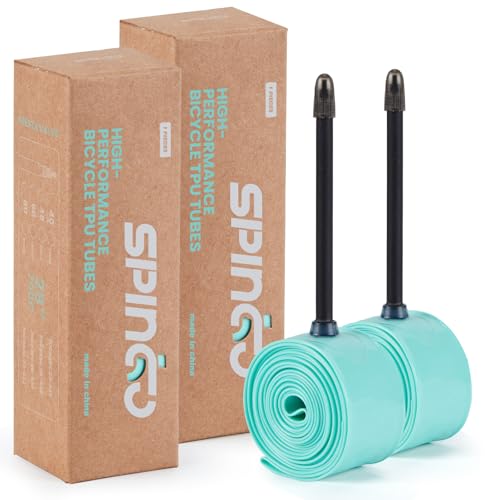
- Size Compatibility: Spingo Ultra-Light TPU Inner Tube 700c fits road bike tires from 23mm to 32mm…
- Three Presta Valve Options – 48mm / 60mm / 80mm: Match your rim depth—48mm standard, 60mm…
- Upgrade TPU Material: The Spingo TPU Tube 700c is up to 70% lighter than traditional butyl, reducing…
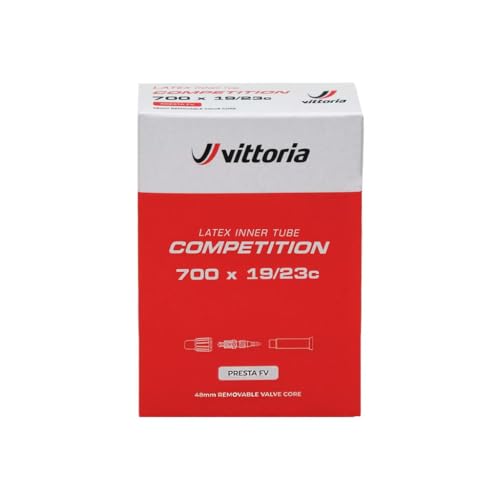
- Light and subtle latex bike inner tube for cyclists who require the best performances in race…
- Reduce rolling resistance – Latex bicycle tubes are light, subtle and generate low friction on the…
- Vittoria’s latex bicycle inner tube is crafted to provide the utmost stability plus puncture…
Key Takeaways
- TPU inner tubes offer superior air retention, maintaining pressure for weeks compared to latex’s rapid overnight loss of 10–20 psi.
- Latex tubes provide the lowest rolling resistance and the most supple ride, marginally outperforming TPU in speed and comfort.
- TPU tubes are significantly lighter than butyl and about 40 grams lighter than latex, improving acceleration and handling through reduced rotational mass.
- TPU has greater durability, better pinch-flat resistance, and heat resilience, making it more reliable and longer-lasting than fragile latex tubes.
- TPU tubes cost more upfront but reduce maintenance frequency and replacements, while latex demands frequent inflation and careful handling.
TPU or Latex Inner Tube: Side-by-Side Performance Comparison
| Feature | TPU Inner Tube | Latex Inner Tube |
|---|---|---|
| Material Type | Thermoplastic polyurethane | Natural rubber latex |
| Weight | Around 20–40 grams | Around 80–100 grams |
| Weight Advantage | Saves about 40 grams per tube | Heavier due to material properties |
| Rolling Resistance | Nearly matches latex | Slightly lower by about 1–2 watts |
| Ride Feel | Smooth and responsive | Softer and more supple |
| Air Retention | Excellent; holds pressure for weeks | Poor; loses 10–20 PSI overnight |
| Inflation Frequency | Every few weeks | Daily top-ups often required |
| Durability | High | More fragile |
| Pinch Flat Resistance | Excellent due to higher elasticity | Lower; more prone to pinching |
| Heat Resistance | Better thermal durability | Degrades faster with heat exposure |
| Installation Handling | Easier and more forgiving | Requires careful handling |
| Maintenance Needs | Low maintenance | Higher maintenance |
| Acceleration & Handling | Improved due to lower rotational mass | Slightly slower due to higher weight |
| Cost | Higher upfront price | Usually cheaper |
| Long-Term Value | Better due to durability and fewer replacements | Lower due to frequent inflation and replacements |
| Best For | Performance riders seeking durability and low maintenance | Racers prioritizing maximum comfort and lowest rolling resistance |
| Main Advantage | Lightweight, durable, and excellent air retention | Best ride softness and marginally faster rolling performance |
| Main Drawback | Higher purchase cost | Fragile and requires frequent maintenance |
TPU vs. Latex: Rolling Resistance Compared

While TPU inner tubes nearly match latex in controlled rolling resistance tests, latex still holds a slight edge by saving one to two watts per wheel pair.
This marginal difference arises from latex’s lower hysteresis losses due to its unique elastomeric properties, which translate into slightly less energy dissipation per tire revolution.
TPU’s polymer structure approaches this efficiency but retains marginally higher internal friction.
However, the gap is minimal and often falls within the variability range caused by tire casing, tread compound, and road surface conditions.
You’ll find that in real-world scenarios, the practical impact on speed or power output is negligible.
If you prioritize peak efficiency, latex remains ideal, but TPU offers a near-equivalent alternative with competitive rolling resistance performance.
Additionally, pairing TPU or latex tubes with wider rims (23 mm+) can further enhance comfort and grip without significant cost increases.
Weight Differences Between TPU And Latex Tubes
You’ll notice that TPU tubes weigh quite a bit less—usually around 20 to 40 grams—while latex tubes typically range from 80 to 100 grams. That’s a significant reduction in rotational mass!
This weight difference really affects how your bike accelerates and handles. For performance-focused riders, TPU tubes can be a game-changer.
Additionally, choosing the right tube type impacts overall rolling resistance, which influences efficiency and ride comfort.
Tube Weight Comparison
Because weight directly affects rotational inertia and acceleration, understanding the differences between TPU and latex inner tubes is essential for performance-focused cyclists.
TPU tubes typically weigh between 20 and 40 grams, markedly lighter than latex tubes, which range from 80 to 100 grams. This substantial weight difference translates to tangible benefits in ride quality and responsiveness.
Consider these key points:
- Switching from latex to TPU saves you approximately 40 grams per tube, reducing the rotating mass considerably.
- Compared to traditional butyl tubes (100–120 grams), TPU offers over 80 grams of weight reduction, enhancing acceleration.
- The lighter TPU tubes maintain structural integrity while optimizing weight, unlike latex which sacrifices durability for suppleness.
Choosing TPU means you gain a competitive edge through precise weight management without compromising tube performance. Additionally, TPU tubes often come with repair kits included, providing convenience for trail-side fixes.
Rotational Mass Impact
Rotational inertia plays a critical role in cycling dynamics, directly influenced by the weight of your inner tubes.
TPU tubes typically weigh between 20 and 40 grams, markedly lighter than latex tubes, which range from 80 to 100 grams.
This difference means TPU reduces rotational mass by at least 40 grams per wheel, which can enhance acceleration and responsiveness.
Because rotational mass affects the energy required to change wheel speed, even marginal weight reductions at the rim translate into measurable performance gains.
While latex tubes offer benefits like suppleness, their greater weight increases inertia, potentially slowing acceleration.
By choosing TPU, you minimize rotational resistance caused by tube mass, optimizing your bike’s dynamic efficiency during rapid cadence changes or sprint efforts.
This makes TPU tubes a technically superior option for riders prioritizing rotational mass impact.
Additionally, when selecting equipment for optimal performance, factors such as magnetic resistance systems in exercise bikes highlight the importance of minimizing rotational mass to improve efficiency.
Weight Savings Benefits
Frequently overlooked, the weight difference between TPU and latex inner tubes markedly influences overall bike performance. TPU tubes weigh between 20 and 40 grams, whereas latex tubes range from 80 to 100 grams. This discrepancy reduces rotational mass, impacting acceleration and climbing efficiency.
Consider these key points:
- Switching from latex to TPU saves 40+ grams per tube, reducing rotational inertia and improving responsiveness.
- Compared to butyl tubes (100–120 grams), TPU offers over 80 grams of weight savings, optimizing power transfer.
- Lower tube weight lessens fatigue during prolonged efforts, enhancing sustained rider performance.
Additionally, just as pH-neutral and acid-free formulations protect delicate finishes, choosing the right tube material can protect your bike’s performance and longevity.
Air Retention In TPU vs. Latex Inner Tubes
Typically, TPU inner tubes maintain air pressure far longer than latex tubes, requiring inflation only after several weeks.
You’ll notice that latex tubes lose 10 to 20 psi overnight due to their higher permeability, demanding daily inflation for consistent performance.
This rapid pressure loss stems from latex’s molecular structure, which allows air molecules to escape more readily compared to TPU.
TPU’s polymer matrix offers a denser barrier, markedly reducing gas diffusion and improving pressure retention.
If you prioritize convenience and consistent tire pressure over short intervals, TPU is superior.
While butyl tubes also provide excellent air retention comparable to TPU, latex tubes fall short, making them less practical for riders unwilling to inflate frequently.
Understanding these differences ensures you select the tube that best matches your maintenance preferences.
Additionally, choosing tires with puncture-resistant technology can complement TPU’s air retention benefits by reducing the risk of flats.
Durability And Flat Resistance In TPU Vs. Latex Tubes
While TPU tubes offer superior air retention, their mechanical properties also contribute markedly to durability and flat resistance. You’ll find TPU’s high elasticity essential for preventing pinch flats, as it better absorbs impacts without rupturing.
In contrast, latex tubes, although lightweight, are fragile and prone to pinching during installation or debris encounters, increasing flat risk. Additionally, TPU’s thermal resilience counters heat buildup from rim braking, extending tube lifespan where latex degrades quickly under high temperatures.
Key factors include:
- TPU’s elasticity reduces pinch-flat susceptibility compared to delicate latex.
- Thermal durability of TPU withstands rim brake heat better than latex.
- Latex’s fragility demands careful handling to avoid punctures and flats.
Choosing TPU means enhanced flat resistance and durability for demanding conditions. Furthermore, TPU’s balance of flexibility and strength is somewhat analogous to the folding bead tire concept, where flexible materials improve performance and durability over rigid alternatives.
Ride Comfort: TPU Vs. Latex Inner Tubes
You’ll notice that both TPU and latex inner tubes enhance ride comfort by allowing greater tire casing flex compared to butyl options.
TPU tubes provide a smooth, responsive feel that supports thinner tire models’ flexibility, improving road conformity and power transfer efficiency.
Latex tubes deliver the supplest ride, maximizing casing compliance for a livelier sensation.
While latex offers marginally superior softness, TPU achieves a near-equivalent ride with added structural robustness, reducing the risk of pinch flats.
This balance makes TPU tubes particularly attractive if you seek comfort without sacrificing durability.
Both materials enable the tire to absorb road irregularities better than butyl, but latex’s extreme flexibility edges TPU slightly in plushness.
Ultimately, your choice depends on whether you prioritize ultimate suppleness or a blend of comfort and resilience.
In high-performance cycling, selecting components like the best brake pads with optimized compound material can similarly enhance overall ride quality and safety.
Is TPU Worth The Extra Cost?
You might notice that TPU tubes tend to be pricier than latex ones. But here’s the thing: they offer some real performance advantages.
For starters, they’re lightweight, hold air better, and are more durable overall. This means you’ll likely find yourself inflating them less often, which cuts down on maintenance and extends the life of the tubes. Additionally, TPU tubes often feature tubeless readiness, enabling lower pressures for improved traction without sacrificing durability or speed.
Cost Versus Performance
Because TPU inner tubes combine advanced material engineering with notable performance benefits, their higher price tag often prompts riders to evaluate whether the cost premium justifies the gains.
When comparing TPU to latex, consider these key factors:
- Performance Efficiency: TPU nearly matches latex in rolling resistance, differing by only 1–2 watts. This mightn’t translate to significant real-world gains under variable conditions.
- Durability and Maintenance: TPU offers superior air retention and pinch-flat resistance. This reduces inflation frequency and maintenance effort compared to latex.
- Weight Savings: TPU tubes weigh approximately half as much as latex, delivering meaningful rotational mass reductions that can affect acceleration and handling.
Given these points, you’ll find TPU’s cost justified if you prioritize low maintenance, durability, and weight. Marginal speed improvements over latex may not offset the higher expense for all riders. Additionally, using biodegradable degreasers to maintain your bike components can complement TPU’s durability by reducing environmental impact during cleaning.
Long-Term Value
Evaluating long-term value requires balancing upfront costs against ongoing benefits in performance and maintenance.
TPU inner tubes, while pricier than latex, offer superior air retention. This reduces inflation frequency and minimizes maintenance time. Their excellent durability and resistance to pinches and heat translate to fewer replacements, offsetting initial expenses.
You gain consistent low rolling resistance nearly matching latex, with less pressure loss and enhanced ride reliability.
Latex tubes, although cheaper, demand daily inflation and are more vulnerable to damage. This increases upkeep costs and inconvenience over time.
When you factor in the extended lifespan and practical advantages, TPU’s extra cost becomes justifiable for riders prioritizing efficiency and durability.
Ultimately, TPU offers a more cost-effective solution for sustained performance, especially if you value reduced maintenance and long-term reliability.
Practical Benefits
Frequently, riders face the dilemma of whether the advanced features of TPU inner tubes justify their higher price compared to latex.
You’ll find that TPU offers practical benefits beyond marginal speed gains, which can influence your decision.
- Air Retention: TPU maintains pressure for weeks, reducing frequent inflation. Unlike latex, it loses 10–20 psi overnight.
- Durability: TPU’s high elasticity prevents pinch flats and resists heat degradation. This makes it more robust in demanding conditions.
- Weight Savings: TPU tubes weigh 40 grams less than latex. This markedly cuts rotational mass for improved acceleration and handling.
While TPU costs more, its superior air retention, durability, and weight reduction provide tangible advantages. These often outweigh the price difference for serious riders.
TPU vs. Latex: Real-World Performance
When you compare TPU and latex inner tubes in real-world conditions, the performance differences narrow markedly despite measurable disparities in laboratory tests.
While latex maintains the lowest rolling resistance, saving a few watts per wheel pair, TPU tubes approach this efficiency closely. Differences are often limited to one or two watts, values easily masked by road and tire variability.
TPU’s superior air retention reduces the need for frequent inflation, contrasting with latex’s rapid pressure loss. Additionally, TPU’s lighter weight and higher elasticity provide enhanced durability and resistance to pinch flats.
Both materials deliver a supple ride quality. In practice, these nuanced advantages make TPU an all-rounder, balancing speed, reliability, and maintenance.
Meanwhile, latex remains marginally faster but more demanding in upkeep.
When To Choose TPU Or Latex Inner Tubes?
Deciding between TPU and latex inner tubes hinges on balancing your priorities for performance, maintenance, and durability. You should pick TPU if you want a highly durable tube with excellent air retention and notable weight savings over latex.
Conversely, latex suits you best if minimizing rolling resistance and maximizing ride suppleness rank highest, despite its rapid air loss and fragility.
Consider these factors:
- Performance vs. Durability: Latex offers marginally lower rolling resistance but is fragile. TPU provides near-latex efficiency with superior durability and heat resistance.
- Maintenance Frequency: TPU maintains pressure for weeks, reducing inflation needs. Latex requires daily top-ups due to rapid air loss.
- Weight Sensitivity: TPU is notably lighter than latex, ideal if you seek rotational mass reduction without sacrificing robustness.
Choose based on which trade-offs align with your riding style and maintenance tolerance.
Maintenance Tips For TPU And Latex Inner Tubes
Maintaining TPU and latex inner tubes requires understanding their distinct air retention and durability characteristics to optimize performance and longevity.
You should inflate TPU tubes less frequently due to superior air retention. However, inspect for abrasion regularly.
Latex tubes demand daily inflation and careful handling to prevent pinches and punctures.
Store both types away from heat and direct sunlight to avoid premature degradation.
| Aspect | TPU Inner Tubes | Latex Inner Tubes |
|---|---|---|
| Inflation | Every few weeks | Daily |
| Handling | High elasticity reduces pinch risk | Fragile, prone to pinching |
| Storage | Cool, shaded, dry | Cool, shaded, dry |
Frequently Asked Questions
How Do TPU and Latex Tubes Affect Tire Noise Levels?
You’ll find TPU inner tubes slightly reduce tire noise compared to latex, thanks to their structural robustness and elasticity that dampen vibrations effectively.
Latex tubes, while offering a suppler ride feel, can transmit more road noise due to their thinner, more flexible casing allowing greater tire casing flex and resonance.
Therefore, TPU balances noise reduction and ride quality, making it a practical choice if minimizing tire noise without sacrificing comfort matters to you.
Are TPU or Latex Tubes Compatible With Tubeless Setups?
Neither TPU nor latex inner tubes are designed for tubeless setups, which rely on a sealed tire-rim interface without an inner tube.
If you want to run tubeless, you’ll need a dedicated tubeless tire and rim combination with proper sealant.
Using TPU or latex tubes inside a tubeless tire negates the tubeless system’s benefits, including reduced rolling resistance and improved puncture protection.
What Environmental Impact Do TPU and Latex Tubes Have?
You’ll find that TPU tubes, made from synthetic polymers, have a higher carbon footprint due to energy-intensive manufacturing.
However, they offer longer durability, reducing waste over time.
Latex tubes, being natural and biodegradable, break down faster but require frequent replacement, increasing consumption.
So, you trade TPU’s resource-heavy production for longevity against latex’s eco-friendly materials but shorter lifespan.
Your choice impacts environmental balance between durability and biodegradability.
Can TPU or Latex Tubes Be Repaired After Punctures?
You can repair both TPU and latex tubes after punctures, but your approach differs.
TPU tubes, being more elastic and durable, accept patch repairs well and resist further damage.
Latex tubes, however, are fragile and prone to tearing during patch application, making repairs less reliable.
Given latex’s sensitivity, you might find replacements more practical.
TPU tubes offer better longevity post-repair due to their robust material properties.
How Do Temperature Changes Affect TPU and Latex Tube Performance?
Wonder how temperature swings impact your tube’s performance?
TPU tubes resist heat buildup effectively, maintaining integrity and elasticity even under high temperatures. You won’t face premature degradation or pressure loss.
Latex tubes, however, degrade quickly with heat exposure and lose air overnight due to permeability, demanding daily inflation.
In cold conditions, both maintain pressure, but TPU’s thermal durability guarantees consistent performance. This makes it more reliable across varying temperatures.
- Size Compatibility: Spingo Ultra-Light TPU Inner Tube 700c fits road bike tires from 23mm to 32mm…
- Three Presta Valve Options – 48mm / 60mm / 80mm: Match your rim depth—48mm standard, 60mm…
- Upgrade TPU Material: The Spingo TPU Tube 700c is up to 70% lighter than traditional butyl, reducing…
- Light and subtle latex bike inner tube for cyclists who require the best performances in race…
- Reduce rolling resistance – Latex bicycle tubes are light, subtle and generate low friction on the…
- Vittoria’s latex bicycle inner tube is crafted to provide the utmost stability plus puncture…
TPU or Latex? Find the Best Inner Tube for Your Ride
When you weigh TPU against latex inner tubes, you’ll notice their differences align like gears in a finely tuned machine.
TPU’s lower rolling resistance and superior air retention often meet latex’s lighter weight and comfort in a delicate balance.
You’ll decide based on your priorities, whether durability or ride feel.
Choosing the right tube mirrors optimizing your ride: precision in material choice leads to peak performance and fewer flats, keeping you rolling smoothly every time.
Last update on 2026-10-15 / Affiliate links / Images from Amazon Product Advertising API