
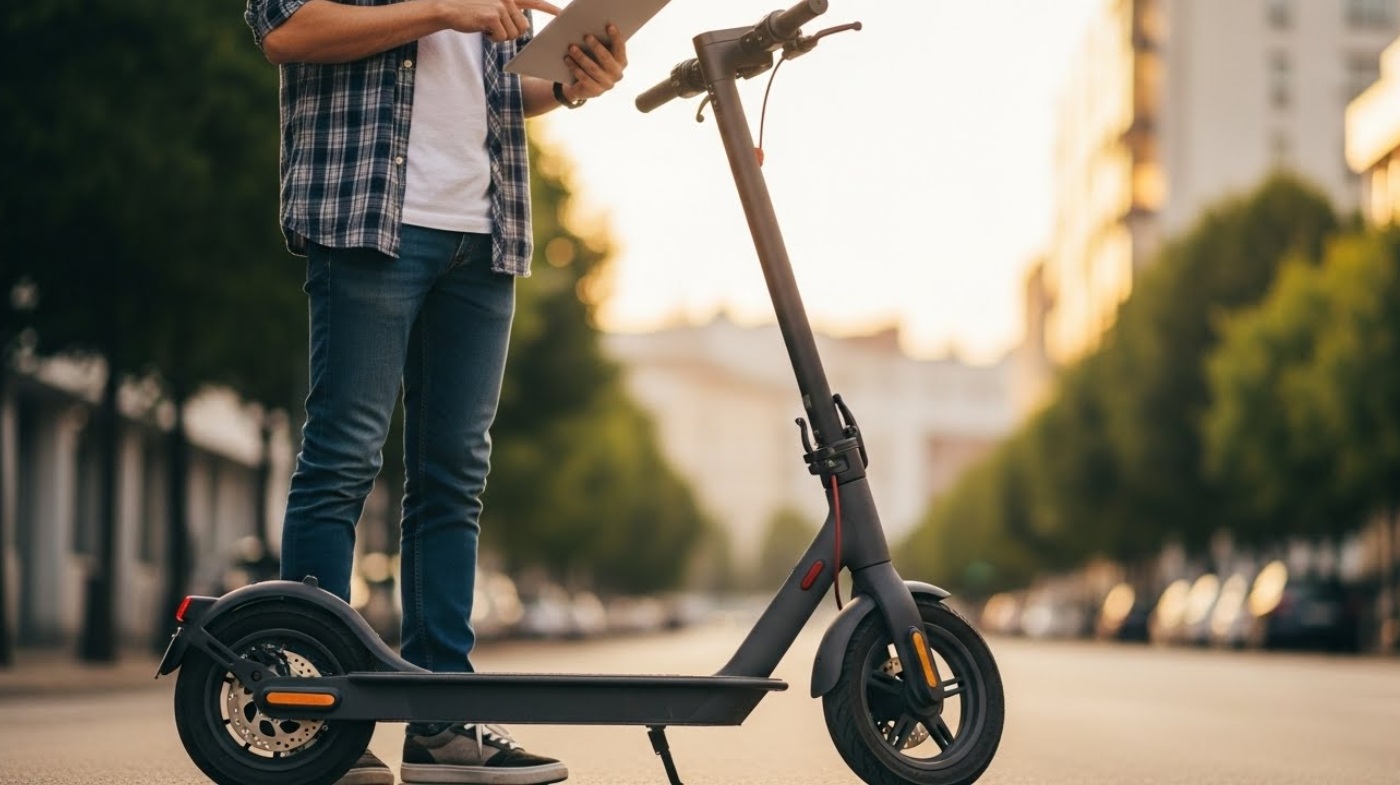
If you’re looking into i scooters, you’ll find they offer solid portability and user-friendly designs, often matching well with the rising trend of lightweight, foldable electric scooters.
Many incorporate smart features like IoT connectivity and improved battery tech, boosting range and safety.
Keep in mind regional preferences and regulations can affect which model fits best.
You’ll also want to contemplate customer feedback on durability and ride comfort.
Exploring further will reveal more on innovations and user experiences shaping today’s market.
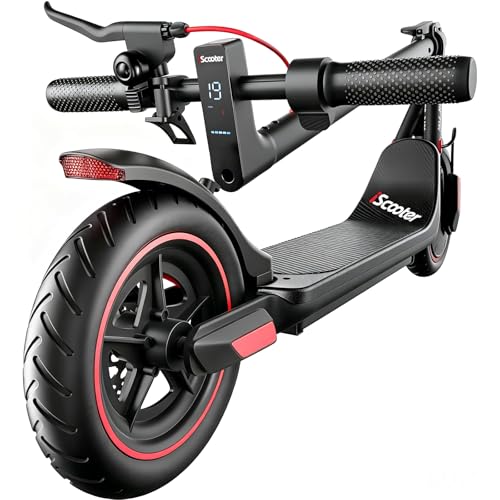
- Powerful & Efficient Ride: Equipped with a robust 350W rated motor (500w peak power), the iScooter…
- Smart App & LED Display: Stay in control with the iScooter App. Monitor speed, battery, and ride…
- Comfortable Pneumatic Tires: Enjoy a smoother ride with 8.5-inch pneumatic road tires that absorb…
Key Takeaways
- Top scooter brands like Ninebot, Xiaomi, and Razor dominate reviews with reliable performance, strong battery life, and user-friendly features.
- Asian markets prefer lightweight, foldable scooters such as Xiaomi 365, praised for portability and ease of use in reviews.
- Safety features like hands-on/off detection and advanced braking systems receive positive feedback in recent scooter model reviews.
- Users frequently highlight convenience, compact design, and smart city integration as major benefits in electric scooter reviews.
- Common criticisms include limited scooter availability, maintenance challenges, and the need for improved urban infrastructure.
Market Overview and Growth Trends
Although the global electric scooter market was valued at approximately $1.8 billion in 2025, it’s poised for explosive growth. Hiboy scooters, known for their durable steel frames, exemplify the increasing demand for reliable urban micro-mobility solutions.
It could potentially exceed $55 billion by 2033 and even reach over $321 billion by 2034 according to some forecasts.
You can expect unit sales to hit around 120 million annually within five years, driven by urbanization and sustainability trends.
Asia Pacific leads the market, with revenues projected to surpass $26 billion by 2030, reflecting its dominant regional role.
Growth is fueled by rising fuel prices, government incentives, and technological advances in battery efficiency. Advances like UL2272-certified batteries ensure improved safety and performance in electric scooters.
North America and Europe also show strong expansion due to infrastructure investments and environmental policies.
This rapid market evolution signals increasing consumer adoption and a shift toward electric micro-mobility worldwide.
However, the market remains highly fragmented, with top players like Ninebot, Xiaomi, and Razor holding around 30% combined market share.
Key Features and Innovations in Electric Scooters
As electric scooters gain popularity, manufacturers are rapidly integrating cutting-edge features and innovations to enhance performance, safety, and user experience.
You’ll find advancements in battery technology, including solid-state, graphene-based, and lithium-sulfur batteries. These promise ranges over 200 km and ultra-fast charging under an hour.
Smart technology integration offers IoT-enabled GPS tracking, AI-assisted navigation, and real-time diagnostics through mobile apps. This optimizes efficiency and maintenance. Many manufacturers are also focusing on developing smarter batteries and enhanced safety features to align with future market needs.
Safety improvements include hands-on/off detection, acoustic alerts, enhanced braking, and Vehicle Control Units coordinating multiple systems for reliability. Proper installation and regular maintenance are crucial to ensure continued safety and performance.
Designs emphasize lightweight, ergonomic, and modular elements for comfort and easy maintenance. Additionally, modular designs allow for easy removal and storage, improving convenience for users.
Additionally, environmental considerations drive the use of sustainable materials, battery recycling initiatives, and energy-efficient motors.
These innovations collectively make electric scooters safer, more efficient, and user-friendly, meeting increasing urban mobility demands.
Regional Insights and Popular Models
When exploring electric scooters worldwide, you’ll notice distinct regional preferences shaped by urban environments, regulations, and rider needs.
In North America, riders favor models like the Segway Ninebot MAX G3 and Niu KQi3 Max for their long range and comfort. Advanced users opt for dual-motor scooters such as the Gotrax GX3. Many North American scooters feature advanced suspension systems to handle diverse terrains comfortably.
Europe’s dense cities see popularity in compact, agile scooters like the Ninebot Max G2 and E2 Plus II, designed for short trips.
Asian markets prioritize lightweight, foldable scooters such as Xiaomi 365 and Niu KQi Air, emphasizing portability and battery life.
Australian riders seek durable, high-performance options like the Apollo City Pro and EMOVE Cruiser V2 for varied terrains.
Globally, the Ninebot Max and Niu KQi series maintain strong presence due to balanced performance and reliability.

- Innovative and Safe Magnetic Charging: The iScooter IK3 electric scooter for kids uses an innovative…
- 150W Motor & 3-Speed Adjustable: The ik3 electric scooter boasts a stable 150W motor, providing a…
- LED Display: Our kid’s electric scooter is equipped with a simple and easy-to-control LED display…
Safety Considerations and Regulatory Environment
Since electric scooters have surged in popularity, understanding their safety considerations and the regulatory environment is essential for every rider.
Federally, scooters are classified as low-speed electric vehicles, capped at 20 mph with motors up to 750W, but states and cities often set their own rules. For example, NYC’s Priscillas Law may soon require registration and license plates for e-scooters and e-bikes. Proper folding and secure locking mechanisms are important to ensure safety when transporting scooters.
You’ll need to check local laws for helmet requirements, age limits (usually 16+), and where you can ride. Sidewalk bans are common to protect pedestrians.
Safety gear like helmets, front and rear lights, and reflectors are either required or strongly recommended, especially for night riding.
Many areas restrict carrying passengers and enforce speed limits that vary by location.
Since inconsistent enforcement and rider inexperience contribute to accidents, staying informed about regulations and using proper safety equipment is vital to reduce injury risks. Additionally, mastering folding techniques helps maintain scooter integrity and rider safety during transport and storage.
User Experience and Common Feedback
How do riders really feel about electric scooters? Most users express positive sentiments after trying them, praising their convenience and fun factor. Over 80% in cities like Milwaukee report very favorable opinions. Initial skepticism among non-riders drops considerably after one or two rides.
However, common feedback highlights areas needing improvement: limited scooter availability and inconsistent maintenance, like flat tires and broken throttles. There’s also insufficient infrastructure, with calls for more bike lanes and paved trails. Cities are increasingly supporting scooters through expanded bike lanes and slow streets initiatives. Riders often emphasize the importance of proper clutch adjustment and maintenance for smooth operation, even on electric scooters.
Complaints about slow speeds impact commute efficiency. Users desire safer, more reliable rides in urban environments. You’ll find that while e-scooters are celebrated for easing short commutes and errands, addressing these concerns is key to enhancing overall user experience.
Future Outlook and Emerging Technologies
Addressing user concerns about scooter availability, maintenance, and safety depends heavily on advancements shaping the future of electric scooters.
Battery innovations like solid-state and graphene cells will extend range and cut charging times dramatically. Safety will improve with ABS, collision avoidance, and IoT-enabled diagnostics. Additionally, ongoing research and safety testing protocols are helping to establish safety standards that will guide future device certifications. Proper folding methods and maintenance practices also contribute to the long-term reliability and portability of scooters, enhancing user experience through folding safety.
Smart city integration will optimize routes and maintenance, enhancing your riding experience.
| Technology | Expected Timeline | Key Benefit |
|---|---|---|
| Solid-state batteries | By 2025 | Longer range, faster charge |
| Wireless charging | 2025 and beyond | Convenient, efficient charging |
| ABS & collision tech | By 2025 | Increased rider safety |
| AI navigation | Near future | Optimized routes |
| Market growth | 2025–2035 | More affordable, accessible |
These trends promise safer, more efficient scooter use aligned with urban mobility needs.
Frequently Asked Questions
How Long Does the Typical I Scooter Battery Take to Fully Charge?
A typical iScooter battery takes between 3 to 9 hours to fully charge, depending on the model and battery size.
Entry-level scooters usually charge in 3–6 hours, while high-capacity batteries need up to 9 hours.
Using the manufacturer’s recommended charger guarantees the best charging speed and safety.
Keep in mind, factors like battery health, temperature, and charging level can also affect the total charging time you’ll experience.
What Is the Weight Limit for Riders on an I Scooter?
Imagine hopping on an i scooter built just for you. The typical weight limit ranges from 200 to 330 lbs, depending on the model.
You’ll want to pick one rated at least 10% above your weight to guarantee safety and performance.
Heavier riders should look for reinforced frames and powerful motors.
Always check the manufacturer’s specs so you don’t risk damage or reduced lifespan by exceeding these limits.
Are Replacement Parts for I Scooters Readily Available?
Yes, replacement parts for iScooters are generally available, especially through dedicated online stores like iscooterglobal.eu and specialized suppliers such as Monster Scooter Parts.
You’ll find common components like tires, batteries, and controllers, though some parts might be out of stock occasionally.
However, you should check compatibility carefully and be prepared for occasional supply fluctuations or model-specific updates.
Can I Fold the I Scooter for Easy Transport?
Yes, you can fold the iScooter for easy transport. Just disengage the latch near the handlebar base, then bend the stem downward toward the rear fender.
It hooks securely in place, making it compact and portable.
When you’re ready to ride, press the trigger to release the hook, lift the stem upright, and lock the latch again.
This folding system is designed to be straightforward, secure, and ideal for urban commuting.
Choose Your i Scooter Today
As you navigate the evolving world of i scooters, remember that while these electric rides feel futuristic, they share the timeless appeal of the horse-drawn carriage, offering freedom and convenience.
Staying informed about features, safety, and regulations guarantees you make smart choices.
With innovations accelerating and regional preferences shaping the market, you’re poised to enjoy a reliable, efficient ride. Embrace the future, but never overlook the lessons from the past.
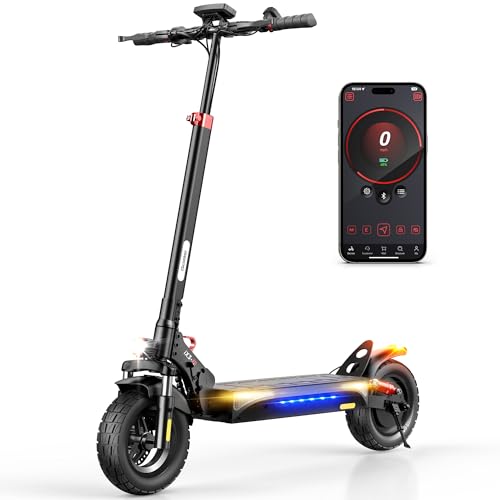
- 【High-Performance Electric Scooter at a Great Value】 iX3 commuter scooter for adults – your…
- 【Upgraded 3 Speed Modes & Full-Color Display】The iX3 adult electric scooter has been upgraded…
- 【Revolutionary Scooter with Height-adjustable Handlebar】 This adult escooter boasts a unique…
Last update on 2026-09-14 / Affiliate links / Images from Amazon Product Advertising API