
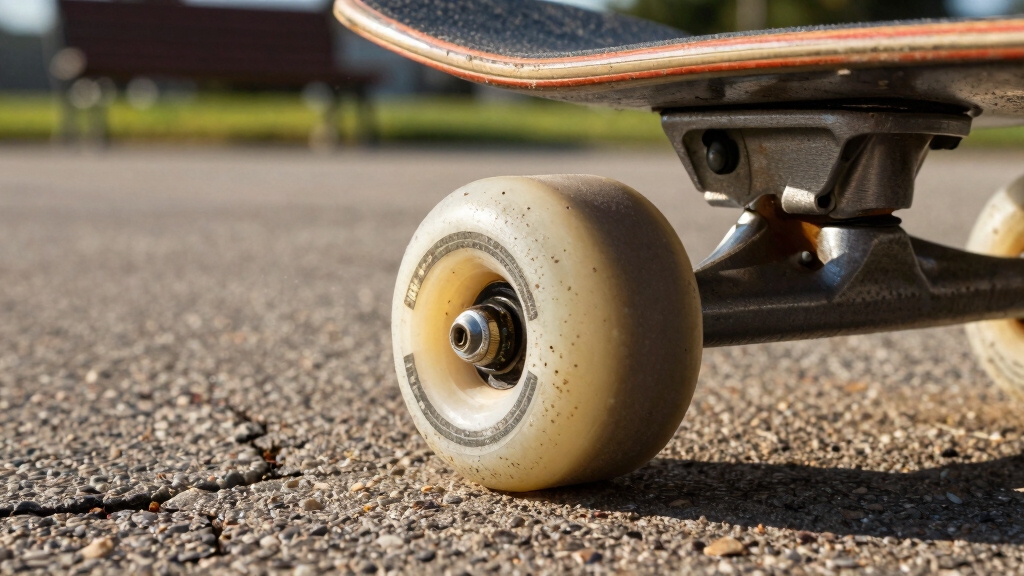
You’ll find polyurethane wheels ideal for outdoor use because they resist cuts, abrasions, and harsh weather far better than rubber or plastic.
They maintain structural integrity under heavy loads and extreme temperatures without deforming or cracking.
Their elasticity cushions impacts on rough terrain while UV and moisture resistance prevent material degradation.
With high load capacity and surface protection, polyurethane wheels guarantee reliable, durable performance outdoors.
Explore how their advanced design enhances outdoor functionality and longevity.
Key Takeaways
- Polyurethane wheels resist cuts, abrasions, and wear from rough outdoor surfaces like asphalt and gravel, ensuring long-lasting durability.
- They maintain structural integrity and load capacity across a wide temperature range without deforming or flat-spotting outdoors.
- Polyurethane wheels resist moisture, UV radiation, and ozone, preventing degradation and corrosion common in outdoor environments.
- Their shock absorption and vibration damping provide stable, comfortable performance on uneven terrain such as grass, dirt, and mulch.
- Aluminum core variants enhance load-bearing capacity, making polyurethane wheels suitable for heavy-duty outdoor industrial applications.
Why Polyurethane Wheels Are Great for Outdoor Use?

When you choose polyurethane wheels for outdoor applications, you benefit from their exceptional durability and weather resistance.
You’ll find these wheels resist cuts, abrasions, and wear caused by rough surfaces like asphalt and gravel. They maintain structural integrity under heavy loads without significant deformation.
They withstand moisture, extreme temperatures, and UV exposure without degrading or warping, ensuring reliable performance year-round. Unlike metal wheels, polyurethane wheels don’t corrode, making them ideal for wet environments.
Their resilience against environmental factors means you avoid frequent replacements and downtime. This combination of strength and resistance makes polyurethane wheels a precise choice for demanding outdoor conditions, where consistent performance and longevity are critical to operational efficiency.
Their engineered composition balances toughness with environmental adaptability effectively. Additionally, like folding bead tires, some polyurethane wheels offer improved ride suppleness and comfort due to their flexible material properties.
Why Polyurethane Wheels Outperform Rubber and Plastic Outdoors?
Polyurethane wheels deliver superior performance compared to rubber and plastic options, especially in demanding outdoor environments.
When you choose polyurethane, you benefit from enhanced durability, weather resistance, and load capacity that rubber and plastic simply can’t match.
Consider these key advantages:
- Durability: Polyurethane resists cuts, abrasions, and maintains integrity under heavy loads without deforming. Unlike rubber, which cracks, and plastic that fails under stress, polyurethane stands strong.
- Weather Resistance: It withstands moisture, UV rays, extreme temperatures, and ozone exposure. This prevents degradation common in rubber and plastic wheels.
- Load Capacity: Polyurethane supports heavy weights, distributing loads evenly to maintain stability. Plastic wheels lack sufficient strength, and rubber can flatten under pressure.
Additionally, polyurethane wheels contribute to ride comfort and stability by absorbing shocks and vibrations on uneven terrain, enhancing outdoor performance.
These technical strengths make polyurethane the best choice for reliable, long-lasting outdoor wheel applications.
How Polyurethane Wheels Resist Wear on Rough Terrain?
Polyurethane wheels really shine when it comes to resisting wear, especially on tough surfaces like gravel and asphalt. They do a fantastic job of minimizing abrasion, which means they can take a beating without falling apart.
One of the key features that make them stand out is their design. These wheels are built to maintain load stability by evenly distributing weight. This is super important because it helps prevent deformation and flat-spotting, even when there’s heavy pressure involved. Additionally, their construction with high rebound polyurethane and pre-installed bearings ensures smooth, fast rotation and low friction for enhanced outdoor performance.
Abrasion Resistance Benefits
Since rough terrain subjects wheels to constant friction and impacts, abrasion resistance becomes critical for maintaining performance and longevity.
You’ll find polyurethane wheels excel by resisting cuts, abrasions, and wear caused by debris and uneven surfaces. This durability helps preserve wheel shape and functionality over time, even under persistent stress.
Consider these key abrasion resistance benefits of polyurethane wheels:
- Superior wear resistance prevents premature surface degradation compared to rubber or plastic alternatives.
- Maintained structural integrity avoids flat-spotting and deformation during extended use on asphalt or gravel.
- Enhanced toughness reduces maintenance frequency and replacement costs in harsh outdoor environments.
Additionally, pairing polyurethane wheels with all-terrain tires and proper suspension can significantly improve ride comfort and durability on rough surfaces.
Load Handling Stability
When handling heavy loads on uneven terrain, maintaining wheel stability is essential to prevent premature wear and guarantee consistent performance.
Polyurethane wheels excel by distributing weight evenly, minimizing deformation and flat-spotting even under substantial pressure.
Their robust molecular structure resists cuts and abrasions from debris, preserving integrity on rough surfaces like asphalt and gravel.
Unlike rubber or plastic, polyurethane maintains stiffness without compromising shock absorption, ensuring smooth load transfer and reducing vibration-induced wear.
Aluminum core variants further enhance load-bearing capacity, making them ideal for industrial and construction applications.
This stability reduces maintenance frequency and extends service life, outperforming phenolic and metal alternatives that chip or corrode.
Additionally, proper wheel balance is crucial to prevent uneven stress and premature bearing failure, further enhancing durability and performance in demanding outdoor conditions by reducing vibration-induced wear.
How Polyurethane Wheels Stand Up to Weather Conditions?
Polyurethane wheels are pretty impressive when it comes to dealing with different weather conditions. They really shine when it comes to resisting moisture and UV exposure. This means that even after being outside for a long time, they won’t degrade easily.
Plus, they’re designed to maintain their shape and performance, no matter if it’s freezing cold or if the temperature climbs up to 180°F. So, you can count on them to work reliably, no matter what Mother Nature throws your way. Their durability and traction make them suitable for outdoor terrain such as grass, dirt, and mulch, although rougher surfaces may impact long-term reliability.
Moisture And UV Resistance
Although outdoor environments expose wheels to constant moisture and sunlight, polyurethane wheels maintain their performance without degradation.
You’ll find that polyurethane’s resistance to moisture prevents swelling, softening, or cracking, common issues in rubber wheels. Its molecular structure also blocks UV radiation, ozone, and sunlight from breaking down the material.
This guarantees long-term durability and consistent function outdoors.
Key reasons to rely on polyurethane wheels for moisture and UV resistance include:
- Water Resistance: Polyurethane repels water, preventing hydrolytic degradation and maintaining mechanical integrity.
- UV and Ozone Stability: The material’s chemical formulation resists photodegradation, preserving elasticity and strength.
- Non-Corrosive Nature: Unlike metal wheels, polyurethane eliminates rust risk, enhancing outdoor reliability.
Additionally, polyurethane wheels contribute to weight distribution and stability, which reduces stress on the hoverboard’s frame and motors during outdoor use.
These factors make polyurethane wheels ideal for prolonged outdoor use in various weather conditions.
Temperature Extremes Performance
Building on their resistance to moisture and UV radiation, polyurethane wheels also excel in handling extreme temperature variations encountered outdoors.
They maintain dimensional stability and load-bearing capacity in temperatures ranging from below freezing to 180°F, without warping, cracking, or softening.
This thermal resilience guarantees consistent performance in both scorching heat and severe cold, unlike rubber wheels that harden or crack under similar conditions.
Polyurethane’s molecular structure preserves elasticity, preventing brittleness in low temperatures while resisting deformation in heat.
This stability reduces maintenance needs and downtime caused by wheel failure.
Additionally, polyurethane wheels don’t suffer from metal corrosion or chemical degradation triggered by temperature-induced reactions, enhancing their reliability in fluctuating weather.
For outdoor applications facing broad thermal stresses, they provide a robust, durable solution that maintains operational integrity year-round.
How Much Weight Polyurethane Wheels Can Handle Outdoors?
When selecting polyurethane wheels for outdoor applications, understanding their load capacity is essential to guarantee safety and performance.
Choosing polyurethane wheels with the right load capacity ensures safety and optimal performance outdoors.
These wheels support heavy loads comparable to metal wheels without compromising durability or stability. Their design distributes weight evenly, preventing flattening and deformation even on uneven terrain.
For enhanced strength, aluminum core variants handle particularly heavy-duty tasks efficiently.
Consider these key points:
- Polyurethane wheels maintain structural integrity under substantial loads, suitable for industrial machinery and material handling.
- They prevent flat-spotting and deformation, ensuring consistent performance on rough surfaces like gravel or asphalt.
- Aluminum core options increase load capacity, making them ideal for demanding outdoor environments requiring robust support.
- Similar to steel wheel chocks, polyurethane wheels benefit from durable materials and proper maintenance to maximize safety and longevity.
How Polyurethane Wheels Protect Surfaces and Equipment Outdoors?
Polyurethane wheels consistently absorb shocks and vibrations, minimizing impact forces transmitted to both surfaces and equipment during outdoor use. This shock absorption protects delicate floor finishes and reduces wear on machinery.
Their elasticity dampens vibrations, preventing structural damage and extending equipment lifespan. Additionally, polyurethane’s resistance to abrasion and cuts guarantees surfaces remain unscathed despite rough terrain.
| Protection Aspect | Benefit |
|---|---|
| Shock Absorption | Reduces impact damage to surfaces & gear |
| Surface Protection | Prevents scuffs, scratches, and wear |
| Vibration Damping | Minimizes mechanical stress and noise |
| Durability | Maintains integrity on rough, uneven ground |
You can rely on these wheels to safeguard both your equipment and the surfaces it traverses outdoors. For enhanced longevity and performance, it is important to regularly inspect and maintain polyurethane wheels, similar to how regular maintenance benefits outdoor equipment such as bike racks.
Frequently Asked Questions
Can Polyurethane Wheels Be Repaired if Damaged Outdoors?
Yes, you can repair polyurethane wheels damaged outdoors, but the process depends on the damage type.
Minor cuts or abrasions can be patched with specialized polyurethane adhesives or fillers, restoring surface integrity.
However, significant structural damage like deep gouges or core damage often requires wheel replacement for safety and performance.
You should assess damage carefully, as improper repairs may compromise load capacity and durability, reducing the wheel’s effectiveness in outdoor environments.
Are Polyurethane Wheels Compatible With All Types of Outdoor Equipment?
Polyurethane wheels pair perfectly with plenty of popular outdoor platforms, providing powerful performance across varied vehicles.
You’ll find them compatible with many carts, machinery, and equipment due to their chemical resistance, weatherproof construction, and high load capacity.
Their elasticity and surface protection make them especially suitable for uneven terrain and heavy-duty applications.
However, always verify specific manufacturer guidelines to guarantee seamless integration with your particular outdoor apparatus.
How Do Polyurethane Wheels Perform on Icy or Snowy Surfaces?
You’ll find polyurethane wheels offer moderate traction on icy or snowy surfaces due to their elasticity and shock absorption.
However, they don’t provide the grip of specialized winter tires or chains.
Their chemical resistance and durability remain effective, yet without added treads or spikes, they may slip on ice.
For safer operation in snow, consider combining them with surface treatments or alternative wheels designed specifically for low-friction winter conditions.
What Maintenance Do Polyurethane Wheels Require for Outdoor Use?
Wondering how much upkeep polyurethane wheels need outdoors? You’ll find maintenance minimal due to their chemical and weather resistance.
Regularly inspect for embedded debris and clean wheels with mild detergent to prevent buildup.
Lubricate bearings occasionally to guarantee smooth rotation.
Avoid harsh solvents that could degrade components.
This straightforward routine preserves their durability and load capacity, letting you rely on consistent performance with minimal downtime in demanding environments.
Are There Environmental Concerns With Disposing of Polyurethane Wheels?
Yes, you should be aware of environmental concerns when disposing of polyurethane wheels. They’re not biodegradable, so landfilling contributes to long-term waste accumulation.
Recycling options exist but are limited and require specialized facilities.
Incineration can release harmful chemicals if not properly controlled.
You should prioritize reuse or send wheels to certified recyclers to minimize environmental impact. Proper disposal protocols help reduce pollution associated with polyurethane materials.
Invest in Strength: Wheels That Work as Hard as You Do
Choosing polyurethane wheels for outdoor use is like equipping your gear with a resilient shield. They are durable against rough terrain, weather, and heavy loads.
Their superior wear resistance and surface protection assure your equipment runs smoothly and lasts longer, no matter the challenge. By opting for polyurethane, you’re investing in reliability and performance.
This choice symbolizes strength and adaptability in every turn. Trust these wheels to keep you moving forward with confidence outdoors.