
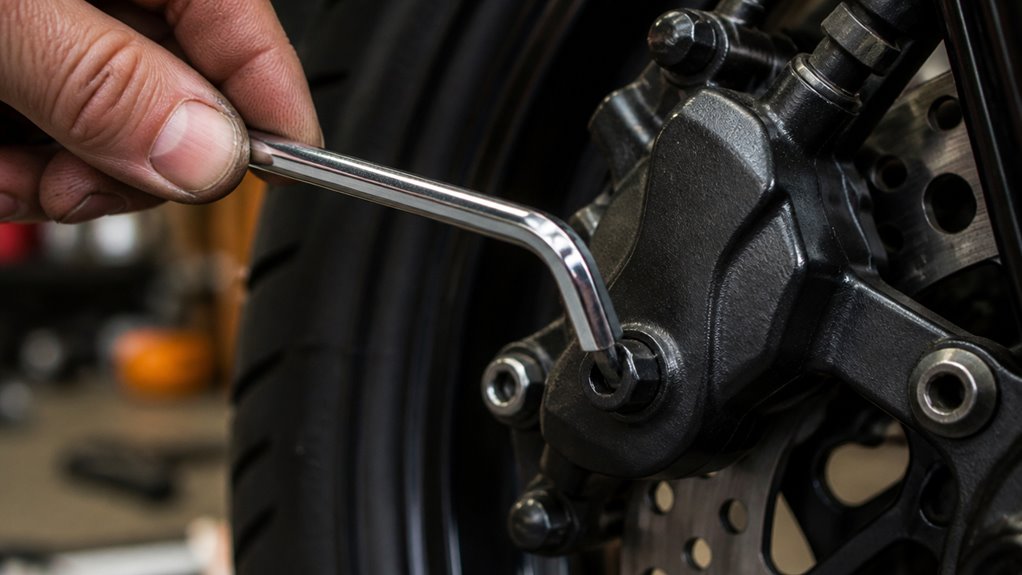
You’ll need different Allen wrench sizes for brake calipers depending on your vehicle and bolt type.
For bicycles, 4 mm and 5 mm are common for caliper and pad adjustments.
Cars often use external hex bolts requiring sockets, not Allen keys.
Automotive caliper bolts vary widely, from smaller internal hex fasteners to larger M12 or M14 external hex heads.
Identifying your bolt type and size precisely prevents damage.
Keep your wrench set handy so you’re ready.
There’s more to understanding these fitments and tool choices ahead.
Key Takeaways
- Common internal hex Allen wrench sizes for brake calipers are 4 mm and 5 mm, especially in bicycles and some automotive pad adjustments.
- Many automotive brake caliper bolts use external hex heads requiring sockets sized 14 mm to 21 mm, not Allen wrenches.
- Verify whether caliper bolts have internal or external hex heads before selecting an Allen wrench or socket.
- Consult vehicle or bike service manuals and OEM catalogs to confirm exact fastener sizes and avoid damage.
- Carry a metric Allen wrench set with 4 mm and 5 mm sizes for most internal hex brake caliper bolts.
Why No Universal Allen Wrench Size Exists for Brake Calipers?

Because brake calipers come in various designs and serve different vehicle types, you won’t find a universal Allen wrench size that fits them all.
Caliper fastener sizes depend on specific vehicle applications, manufacturers, and caliper models. Some calipers use smaller metric Allen keys, like 4 mm or 5 mm, especially in bicycle disc brakes or mechanical pad adjustments.
In contrast, automotive brake caliper bolts often feature external hex heads requiring sockets sized 14 mm to 21 mm. Additionally, thread sizes vary—M8, M12, or M14—affecting bolt head dimensions and the corresponding tool needed.
You must identify the exact fastener, noting whether it has an internal or external hex drive. Consulting vehicle-specific documentation guarantees you select the correct wrench size for safe, efficient brake caliper service.
When adjusting brakes, it is important to loosen brake caliper brackets carefully to avoid rotor damage and maintain proper brake function.
Common Allen Wrench Sizes for Automotive Brake Calipers
You know, when you’re working on automotive brake calipers, you’ll often come across 4 mm and 5 mm Allen wrenches. These are pretty handy for certain brake caliper components, especially when it comes to pad adjustments or hardware.
But here’s the thing: many caliper bolts are a bit larger. We’re talking about external hex heads that range from 14 mm to 21 mm. For those, you’ll need standard sockets instead of those Allen keys. Proper bleeder valve care is essential to maintain brake system integrity and prevent fluid leaks during maintenance.
Typical Allen Wrench Sizes
Typically, you’ll find that automotive brake calipers require various Allen wrench sizes depending on the manufacturer and model. Common sizes include 4 mm and 5 mm for some caliper-related components, especially in smaller or mechanical applications.
However, many automotive caliper bolts use external hex heads rather than internal Allen sockets. This requires sockets sized from 14 mm up to 21 mm. These sizes correspond to caliper bracket bolts with thread sizes like M12 or M14, which often demand larger hex tools.
Since no universal Allen size exists, you should always verify the fastener type, internal hex or external hex, before selecting your tool. Having a metric Allen key set plus metric sockets guarantees you’re prepared for the typical variations encountered in brake caliper hardware. Proper hardware inspection ensures safe and effective brake maintenance.
Automotive Caliper Bolt Variations
When working on automotive brake calipers, you’ll encounter various bolt designs that demand different Allen wrench sizes. Unlike bicycle calipers, automotive caliper bolts often use external hex heads, requiring socket wrenches instead of Allen keys.
You’ll need to select tools based on bolt size, thread, and head type to avoid damage or improper torque. Common variations include:
- 14 mm to 21 mm hex heads for caliper bracket bolts, often M12 or M14 thread size.
- Metric Allen keys like 4 mm and 5 mm for smaller caliper hardware or pad adjustments.
- Heavy-duty bolts with 19 mm or 21 mm hex heads for larger vehicles.
- Bolts graded 10.9 that require precise torque application during installation.
Always verify the fastener type before starting work. Proper maintenance, including bleeding motorcycle dual front brakes, ensures optimal brake performance and safety.
Common Allen Wrench Sizes for Bicycle Brake Calipers
When you’re working on bicycle brake calipers, you’ll usually come across 4 mm and 5 mm Allen wrench sizes for adjustments and mounting. It’s handy to have both sizes on hand!
But here’s a little tip: the tool size can actually vary between pad-adjustment screws and caliper mounting bolts, even if they’re from the same model. So, it’s always a good idea to double-check the correct size in your bike’s documentation. That way, you can ensure a proper fit and avoid any potential damage. Happy biking!
Also, maintaining proper adjustment and tension on brake components is crucial to avoid issues like wheel wobbling and ensure safe riding, especially when you don’t have specialized tools like a truing stand for wheel maintenance (wheel alignment).
Typical Allen Sizes
Although brake caliper designs vary, you’ll most often need a 4 mm or 5 mm Allen wrench for bicycle brake caliper adjustments and maintenance.
These sizes cover the majority of pad adjustments and mounting bolts on mechanical and hydraulic disc brakes. It’s critical to match the wrench size to the specific fastener to avoid stripping.
Typical Allen sizes for bicycle brake calipers include:
- 4 mm – Common for front disc caliper retention screws and lighter hardware.
- 5 mm – Often used for pad adjustment screws, especially on Shimano mechanical disc calipers.
- 3 mm – Occasionally found on smaller adjustment screws or cable clamps.
- 6 mm – Used less frequently but present on some mounting bolts in higher-end setups.
Confirm sizes with your bike’s documentation before starting work. When working on various bike components, having the right tools and avoiding damage to threads or parts is essential, as emphasized in the pedal removal process.
Adjustment vs Mounting Tools
In distinguishing between adjustment and mounting tasks on bicycle brake calipers, you’ll find that each requires different Allen wrench sizes tailored to their specific fasteners.
For adjustment, like pad alignment on Shimano mechanical disc brakes, a 5 mm Allen key is common. Some front disc calipers use a smaller 4 mm Allen wrench for fine-tuning retention screws.
Mounting hardware, however, may demand a different tool size altogether, often depending on the caliper design or manufacturer. Unlike automotive caliper bolts, which frequently use larger external hex sockets, bicycle caliper mounting bolts typically stick to smaller internal hex sizes.
Before starting work, always verify the fastener type and size. Mixing adjustment and mounting tools can damage bolt heads or compromise brake function. Keep metric Allen keys handy for precise service.
Additionally, using the correct tools is essential to avoid damage during removal or installation, as improper tools can cause fastener stripping or component damage.
Model-Specific Tool Requirements
Because brake caliper designs vary widely across bicycle models, you’ll need to confirm the exact Allen wrench size before maintenance or adjustments.
Bicycle brake caliper fasteners commonly use smaller metric sizes than automotive calipers. The tool requirements depend heavily on the model and manufacturer.
For example, Shimano mechanical disc brakes typically require a 5 mm Allen key for pad adjustments. Some front disc calipers use a 4 mm Allen screw for retention.
Here are key points for consideration:
- Consult model-specific documentation to verify tool size.
- Use a metric Allen wrench set covering 4 mm and 5 mm sizes.
- Identify if separate tools are needed for adjustment versus mounting.
- Avoid forcing incorrect sizes to prevent damage.
Additionally, regular maintenance and cleaning, such as removing dirt buildup, can help ensure proper brake caliper function and longevity.
How Automotive Caliper Bolt Sizes Affect Your Tool Choice?
Selecting the right tool for automotive brake caliper bolts hinges on understanding the bolt sizes and head types involved.
Choosing the correct tool for brake caliper bolts depends on knowing their sizes and head styles.
Automotive caliper bolts often come with hex heads ranging from 14 mm to 21 mm, corresponding to thread sizes like M12 and M14.
You need to identify whether the bolt has an internal Allen socket or an external hex head since this dictates your tool choice.
For example, Dorman caliper bracket bolts typically feature external hex heads, requiring metric sockets rather than Allen wrenches.
Matching the exact wrench or socket size prevents rounding off bolt heads and guarantees proper torque application.
Because bolt sizes vary by vehicle and caliper design, having a thorough metric wrench and socket set will help you adapt to diverse caliper hardware quickly and efficiently during brake maintenance or replacement.
When working on caliper bolts, it is important to maintain safety and prevent damage by using proper stabilization techniques such as leveling blocks and old tires to secure the motorcycle or vehicle during maintenance.
Choosing Between Allen Wrenches and Hex Sockets for Brake Caliper Bolts
When working on brake caliper bolts, you’ll need to decide whether to use Allen wrenches or hex sockets based on the bolt’s head type and size.
Allen wrenches fit internal hex (recessed) bolt heads, typically smaller sizes like 4 mm or 5 mm for bicycle calipers.
Hex sockets fit external hex heads common on automotive caliper bracket bolts, ranging from 14 mm to 21 mm.
To choose correctly:
- Inspect the bolt head: internal hex means Allen wrench, external hex means socket.
- Match tool size precisely; mismatched tools risk stripping.
- Use metric tools as most caliper bolts follow metric standards.
- Refer to vehicle or component documentation for exact specifications.
This guarantees efficient, damage-free caliper bolt service. For best results, always gather essential tools before starting any brake repair or maintenance.
How to Identify the Correct Allen Wrench Size for Your Brake Caliper Bolts?
To identify the correct Allen wrench size for your brake caliper bolts, start by examining the bolt head carefully to determine if it has an internal hex recess.
If it does, measure the distance across the flats of the recess using a caliper or ruler. Consult your vehicle’s service manual or parts catalog to confirm the metric size.
Remember, automotive caliper bolts often require external hex sockets instead. Use the table below as a quick reference for common brake caliper bolt sizes:
| Bolt Type | Hex Size (mm) | Typical Application |
|---|---|---|
| Internal Hex Allen | 4, 5 | Bicycle disc brake calipers |
| External Hex Socket | 14, 17, 18, 19, 21 | Automotive caliper bracket bolts |
| Pad Adjustment Allen | 5 | Shimano mechanical disc brakes |
Always verify before proceeding.
Safe Removal and Installation Tips for Caliper Bolts
After confirming the correct Allen wrench or socket size for your caliper bolts, focus on safe removal and installation to avoid damaging the fasteners or brake components. Use controlled force and the right tools to maintain bolt integrity and brake safety.
- Apply penetrating oil if bolts show corrosion. Let it sit before loosening.
- Use a torque wrench to tighten bolts to manufacturer specifications during installation.
- Avoid using worn or rounded tools, which can strip bolt heads or hex sockets.
- Inspect washers and replace if damaged to ensure even clamping and prevent loosening.
Following these steps helps preserve bolt threads and caliper function. This assures reliable braking performance while preventing costly repairs.
Where to Find Exact Tool Sizes for Your Specific Brake Caliper Model?
Although brake caliper designs vary widely, you can pinpoint the exact tool sizes needed by consulting your vehicle’s service manual or parts catalog. These resources list bolt head types, sizes, and thread specifications, ensuring you match the correct Allen wrench or socket.
Online parts databases and manufacturer websites also provide detailed fastener information by caliper model.
| Source | Information Provided | Example Tool Sizes |
|---|---|---|
| Vehicle Service Manual | Bolt specs, torque values | 5 mm Allen, 17 mm hex |
| OEM Parts Catalog | Part numbers, fastener details | 4 mm Allen, 14-21 mm hex |
| Manufacturer Website | Technical drawings, bolt types | 9 mm hex, M12/M14 bolts |
| Online Repair Forums | User experiences, model tips | All sizes, tool alternatives |
Using these references guarantees precise tool selection.
Frequently Asked Questions
Can Using the Wrong Allen Wrench Size Damage Brake Caliper Bolts?
Yes, using the wrong Allen wrench size can damage brake caliper bolts.
If the wrench is too small, it can strip the bolt’s internal hex, making removal difficult.
If too large, it won’t engage properly, causing slippage and rounding of the bolt head.
Always match the wrench size precisely to the fastener’s hex size to avoid rounding, stripping, or damaging the bolt.
This ensures safe and effective brake maintenance.
How Often Should Brake Caliper Bolts Be Checked for Wear or Damage?
You should check brake caliper bolts for wear or damage every time you service your brakes, ideally at least twice a year or every 12,000 miles.
While calipers may seem sturdy, neglecting bolt inspection risks unexpected failures.
Look for corrosion, stripped threads, or rounded heads.
Regular checks guarantee safe braking performance and prevent costly repairs.
Don’t wait for symptoms; proactive maintenance keeps your system reliable and secure.
Are There Specialized Allen Wrenches for High-Torque Brake Caliper Bolts?
Yes, you’ll find specialized Allen wrenches designed for high-torque brake caliper bolts.
These tools often feature thicker shafts and stronger steel alloys to resist stripping under heavy loads.
Some have longer handles for better leverage, helping you apply the necessary torque without damaging the bolt head.
Using a quality, torque-rated Allen wrench guarantees safe, effective tightening or loosening of brake caliper bolts, especially on heavy-duty or performance vehicles.
Can Corrosion Affect the Fit of Allen Wrenches on Brake Caliper Bolts?
Yes, corrosion can definitely affect the fit of Allen wrenches on brake caliper bolts.
Rust buildup can enlarge or distort the bolt’s hex socket, causing your wrench to slip or fail to engage properly.
You should clean the bolt thoroughly with a wire brush and apply penetrating oil before attempting removal.
Using the exact size Allen wrench is essential to avoid rounding off the bolt head during this process.
What Alternatives Exist if the Correct Allen Wrench Size Is Unavailable?
If you don’t have the correct Allen wrench size, you can try a few alternatives.
Use a high-quality adjustable wrench carefully to avoid rounding the bolt head.
A hex bit socket with a compatible ratchet might work if available.
You can also try using a slightly larger or smaller Allen key, but that risks damaging the fastener.
Ultimately, sourcing the exact size from a metric set or vehicle-specific toolkit guarantees proper fit and avoids harm.
The Bottom Line on Brake Caliper Allen Wrench Sizes
You won’t find one universal allen wrench size for brake calipers because sizes vary widely.
For example, if you’re working on a 2015 Honda Civic, you’ll likely need a 7mm or 8mm wrench.
Many mountain bikes use a 5mm or 6mm wrench.
Always identify your specific caliper bolts first to avoid stripping or damage.
Using the correct size tool guarantees a safe, efficient job every time; no guesswork, just precision.