

If you need high tensile strength with minimal weight, carbon fiber’s strength-to-weight ratio outperforms carbon steel by about five times. It also resists corrosion inherently.
However, steel offers superior compressive strength, toughness, and ductility. This makes it better for heavy-load, impact-prone applications.
Carbon fiber demands costly, specialized manufacturing, while steel remains economical and versatile.
Depending on whether tensile strength or compressive resilience matters more, choosing between these materials can markedly affect performance and cost. Further insights reveal more nuanced trade-offs.
Key Takeaways
- Carbon fiber is significantly lighter than carbon steel, with about one-fifth the density, enabling up to 70% lighter components.
- Carbon fiber offers superior tensile strength, while carbon steel excels in compressive strength, toughness, and ductility.
- Carbon fiber inherently resists corrosion and fatigue, whereas carbon steel requires protective coatings and is prone to corrosion.
- Carbon steel is more cost-effective and easier to manufacture, making it suitable for heavy-load and infrastructure applications.
- Carbon fiber is ideal for aerospace and automotive uses where high strength-to-weight ratio and environmental resistance are critical.
Carbon Steel or Carbon Fiber Comparison Table
| Feature | Carbon Steel | Carbon Fiber |
|---|---|---|
| Material Type | Metal alloy (iron + carbon) | Composite (carbon fibers + resin matrix) |
| Density / Weight | Heavy (~7,850 kg/m³) | Very light (~1,500–2,000 kg/m³) |
| Strength-to-Weight Ratio | Moderate | Extremely high (≈5× higher than steel) |
| Tensile Strength | 0.50–1.77 GPa | Up to ~7.06 GPa |
| Compressive Strength | Excellent | Lower than steel |
| Toughness & Ductility | High (absorbs impact well) | Low (brittle under impact) |
| Corrosion Resistance | Poor (needs coatings) | Excellent (inherent resistance) |
| Fatigue Resistance | Moderate (can crack over time) | Excellent (resists cyclic stress) |
| Impact Resistance | High | Lower (can crack or shatter) |
| Manufacturing Complexity | Easy, mass production | Complex, specialized processes |
| Cost | Low to moderate | High (materials + labor intensive) |
| Maintenance Needs | Higher (rust protection required) | Lower (corrosion-resistant) |
| Repairability | Easy (weldable, machinable) | Difficult (requires bonding/lamination) |
| Heat Resistance | Very high | Limited by resin (~200–300°C) |
| Recyclability | Highly recyclable | Limited, complex recycling |
| Best Use Cases | Construction, infrastructure, heavy machinery | Aerospace, automotive, sports equipment |
| Performance Focus | Strength, durability, cost-efficiency | Lightweight performance, efficiency |
| Environmental Resistance | Vulnerable to moisture & oxidation | Resistant to chemicals and environment |
Carbon Fiber vs. Steel: Key Differences and When to Use Each
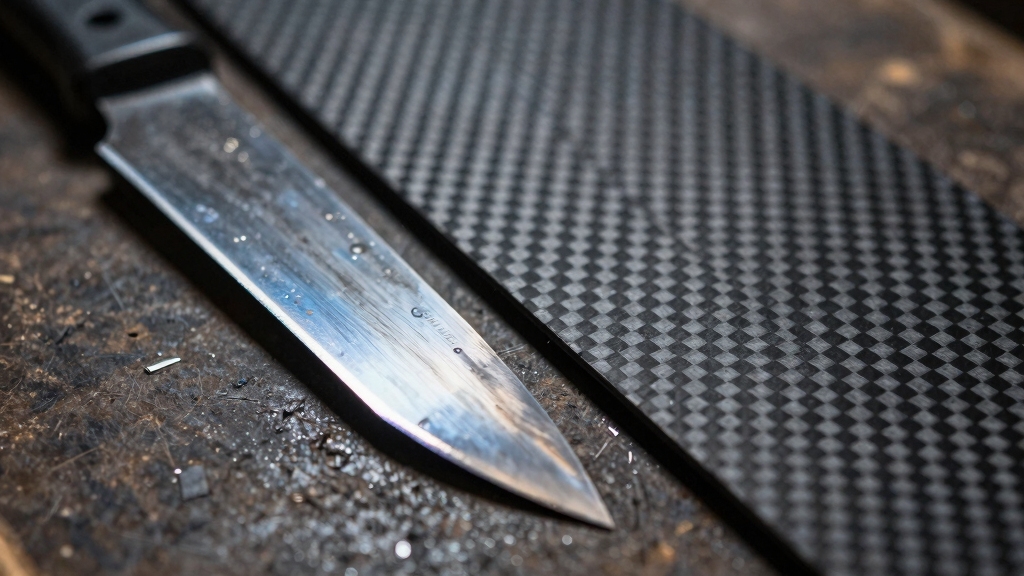
Understanding the key differences between carbon fiber and steel helps you select the right material for your project’s demands.
Carbon fiber composites offer exceptional tensile strength combined with a markedly lower density, about one-fifth that of steel. This makes them ideal when weight reduction is critical.
Carbon fiber excels in tensile strength while weighing significantly less than steel, perfect for weight-sensitive projects.
Steel, conversely, provides superior compressive strength, toughness, and ductility. These qualities are essential for applications requiring high load-bearing capacity and resistance to catastrophic failure.
Carbon fiber’s inherent corrosion resistance and fatigue endurance reduce maintenance needs. In contrast, steel demands protective coatings to prevent oxidation.
You’ll also notice manufacturing complexity and cost differ. Carbon fiber requires specialized, costly processes, while steel is more economical and widely available.
Additionally, the choice between materials affects frame weight and durability, influencing ride feel and performance.
Evaluating these factors lets you match material properties with application requirements. This balance helps in performance, durability, and budget constraints effectively.
Strength and Weight Comparison of Carbon Fiber and Steel
When comparing carbon fiber and steel, the most striking difference lies in their strength-to-weight ratios.
Carbon fiber offers a strength-to-weight ratio approximately five times greater than steel, thanks to its tensile strength reaching up to 7.06 GPa in high-strength variants.
It maintains a density around 1,500-2,000 kg/m³, roughly one-fifth that of steel’s 7,850 kg/m³.
This translates to components up to 70% lighter without compromising stiffness, as both materials exhibit elastic moduli above 200 GPa.
You’ll find carbon fiber ideal where minimizing weight is critical, such as aerospace or automotive sectors, improving efficiency substantially.
Conversely, steel’s higher density results in heavier structures, but it remains preferred when weight is less critical.
Steel balances load-bearing capacity with cost-effectiveness in industrial applications.
In electric scooter design, material choice such as carbon fiber frames plays a key role in reducing weight while maintaining durability.
Tensile vs. Compressive Strength: Carbon Fiber and Steel Performance
Carbon fiber excels in tensile strength, delivering up to 7.06 GPa in high-strength variants. This is several times greater than steel’s typical tensile strength, which ranges from 0.50 GPa (S355 grade) to 1.77 GPa (wire steel).
When you apply tensile loads, carbon fiber’s superior strength-to-weight ratio offers clear advantages, enabling lighter, stronger components. However, steel outperforms carbon fiber in compressive strength and flexural rigidity.
Steel provides better resistance to buckling and deformation under compressive forces. This difference stems from steel’s ductility and toughness, which help it absorb and redistribute compressive stresses more effectively.
When selecting between these materials, you must weigh tensile superiority versus compressive resilience. Consider your application’s dominant load types to optimize performance and structural integrity.
Durability of Carbon Fiber vs. Steel: Corrosion and Fatigue Resistance
Although steel offers impressive mechanical properties, it’s highly vulnerable to corrosion when exposed to atmospheric moisture. This demands protective coatings and ongoing maintenance to preserve structural integrity.
Carbon fiber composites inherently resist corrosion, chemicals, and environmental degradation, eliminating the need for such interventions.
When it comes to fatigue resistance, carbon fiber excels by withstanding repeated stress cycles without fatigue failure, outperforming steel markedly.
Steel, while tougher and more ductile, is prone to crack initiation and propagation under cyclic loading, especially when corrosion is present.
This susceptibility shortens steel’s effective lifespan in harsh environments.
Consequently, carbon fiber’s superior corrosion resistance and fatigue endurance reduce maintenance costs and enhance durability.
This makes it a more reliable choice for applications where long-term structural integrity under cyclic loads and corrosive conditions is critical.
Additionally, the use of high-heat resistant materials like Kanthal in catalytic converters demonstrates how advanced composites and alloys can improve durability in demanding environments.
Cost, Manufacturing, and Best Applications for Carbon Fiber and Steel
In balancing performance with budget constraints, you’ll find steel remains the more cost-effective choice compared to carbon fiber.
Balancing performance and budget often makes steel the more economical option over carbon fiber.
Carbon fiber’s manufacturing demands skilled labor, prolonged processing, and costly raw materials, driving up its price.
However, its superior strength, lightweight nature, and durability justify the investment in specific contexts.
Consider these factors when choosing between the two:
1. Cost and Manufacturing: Steel benefits from mass production and lower raw material expenses.
Carbon fiber requires complex, time-intensive fabrication.
2. Application Suitability: Use carbon fiber in aerospace, automotive, and sports equipment where weight reduction and strength are critical.
Steel suits heavy-load construction, manufacturing, and infrastructure with its high toughness and affordability.
3. Maintenance Impact: Carbon fiber’s corrosion resistance lowers lifecycle costs.
Steel demands protective coatings and ongoing upkeep.
Your choice hinges on balancing upfront cost against performance needs and maintenance considerations.
Lightweight materials like carbon fiber can significantly improve acceleration and throttle response by reducing rotational mass.
Frequently Asked Questions
How Does Carbon Fiber Recycling Compare to Steel Recycling Processes?
Recycling carbon fiber is more complex than steel recycling. You’ll find steel is easily melted and reshaped, making its recycling efficient and widespread.
Carbon fiber requires specialized processes like pyrolysis or solvolysis to recover fibers without degrading quality. These methods are energy-intensive and less mature, meaning recycled carbon fiber often has reduced mechanical properties.
You’ll face higher costs and limited recycling infrastructure for carbon fiber compared to the well-established steel recycling industry.
What Are the Environmental Impacts of Producing Carbon Fiber Versus Steel?
You’ll find that producing carbon fiber consumes more energy and emits higher CO2 levels than steel manufacturing, primarily due to its complex polymer precursor processing and curing.
Steel production, though energy-intensive, benefits from mature recycling systems reducing environmental strain.
Carbon fiber’s lower recyclability and reliance on fossil-based precursors contribute to greater ecological footprints.
However, its lightweight nature can reduce emissions during product use, offsetting initial impacts over time.
Can Carbon Fiber Be Welded or Joined Like Steel?
You can’t weld carbon fiber like steel because carbon fiber is a composite material, not a metal.
Instead, you join carbon fiber using adhesives, mechanical fasteners, or specialized bonding techniques.
These methods preserve its structural integrity without damaging fibers.
Unlike steel, which melts and fuses during welding, carbon fiber relies on resin matrices that degrade under heat.
How Do Temperature Extremes Affect Carbon Fiber and Steel Differently?
You’ll find carbon fiber handles temperature extremes differently than steel. Carbon fiber maintains mechanical properties under high heat but degrades beyond its resin matrix limits, typically around 200-300°C.
Steel withstands much higher temperatures without losing strength but expands markedly, risking structural deformation. In cold, carbon fiber retains stiffness, while steel becomes more brittle.
Are There Health Risks Associated With Handling Carbon Fiber Materials?
You might encounter minor discomfort when handling carbon fiber materials, mainly due to tiny fibers that can irritate your skin or respiratory system if inhaled.
These microscopic particles, while not overtly hazardous, require you to use protective gloves, masks, and proper ventilation during manufacturing or cutting processes.
Taking these precautions minimizes exposure risks and guarantees your safety, given carbon fiber’s inert chemical nature but potential for mechanical irritation.
Engineering Decisions Start with the Right Material
Choosing between carbon fiber and steel is like picking the right tool for your craft. Carbon fiber, light and strong, symbolizes innovation and speed, ideal when every gram counts.
Steel, dependable and resilient, represents enduring strength and stability, perfect for heavy-duty tasks. Understanding their distinct strengths and limitations lets you optimize performance and cost.
In the end, your choice shapes not just a product, but the very foundation of your engineering vision.