
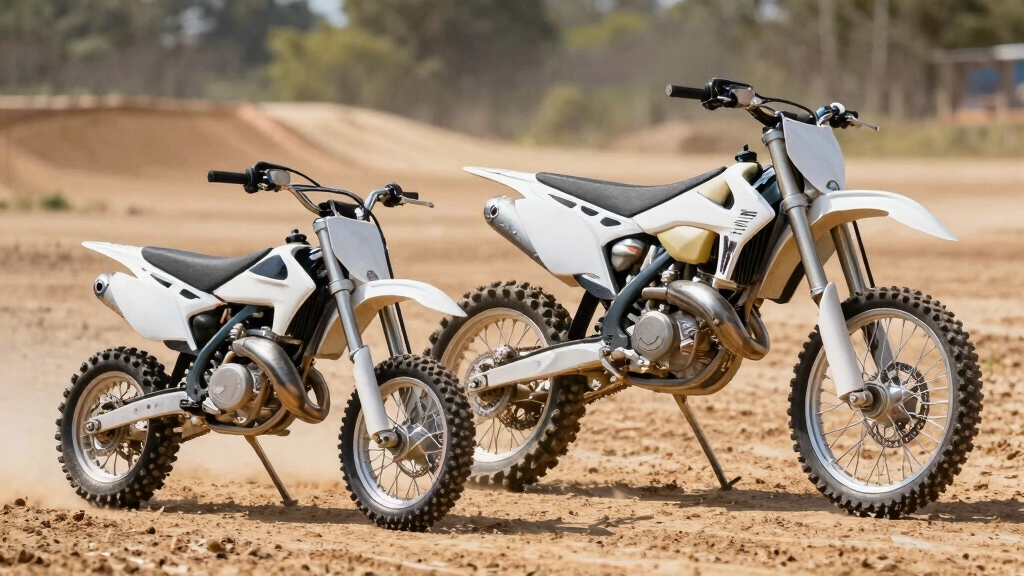
You’ll find pit bikes have smaller 4-stroke engines, compact frames, and smoother tires designed for agility on tight, mild tracks.
Dirt bikes use larger 2-stroke or advanced 4-stroke engines, taller frames, aggressive knobby tires, and robust suspension for handling rough terrain and jumps.
Dirt bikes demand more maintenance and cost more but offer superior power and control in rugged conditions.
Keep exploring to understand how these differences affect performance and usage.
Key Takeaways
- Pit bikes have smaller, lighter frames with lower seat heights (24–28 inches) for agility on compact tracks, while dirt bikes have taller, heavier frames over 36 inches.
- Pit bikes use 4-stroke engines (50cc–150cc) for smooth power and easy maintenance; dirt bikes often use more powerful 2-stroke or advanced 4-stroke engines (125cc–500cc).
- Dirt bikes feature taller, adjustable suspension (10–12 inches travel) for rough terrain and jumps; pit bikes have shorter, less stiff suspension (4–6 inches) focused on nimbleness.
- Dirt bike tires have aggressive knobby treads for superior grip on loose, technical terrain; pit bike tires are smoother for better handling on compact, controlled surfaces.
- Pit bikes are beginner-friendly, designed for training and backyard fun, while dirt bikes are built for competitive off-road riding and challenging trail conditions.
Every Rider Should Know: Pit Bike and Dirt Bike
| Feature | Pit Bike | Dirt Bike |
|---|---|---|
| Engine Size | Smaller 4-stroke engines (50cc–150cc) | Larger 2-stroke / 4-stroke engines (125cc–500cc) |
| Power Output | Smooth and moderate power | Stronger torque and higher speed |
| Frame Size | Smaller, compact frame | Larger and taller frame |
| Weight | Lighter and easier to handle | Heavier for stability |
| Seat Height | Lower seat height (24–28 inches) | Higher seat height (36+ inches) |
| Tire Design | Smoother tread for compact tracks | Aggressive knobby tires for rough terrain |
| Suspension | Shorter suspension travel | Long-travel suspension for jumps and rough trails |
| Terrain Use | Backyard riding, small tracks | Trails, motocross, rough off-road riding |
| Beginner Friendly | Very suitable for beginners | Better for experienced riders |
| Maintenance Cost | Lower maintenance cost | Higher maintenance and repair cost |
Pit Bike vs. Dirt Bike Engine Differences
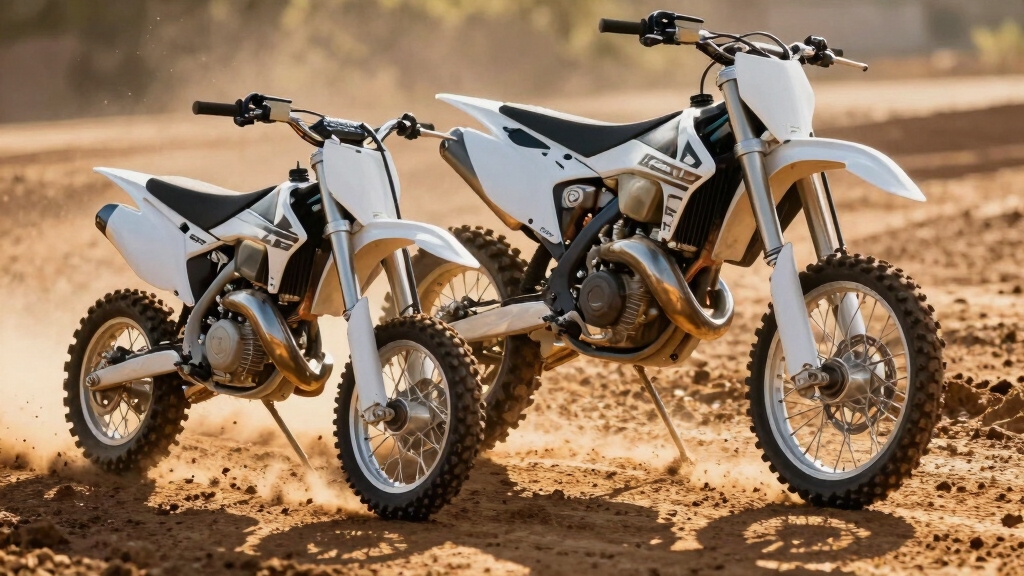
When comparing pit bike and dirt bike engines, you’ll notice they serve distinct performance roles optimized for their intended uses.
Pit bike and dirt bike engines deliver unique performance tailored to their specific riding demands.
Pit bikes rely on 4-stroke engines, offering swift acceleration and moderate top speeds, typically ranging from 50cc to 150cc, with some models reaching 250cc.
These engines provide smoother power delivery, ideal for controlled environments and beginner riders.
In contrast, dirt bikes utilize 2-stroke engines, which produce higher power output and better fuel efficiency within larger displacements of 125cc to 500cc.
This configuration delivers superior torque and acceleration, essential for aggressive off-road riding and competitive racing.
While pit bike engines focus on ease of use and manageable speed, dirt bike engines emphasize peak performance and durability under demanding conditions.
This makes their engine designs fundamentally distinct.
Additionally, many modern enduro and dirt bikes incorporate EFI fuel injection to ensure smoother throttle response and consistent power delivery across varied terrains and conditions.
Frame Size And Weight Differences
You might’ve noticed that pit bikes come with smaller frames that sit closer to the ground. This design makes them lighter and a breeze to handle, especially in tight spots.
On the other hand, dirt bikes are built with larger dimensions and a heavier weight. This gives them more stability and better ground clearance, which is super helpful for tackling rough terrain.
For example, just like choosing the right wood density is crucial for building a sturdy motorcycle wheel chock, the frame size and weight significantly affect a bike’s handling and durability.
Frame Dimensions Comparison
Although pit bikes and dirt bikes share off-road capabilities, their frame dimensions differ markedly to suit distinct riding needs.
Pit bikes have compact frames with lower seat heights, typically ranging from 24 to 28 inches. This allows closer ground proximity, enhancing control in confined spaces and suiting younger or beginner riders.
In contrast, dirt bikes feature taller, more robust frames with seat heights often exceeding 36 inches. These are designed to provide greater ground clearance essential for negotiating rugged terrain and obstacles.
Frame geometry on dirt bikes prioritizes stability at high speeds and aggressive handling. Additionally, pit bike frames are lighter and narrower, facilitating agility on smooth tracks.
Dirt bike frames incorporate reinforced materials to withstand intense stress during competitive riding and jumps. Understanding these dimensional differences helps you select the right bike for your intended off-road environment.
When maintaining or adjusting these bikes without specialized equipment, using leveling blocks and old tires can provide essential stability and prevent damage during lifting or repairs.
Weight Impact on Maneuverability
Since frame size and weight directly influence a bike’s handling, understanding their impact on maneuverability is essential.
Pit bikes feature smaller frames and lighter weight, allowing you to easily navigate tight spaces and make quick directional changes. This reduced mass decreases inertia, so you can accelerate and decelerate with less effort, enhancing control in confined areas.
In contrast, dirt bikes possess larger frames and heavier builds, prioritizing stability over nimbleness. Their weight improves traction and balance on rough terrain but demands more physical strength to maneuver, especially during rapid turns or low-speed maneuvers.
When choosing between the two, consider how weight affects your riding style: pit bikes excel in agility and responsiveness, while dirt bikes offer superior stability for aggressive off-road conditions. Additionally, reinforced suspension systems on dirt bikes help maintain control and comfort for heavier riders navigating rough terrain.
Pit Bike vs. Dirt Bike Tires And Terrain Handling
You know, when you look at dirt bike tires, you’ll see they’ve these aggressive knobby treads. They’re designed to give you superior grip on all sorts of tricky surfaces like mud, rocks, and sand.
On the flip side, pit bike tires have smoother profiles that work better on compact trails.
This difference in tire design really affects how each bike handles different terrains. Dirt bikes shine on those rough, technical trails, while pit bikes are much happier on smoother surfaces.
For example, tires with aggressive knobby tread provide enhanced traction on loose dirt and uneven terrain, making them ideal for dirt bike use.
Tire Design Differences
When traversing varied terrains, the tire design on pit bikes and dirt bikes directly impacts their performance and handling capabilities.
Dirt bike tires feature aggressive knobby rubber, engineered to grip loose surfaces like mud, sand, and rocks. This enhances traction during jumps and water crossings.
This design allows you to maintain control on rugged trails and absorb shocks through deep treads.
In contrast, pit bike tires have less aggressive, smoother rubber patterns optimized for lower speeds and compact tracks.
They provide sufficient grip on smooth dirt or packed trails but lack the deep tread needed for extreme off-road conditions.
Understanding these tire design differences helps you choose the right bike for your terrain. This ensures peak traction and handling without compromising safety or performance.
Proper tire balance is also essential to maintain better traction and overall handling during rides.
Terrain Adaptability Comparison
Although both pit bike and dirt bike tires serve off-road purposes, they adapt differently to varied terrains due to their distinct designs and construction.
When you ride, understanding these differences helps you choose the right bike for your terrain needs.
Dirt bike tires have aggressive knobby treads with rubberized compounds, providing superior grip on loose surfaces like mud, sand, and rocks.
Pit bike tires use less aggressive patterns optimized for smoother, compact trails, offering stability at lower speeds but limited traction on rugged terrain.
The larger dirt bike tires and advanced tread design allow you to confidently tackle varied surfaces and water crossings.
Pit bike tires prioritize control in tighter, less demanding environments.
This means dirt bikes handle diverse, challenging terrain better, while pit bikes excel in more controlled, moderate off-road conditions.
For example, tires with firm sidewalls enable riders to use lower air pressure for improved traction and reduced pinch-flat risk on varied terrain.
Performance on Rough Trails
Handling rough trails demands a combination of tire design and terrain adaptability, where dirt bikes clearly outperform pit bikes.
Dirt bikes come equipped with aggressive, rubberized knobby tires engineered for superior grip on mud, sand, and rocky surfaces. This enables you to maintain control on unpredictable terrain.
Their taller suspension systems absorb significant impacts, allowing you to tackle jumps and uneven ground with stability.
In contrast, pit bikes feature less aggressive tires suited for smoother trails and shorter suspensions focused on agility rather than heavy-duty shock absorption.
This makes pit bikes less capable on rugged trails but easier to handle in confined spaces.
If you prioritize navigating challenging off-road conditions efficiently, dirt bikes offer the necessary tire traction and suspension robustness to enhance your trail performance.
Many dirt bikes also incorporate dual suspension systems that significantly improve comfort and control on rough terrain.
Suspension Differences Between Pit Bikes And Dirt Bikes
Because pit bikes prioritize agility and ease of control, their suspensions are shorter and less stiff compared to dirt bikes. This design suits quick handling on smooth or mildly uneven terrain but limits shock absorption on rough trails.
Dirt bikes, conversely, use taller, stiffer suspension systems to handle larger bumps, jumps, and unpredictable off-road conditions.
Key suspension differences include:
- Travel Length: Dirt bikes offer longer suspension travel (typically 10-12 inches) for absorbing big impacts. Pit bikes have shorter travel (around 4-6 inches) focused on nimbleness.
- Spring Stiffness: Dirt bike springs are firmer to resist bottoming out on rough terrain. Pit bike springs are softer for easier control at lower speeds.
- Adjustability: Dirt bike suspensions often feature adjustable damping and preload. Pit bike suspensions are more basic with limited tuning options.
Additionally, the weight vs durability trade-off plays a role in suspension design, where heavier frames contribute to stability on rough terrain, impacting suspension performance.
Understanding these traits helps you choose the right suspension for your riding style and terrain.
Choosing Between Pit Bikes And Dirt Bikes: Intended Uses
Evaluating your riding goals is essential when choosing between pit bikes and dirt bikes.
If you’re focused on tight trail navigation, backyard fun, or beginner-friendly riding, pit bikes suit you best. Their smaller frames, lighter weight, and less aggressive tires offer agility in confined spaces and controlled environments.
Conversely, if you aim for competitive motocross, enduro, or rugged trail riding, dirt bikes deliver superior power, suspension travel, and tire traction. Their larger engines and specialized components handle high speeds, jumps, and rough terrain effectively.
Pit bikes also serve as excellent training tools, helping you develop skills before progressing to more demanding dirt bikes.
Ultimately, your intended use—from casual recreation to competitive racing—dictates the best bike choice. Additionally, selecting the right sprocket tooth count can optimize your bike’s torque, speed, and control for your specific riding style and terrain.
Price And Maintenance Comparison
When comparing pit bikes and dirt bikes, price and maintenance represent critical factors that influence ownership decisions. You’ll find pit bikes more budget-friendly, featuring simpler mechanics and cheaper, readily available spare parts.
Dirt bikes, however, come with higher upfront costs and demand more frequent, specialized upkeep to maintain peak performance.
Consider these key points:
- Pit bikes have 4-stroke engines with basic components, making repairs straightforward and less costly.
- Dirt bikes use higher-performance 2-stroke or advanced 4-stroke engines, requiring regular tuning and more expensive parts.
- Maintenance on dirt bikes involves suspension, tire, and engine care for rugged terrain, whereas pit bikes need minimal servicing due to milder use.
Choosing pit bikes means prioritizing affordability and ease. Dirt bikes suit riders ready for intensive maintenance and higher expenses.
Frequently Asked Questions
Can Pit Bikes Be Used for Motocross Racing?
You generally shouldn’t use pit bikes for motocross racing because they lack the power, suspension, and tire aggression needed for competitive tracks.
Pit bikes are designed for tight trails, casual riding, and skill-building, not high-speed jumps or rough terrain.
While you can practice basic techniques on a pit bike, shifting to a dirt bike is essential for serious motocross due to its superior engine size, suspension travel, and durability.
Are Dirt Bikes Suitable for Beginner Riders?
Dirt bikes can be a bit of a wild stallion for beginners. You’ll need solid control and confidence to handle their power and suspension.
Their larger engines and aggressive tires demand respect and skill, making them better suited once you’ve built some foundational riding ability.
If you’re just starting, you might find a gentler ride easier to master before tackling the high-performance dirt bike’s technical demands and spirited performance.
What Safety Gear Is Recommended for Pit Bike Riding?
You should wear a DOT-approved helmet to protect your head during pit bike riding.
Use goggles to shield your eyes from debris and dust.
Gloves improve grip and protect your hands.
Wear a chest protector or padded jacket to guard against impacts.
Knee and elbow pads reduce injury risk from falls.
Durable boots with ankle support are essential for foot and ankle protection.
Proper safety gear minimizes injury chances and enhances control.
How Long Does a Typical Pit Bike Engine Last?
You can expect a typical pit bike engine to last anywhere from 1,500 to 3,000 hours with proper care.
This longevity depends heavily on regular maintenance like oil changes and air filter cleaning.
Avoiding overheating is also crucial.
Since most pit bike engines are 4-stroke and relatively simple, they tolerate wear well, especially if you ride moderately.
Replacing worn parts promptly is essential.
Keeping your bike tuned extends engine life markedly.
Can Pit Bikes Be Modified for Higher Speeds?
Yes, you can modify pit bikes for higher speeds by upgrading the exhaust system, carburetor, and air filter to improve airflow and combustion efficiency.
Installing a larger sprocket or changing the gear ratio also boosts top speed. However, keep in mind the engine’s 4-stroke design and smaller displacement limit extreme performance gains.
Upgrading suspension and tires may be necessary to safely handle increased speed and maintain control.
Final Verdict: Pick Performance Over Price
When choosing between a pit bike and a dirt bike, you’ll want to ponder engine size, frame weight, and suspension precision to match your riding style and terrain.
Pit bikes excel in compact agility, while dirt bikes dominate rough, expansive trails. Maintenance and cost also vary markedly. With the right choice, you’ll handle any terrain like a pro. Make your decision based on performance needs, not just price.