
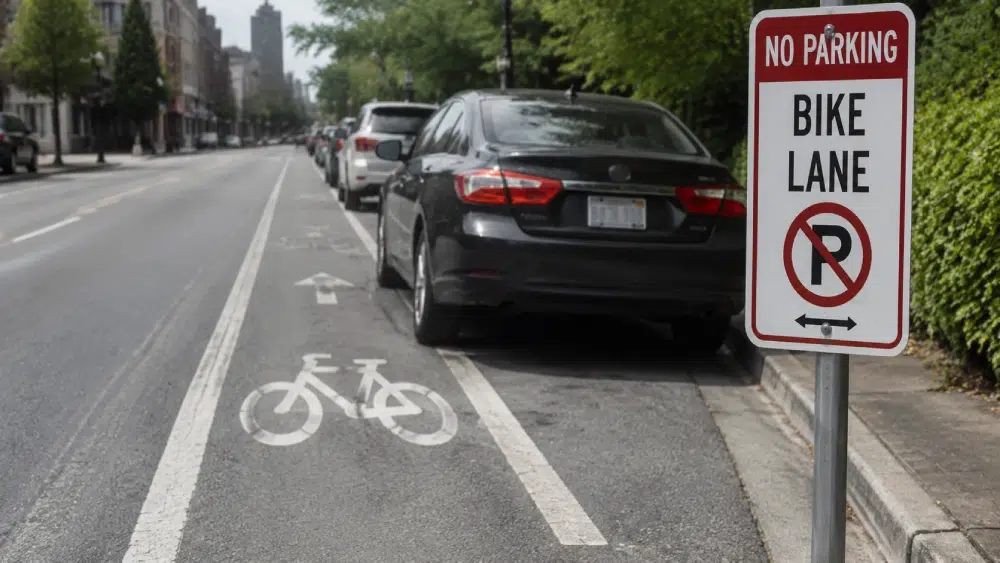
You can’t legally park in bike lanes in most places because they’re reserved for cyclists’ safe travel. Unless explicit signs say otherwise, parking, stopping, or loading there is prohibited and can lead to fines or towing.
Rules vary by region; some areas allow brief stops for commercial or public vehicles, but these are exceptions. Parking in bike lanes also puts cyclists at serious risk by forcing them into traffic.
Discover regional specifics and safety consequences to stay informed and compliant.
Key Takeaways
- Parking in bike lanes is generally illegal worldwide to keep lanes clear and safe for cyclists.
- Exceptions exist only with explicit local signage or authorized vehicle use, like loading or public transport.
- Illegally parked vehicles force cyclists into traffic, increasing accident risks and endangering public safety.
- Violations often result in fines, towing, and potential impacts on driving records and insurance.
- Always check local laws and signage before parking near or in bike lanes to avoid penalties.
Is Parking in a Bike Lane Generally Illegal?

Although specific regulations vary by location, parking in a bike lane is generally illegal in most jurisdictions worldwide.
You should understand that bike lanes serve as active travel lanes for cyclists, not as parking spots. Parking your vehicle there disrupts traffic flow and forces cyclists into potentially dangerous lanes meant for motor vehicles.
Laws explicitly prohibit stopping or parking in these lanes to maintain safety and efficiency. If you disregard these rules, you risk fines, vehicle towing, or both.
Enforcement agencies actively monitor bike lanes to prevent violations. Ignoring these rules not only endangers cyclists but also compromises public safety and may result in substantial penalties.
Always assume that bike lanes are off-limits for parking unless clear signage states otherwise.
Additionally, proper parking involves using designated zones or bike racks to avoid obstructing bike lanes and ensure safety for all road users.
When Is Parking Allowed in Bike Lanes?
While parking in bike lanes is generally prohibited, you can park there if explicit signage authorizes it or if specific local regulations provide exceptions. You must always look for and obey posted signs before parking in a bike lane. Without clear authorization, parking there’s illegal and unsafe.
Parking in bike lanes is only allowed with explicit signage or clear local exceptions; otherwise, it’s illegal and unsafe.
Here are key scenarios when parking in bike lanes may be allowed:
- When signs explicitly permit parking or stopping in the bike lane.
- For temporary loading or unloading of passengers or goods, if local rules allow.
- In areas where public transport or commercial vehicles are authorized to stop.
- When local ordinances provide specific exceptions, always confirmed by signage.
Always make certain you comply fully with conditions on any signage to avoid penalties and maintain cyclist safety. Additionally, be aware that improperly secured bike racks or bikes parked in these areas can pose safety risks to cyclists and other road users.
How Do Bike Lane Parking Rules Vary by Region?
How do bike lane parking rules differ depending on where you are? Regulations vary by region, reflecting local traffic policies and cyclist safety priorities. Generally, parking in bike lanes is prohibited, but exceptions exist based on signage, vehicle type, or temporary needs.
| Region | Key Rule/Exception |
|---|---|
| United States | All states ban parking; fines and towing apply |
| United Kingdom | No parking in solid-line cycle lanes; broken lines allow limited use |
| Australia (varies) | Some states allow commercial vehicle stops; others ban parking outright |
| Europe | Parking usually prohibited; allowed only to access permitted zones |
| Canada | Most provinces prohibit parking; local signage dictates exceptions |
Local ordinances often impose fines and towing penalties to enforce bike lane parking restrictions, emphasizing the importance of understanding local regulations.
Understanding these regional nuances ensures you comply with rules and keep bike lanes safe for all users.
What Are Australia’s Specific Rules for Bike Lane Parking?
In Australia, the rules for parking in bike lanes can differ quite a bit from one state to another. So, it’s super important to be aware of the local regulations before you park.
For instance, in places like Victoria and the Australian Capital Territory, certain vehicles, like buses and taxis, can actually park briefly in bike lanes under specific conditions. But, you’ve got to keep an eye out for any signs that indicate what’s allowed and what’s not. This way, you can avoid fines and help keep cyclists safe on the road.
Always double-check the local rules, and you’ll be good to go! It’s also important to understand that many jurisdictions prohibit riding or parking scooters on high-speed roads to enhance safety for all road users.
State-by-State Parking Rules
Because Australia’s traffic laws vary by region, you need to know the specific bike lane parking rules that apply where you drive. Each state enforces distinct regulations to protect cyclists and ensure traffic flow.
Consider these key points:
- In Victoria, buses and commercial vehicles can stop in bike lanes for passenger loading and unloading.
- New South Wales prohibits parking unless clearly authorized by signage.
- Queensland allows parking adjacent to bike lanes unless restricted by signs or lane width.
- The Australian Capital Territory bans parking in bike lanes except for public transport, taxis, and hire cars.
Always check local signage and rules before parking. Ignoring these regulations risks fines, towing, and creating hazardous conditions for cyclists. Stay informed to avoid penalties and promote safety on the road. Additionally, when traveling, it is important to notify relevant authorities at least 48 hours in advance about any mobility devices to ensure compliance with transport regulations.
Authorized Vehicle Exceptions
Understanding the general parking restrictions in each Australian state sets the stage for recognizing specific exceptions for authorized vehicles.
In many states, certain vehicles like buses, taxis, and commercial vehicles may stop or park in bike lanes under strict conditions. This is usually for loading, unloading, or passenger pick-up/drop-off.
You must always check local signage and regulations, as unauthorized parking remains prohibited.
| State | Authorized Vehicles | Conditions |
|---|---|---|
| Victoria | Buses, Commercial Vehicles | Passenger loading/unloading only |
| New South Wales | Buses, Commercial Vehicles | Signage required |
| Queensland | Public Transport, Taxis | Allowed unless signage forbids |
| ACT | Public Transport, Taxis, Hired Cars | Parking generally banned except authorized |
Always comply with posted rules to avoid fines or towing.
How Do US, UK, and European Laws Handle Bike Lane Parking?
While you might see bike lanes alongside many roads, US, UK, and European laws strictly prohibit parking in them to protect cyclists and maintain traffic flow. You need to understand these rules clearly:
- In all 50 US states, parking in bike lanes is illegal, with fines and possible towing.
- The UK Highway Code forbids parking in cycle lanes marked by solid white lines during active hours.
- European regulations treat bike lanes as travel lanes, disallowing stopping or parking except when entering permitted areas.
- Absence of explicit signage doesn’t mean you can park; default rules prohibit it.
- Properly securing bicycles with locks designed for the rack can prevent theft when parking near bike lanes.
What Are the Safety Risks and Penalties for Parking in Bike Lanes?
Parking in a bike lane can really create some serious safety issues. When you do that, cyclists often have to swerve into traffic, which can be dangerous for everyone on the road.
Plus, the laws around this are pretty strict. You could face fines or even have your car towed. It’s not just about the money—it’s about keeping our streets safe for everyone.
To further minimize risks, it’s important to understand and follow safe practices for securing your vehicle and bike racks when transporting bicycles.
Cyclist Safety Hazards
Parking in a bike lane creates significant safety hazards by forcing cyclists to merge abruptly into vehicle traffic lanes. This increases the risk of collisions. When a vehicle blocks the bike lane, you endanger cyclists who must swerve into faster-moving traffic, often without warning.
Consider these risks:
- Sudden lane changes can cause crashes with vehicles.
- Cyclists’ visibility decreases, especially in poor lighting.
- Emergency maneuvers become difficult, leading to injuries.
- Children and inexperienced riders face amplified dangers.
Additionally, low helmet use among cyclists further increases the severity of injuries in such crash scenarios, emphasizing the need for helmet safety practices.
Legal Penalties Overview
The hazards created by obstructing bike lanes carry significant legal consequences designed to deter such behavior. When you park in a bike lane, you endanger cyclists who must merge into traffic, increasing accident risks. Authorities impose penalties including fines and vehicle towing to enforce compliance and promote safety. Many jurisdictions emphasize the importance of respecting traffic flow to ensure the safety of all road users.
| Penalty Type | Description | Impact on You |
|---|---|---|
| Monetary Fines | Vary by jurisdiction, commonly $50-$200 | Immediate financial burden |
| Vehicle Towing | Applied if obstruction severely impacts traffic | Additional retrieval fees |
| Safety Risks | Forcing cyclists into busy lanes | Higher accident probability |
| Legal Records | Violations may appear on your driving record | Potential for increased insurance rates |
| Enforcement | Active monitoring by traffic authorities | Swift penalty application |
Avoid parking in bike lanes to protect cyclists and avoid costly penalties.
Enforcement and Fines
By illegally occupying bike lanes, you create significant safety hazards that prompt strict enforcement and substantial fines. Parking in these lanes forces cyclists into vehicle traffic, increasing accident risk.
Authorities actively monitor bike lanes to protect vulnerable road users and maintain traffic flow. When caught, you face penalties that vary by jurisdiction but often include severe consequences.
Here are key points to consider:
- Fines can range from moderate to hefty, depending on local laws.
- Your vehicle may be towed, leading to costly retrieval and storage fees.
- Blocking a bike lane increases public safety risks, potentially causing injury.
- Repeat offenses can escalate penalties, including higher fines and legal action.
Respecting bike lanes guarantees safety and helps you avoid costly enforcement measures. Additionally, proper bike rack installation ensures that bikes are transported securely without obstructing bike lanes or creating hazards for cyclists.
Frequently Asked Questions
Can Emergency Vehicles Park Temporarily in Bike Lanes During Urgent Situations?
Yes, you can park emergency vehicles temporarily in bike lanes during urgent situations. Laws recognize the necessity for emergency responders to access sites quickly, so exceptions exist for safety and assistance purposes.
However, this is strictly limited to active emergencies. Once the situation is resolved, you must move the vehicle promptly to avoid obstructing cyclists and traffic flow. Always prioritize clearing the lane as soon as possible to maintain safety.
How Do Bike Lane Parking Rules Apply to Electric Scooters and Mopeds?
Like cyclists, you must treat bike lanes as no-parking zones for electric scooters and mopeds unless signage explicitly allows it.
Parking them in these lanes disrupts safety and traffic flow, forcing others to swerve.
Regulations often classify these vehicles similarly to bicycles, so your scooter or moped shouldn’t block the lane.
Always check local rules, but generally, you’re expected to park off the bike lane to avoid fines and hazards.
Are There Specific Hours When Bike Lane Parking Restrictions Are Relaxed?
You’ll find that bike lane parking restrictions are rarely relaxed by time, but some regions allow exceptions during specific hours, often noted on local signage.
For example, South Australia permits parking during peak hours indicated on signs.
Without clear authorization, you shouldn’t assume any time-based leniency.
Always check local rules and posted signs carefully to avoid fines or towing.
Most jurisdictions enforce bike lane restrictions consistently throughout the day and night.
What Technology Is Used by Enforcement Agencies to Detect Illegal Bike Lane Parking?
You might think officers just rely on visual checks, but enforcement agencies use advanced technology like high-resolution cameras and automated license plate readers to detect illegal bike lane parking.
These tools capture clear evidence without needing constant human presence.
Some cities also deploy sensors embedded in the road and mobile apps for real-time reporting.
This tech guarantees consistent enforcement, deterring violations and keeping bike lanes clear and safe for cyclists.
Can Cyclists Report Illegal Parking in Bike Lanes to Authorities?
Yes, you can report illegal parking in bike lanes to authorities. Many local governments encourage cyclists and motorists to report violations through apps, hotlines, or online portals.
When you report, provide clear details like the location, vehicle description, and time. Authorities use this information to enforce regulations, issue fines, and improve cyclist safety.
Your vigilance helps keep bike lanes clear and promotes safer roads for everyone.
Bike Lane Laws Explained: What Drivers Need to Know
You might think parking briefly in a bike lane won’t cause harm, but it’s usually illegal and compromises cyclist safety.
While some regions allow exceptions, ignoring these rules puts you at risk of fines and accidents. Always check local regulations before stopping in a bike lane.
Protecting cyclists and maintaining clear pathways guarantees safer roads for everyone. Don’t make the mistake of assuming bike lanes are just extra curb space.