
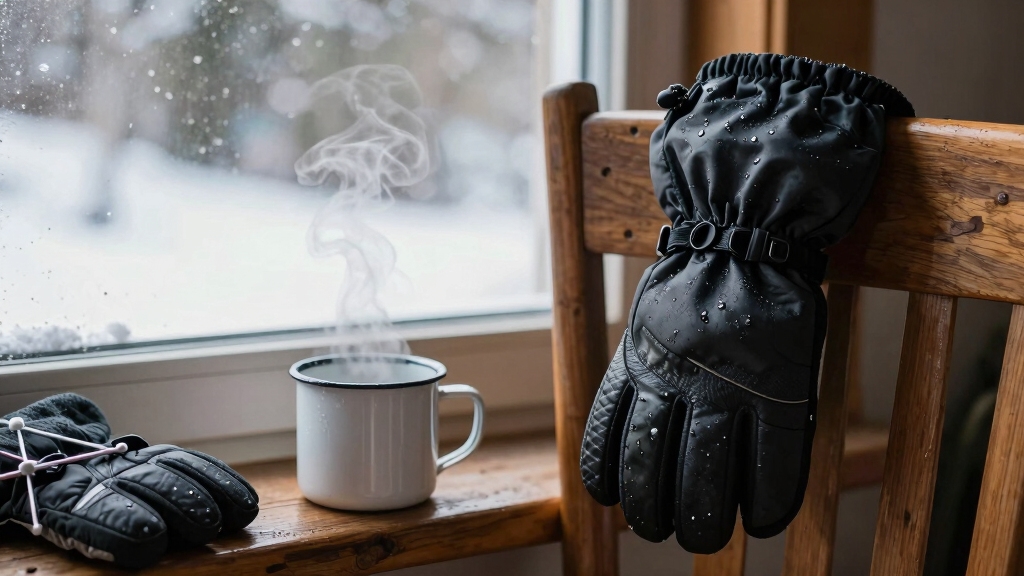
To dry your ski gloves effectively, first remove liners and gently squeeze out excess water without twisting.
Lay gloves flat or stand them upright in a well-ventilated area, avoiding direct heat or sunlight that can damage fabric and insulation.
Turn gloves inside out for thorough drying and use a fan to speed airflow without heat.
Dry liners separately on a clean towel.
Proper drying preserves warmth, shape, and waterproofing, while careful post-dry care and storage guarantee they stay fresh and ready for your next adventure.
Discover how to optimize each step for best results.
Key Takeaways
- Gently squeeze out excess water from gloves without twisting or wringing to avoid damage.
- Turn gloves inside out and lay flat or stand upright in a well-ventilated area for even airflow.
- Use a fan to circulate air around gloves for faster drying, avoiding direct heat sources like dryers or heaters.
- Dry liners separately by laying flat on a clean towel in good airflow, avoiding piling or direct heat.
- Check and rearrange gloves periodically during drying to ensure thorough and even drying until completely dry.
How To Prepare Ski Gloves For Drying?

Before you start drying your ski gloves, it’s important to prepare them properly to guarantee effective drying and maintain their quality.
First, check the care label to confirm whether your gloves are machine-washable.
Begin by checking the care label to see if your gloves can be machine washed.
Next, if needed, hand wash them gently with a mild detergent in lukewarm water, avoiding bleach or fabric softeners.
Rinse thoroughly to remove all soap residue, as leftover detergent can affect drying and fabric quality.
After washing, gently squeeze out excess water without wringing or twisting to prevent damaging insulation and materials.
Remove any detachable liners and set them aside to dry separately.
Finally, reshape your gloves to their natural form before laying them flat or standing them upright to dry, ensuring even airflow inside and out.
This careful preparation sets the stage for an efficient, safe drying process.
For optimal moisture management, consider using gloves made with breathable fabrics that help maintain airflow during drying.
How To Hand Wash Ski Gloves Safely?
When it comes to hand washing your ski gloves, it’s important to pick a mild detergent that’s gentle on the fabric and won’t mess with any waterproof coatings. You definitely want to avoid anything too harsh.
Start by filling a basin with lukewarm water and gently agitate the gloves. Just a light touch—no need to scrub them aggressively, as that could damage the materials.
Once you’ve given them a good soak, make sure to rinse them thoroughly to get rid of all that soap residue. You want them clean but not soapy! After that, you can move on to the drying process.
Choosing Mild Detergents
Selecting a mild detergent is essential to preserving the integrity and performance of your ski gloves during hand washing. Harsh detergents can strip waterproof coatings, damage insulation, and weaken fabric fibers.
Look for gentle, fragrance-free detergents labeled safe for delicate or technical fabrics. Avoid bleach, fabric softeners, and strong stain removers, as these can degrade materials and reduce glove lifespan.
You want a detergent that effectively removes dirt and oils without compromising breathability or water resistance. When washing, use only a small amount of detergent to prevent residue buildup, which can affect drying and comfort.
Choosing the right detergent guarantees your gloves stay clean, functional, and durable. This makes your next ski trip more enjoyable and protects your investment in quality gear.
Because water exposure can impair protective gear, understanding water resistance limits is important when caring for your ski gloves.
Proper Washing Techniques
Although washing ski gloves may seem straightforward, proper hand washing techniques are essential to preserving their materials and functionality.
Start by filling a basin with lukewarm water and adding a mild detergent. Submerge your gloves and gently rub the fabric to loosen dirt. Avoid scrubbing harshly or twisting.
Rinse thoroughly under cool running water to remove all soap residue, as leftover detergent can damage the glove’s waterproofing.
Once clean, gently squeeze out excess water without wringing. If your gloves have liners, remove and wash them separately.
Always check the care label first; some gloves may have special instructions. Following these steps helps maintain insulation, breathability, and the glove’s overall durability.
This ensures they stay effective and comfortable for your next ski trip.
To maximize warmth, consider gloves with 3M Thinsulate insulation which offers high warmth retention even in extreme cold.
How To Remove Excess Water From Ski Gloves?
Start by gently squeezing your ski gloves to remove excess water without twisting or wringing them. This can damage the fabric and insulation.
Press the gloves firmly but carefully to expel water. Avoid twisting, which may distort the glove’s shape and harm insulation. Use a clean towel to pat down the gloves, absorbing additional moisture.
Repeat squeezing and patting until no more water seeeps out.
It is important to use insulated, windproof gloves to protect your hands from frostbite during cold exposure.
| Step | Action |
|---|---|
| 1 | Gently squeeze gloves |
| 2 | Avoid twisting or wringing |
| 3 | Pat dry with clean towel |
| 4 | Repeat squeezing if needed |
| 5 | Prepare gloves for air drying |
This method protects your gloves and speeds up the drying process efficiently.
Why Avoid Heat When Drying Gloves?
When you dry your ski gloves using heat sources like clothes dryers, heaters, or hair dryers, you risk damaging their materials and insulation.
Drying ski gloves with heat sources risks damaging their materials and insulation, reducing effectiveness and durability.
High heat can warp synthetic fabrics, shrink natural fibers, and break down waterproof coatings, leaving your gloves less effective against moisture. Insulation fibers may clump or lose their loft, reducing warmth and comfort.
Prolonged heat exposure also weakens seams and adhesives, compromising glove durability. Even direct sunlight can fade colors and degrade fabrics over time.
By avoiding these heat sources, you preserve the glove’s structural integrity and performance. Instead, opt for gentle drying methods that protect delicate materials.
This ensures your gloves stay functional and comfortable season after season without the risk of irreversible damage caused by excessive heat.
Using low-heat drying methods recommended for delicate gear helps maintain the protective coatings and insulation quality of your gloves.
Ideal Air Drying Techniques For Ski Gloves
Protecting your ski gloves from heat damage means relying on air drying as the safest method.
Start by gently squeezing out excess water without wringing or twisting to avoid fabric distortion.
Lay your gloves flat on a clean surface in a well-ventilated area, or stand them upright to let warm air circulate inside. Turning them inside out helps dry the interior thoroughly.
To speed drying, position gloves where air flows freely, like between a wall and an object, or use a fan for better circulation. Avoid direct sunlight or heat sources to preserve materials and waterproof coatings.
Check gloves periodically; drying usually takes several hours or overnight.
Once dry, reshape gloves to maintain form and prepare them for your next adventure.
Proper storage in a warm, dry environment is crucial to protect the gloves and prevent damage to their waterproof materials.
How To Dry Ski Glove Liners Separately?
As soon as you finish skiing, it’s a good idea to take the liners out of your gloves.
This way, they can dry separately and much faster. Just lay them flat in a spot with good airflow—ideally, somewhere that doesn’t get direct heat. Trust me, avoiding those heat sources is crucial because they can really damage the delicate materials. Additionally, using non-slip shoes while handling wet gear can help prevent accidents caused by slippery surfaces.
Remove Liners Promptly
To make certain your ski gloves dry thoroughly and maintain their shape, remove the liners promptly after use. Liners trap moisture and heat, which can slow drying and cause odor or mildew if left inside.
Carefully pull out the liners to allow both the gloves and liners to dry fully without retaining dampness. After removing, gently squeeze excess water from the liners without wringing, then lay them flat or hang separately to dry.
This separation helps air circulate better inside the gloves and speeds up the drying process for both components. Prompt removal also prevents liners from compressing, which maintains their insulation and fit.
Don’t delay this step, especially after heavy use or wet conditions, to keep your gloves fresh and functional longer. Using materials with water resistance ratings similar to those found in durable outdoor gear can enhance the longevity of your gloves in wet conditions.
Air Dry Separately
When drying ski glove liners separately, start by gently squeezing out any excess moisture without twisting or wringing to avoid damaging the insulation.
Next, lay the liners flat on a clean, dry towel in a well-ventilated area to help air circulate evenly. If possible, turn the liners inside out to speed up drying of the interior fabric.
Avoid piling liners on top of each other; drying them separately prevents trapped moisture and potential odor buildup. You can also hang the liners upright or drape them over a drying rack to allow warm air to flow inside.
Check them periodically and reposition if needed to ensure thorough drying. This careful approach helps maintain liner shape, breathability, and insulation performance for your next ski trip.
Additionally, keeping the gloves clean and dry after use reduces moisture retention and helps prevent issues similar to residual moisture and rust formation found in other gear.
Avoid Heat Exposure
Although drying ski glove liners quickly might be tempting, you should never expose them to direct heat sources like clothes dryers, heaters, or open flames. High heat can warp the delicate materials, shrink fibers, and degrade insulation, reducing your liners’ effectiveness and comfort.
Instead, gently squeeze out excess water without twisting, then lay them flat in a well-ventilated area at room temperature. You can also hang liners separately to improve airflow, but avoid prolonged sun exposure to prevent fading and fabric weakening.
Using a fan nearby helps speed up drying without risking damage. Patience pays off; air drying preserves your liners’ shape and waterproofing, ensuring they stay soft, functional, and ready for your next skiing adventure.
For best results, maintain drying conditions similar to the recommended charging temperature range for lithium-ion batteries, between 32°-104°F, to avoid damage from extreme temperatures.
How To Speed Up Drying Ski Gloves Without Heat?
Speed up drying ski gloves without heat by maximizing airflow and moisture evaporation.
First, gently squeeze out excess water without twisting or wringing to avoid damaging materials.
Gently squeeze out excess water without twisting to protect the gloves’ materials from damage.
Then, turn the gloves inside out to expose the interior fabric and lay them flat on a clean surface in a well-ventilated area.
Position them upright or drape them over a chair back to promote air circulation inside the gloves.
Use a fan to circulate air around the gloves for faster drying.
If your gloves have liners, remove and hang them separately to speed drying.
Briefly place gloves in a bright spot to encourage evaporation, but avoid prolonged sun exposure to protect fabrics and colors.
Check periodically and rearrange gloves for even drying until completely dry.
How To Care For Ski Gloves After Drying?
Maintaining your ski gloves after drying guarantees they stay soft, functional, and durable for many seasons. Once dry, reshape them gently to retain fit.
For leather gloves, apply a leather conditioner to keep the material supple. Use a reproofing spray to restore waterproofing, ensuring protection in wet conditions.
Check seams and insulation for signs of wear and repair as needed.
| Care Step | Purpose | Tips |
|---|---|---|
| Reshape gloves | Maintain fit | Do this while gloves are damp |
| Leather conditioning | Keep leather soft | Use quality conditioner |
| Reproofing spray | Restore waterproofing | Spray evenly, let dry fully |
| Inspect & repair | Extend lifespan | Fix small tears promptly |
How To Store Ski Gloves To Keep Them Dry And Fresh?
When storing your ski gloves, keeping them dry and fresh starts with choosing the right environment.
Pick a cool, well-ventilated spot away from direct sunlight or heat sources that could warp materials or damage waterproof coatings.
Make sure your gloves are completely dry. Any moisture left can lead to mildew or unpleasant odors.
Store them flat to maintain their shape and breathability, which helps with faster drying next time.
If your gloves have liners, remove and store them separately to avoid trapping moisture.
Avoid stuffing gloves into tight spaces or sealed bags, as this restricts airflow.
Regularly check stored gloves for any dampness or signs of wear.
Following these steps keeps your gloves ready for your next adventure, extending their lifespan and performance.
Frequently Asked Questions
Can I Dry Ski Gloves in the Sun Briefly Without Damage?
You’ve heard that “a little sunshine is the best medicine,” and it applies here too.
Yes, you can dry your ski gloves briefly in the sun, but keep it short to avoid fading or weakening the fabric.
Aim for a well-lit spot without prolonged exposure.
Always turn them inside out and remove liners to speed drying safely.
This way, you protect your gloves’ waterproofing and extend their lifespan effectively.
How Long Does It Typically Take for Ski Gloves to Fully Dry?
It typically takes several hours to overnight for ski gloves to fully dry, depending on their material and drying conditions.
You should gently squeeze out excess water, then lay them flat or stand them upright in a well-ventilated area.
Using a fan can speed things up, but avoid heat sources that damage insulation.
Check them periodically; when they feel warm and crispy, they’re ready.
Proper drying prevents mildew and maintains glove performance.
Are There Specific Detergents Recommended for Ski Glove Washing?
You should use mild, gentle detergents when washing ski gloves, avoiding bleach or fabric softeners that harm materials and waterproof coatings.
Look for detergents labeled safe for technical fabrics or outdoor gear, as they preserve breathability and insulation.
Avoid harsh chemicals to maintain glove performance.
Always rinse thoroughly to remove soap residue, and consider hand washing to protect delicate materials.
These steps keep your gloves clean and durable without damage.
Can Waterproofing Sprays Harm the Glove’s Breathability?
You know what they say, “Too much of a good thing can be harmful.”
Waterproofing sprays can indeed affect your glove’s breathability if overused. They create a protective layer that repels water but might clog the fabric’s pores, reducing airflow.
To keep breathability intact, apply the spray sparingly and evenly. Always follow the product instructions and reapply only when necessary to maintain both waterproofing and comfort.
Is It Safe to Use a Glove Dryer Designed for Sports Gloves?
Yes, you can safely use a glove dryer designed for sports gloves, as long as it uses gentle, low heat or air circulation.
Avoid high heat settings that can warp materials, damage insulation, or ruin waterproof coatings.
Make sure to check your gloves’ care label and remove any liners before drying.
Using a glove dryer with controlled airflow helps speed drying without risking damage, keeping your gloves in top condition for your next adventure.
Keep Your Ski Gloves Dry, Fresh, and Adventure-Ready
By drying your ski gloves carefully, like Emma did after a snowy weekend, you’ll extend their life and keep them comfy.
Avoid heat to prevent damage, gently remove excess water, and air dry them properly. Don’t forget to dry liners separately and store gloves in a cool, dry place.
These steps guarantee your gloves stay fresh and ready for your next adventure, saving you time and money on replacements.