

You shouldn’t ride your hoverboard in the rain, as even light moisture can cause serious damage and increase your risk of slipping or falling.
Most hoverboards aren’t fully waterproof, so water can seep into motors, batteries, and wiring, leading to corrosion and malfunction.
Puddles and wet surfaces raise these risks further. It’s best to stop riding in heavy rain, snow, or ice to protect both you and your device.
Learn how to better safeguard your hoverboard and avoid costly repairs.
Key Takeaways
- Riding a hoverboard in the rain is not recommended due to increased risk of water damage and slipping hazards.
- Most hoverboards lack full waterproofing, making exposure to rain potentially harmful to motors, batteries, and electronics.
- Heavy rain and wet surfaces like puddles or wet grass greatly increase fall risk and device malfunction chances.
- If accidental rain exposure occurs, turn off the hoverboard immediately and dry it thoroughly before use or charging.
- Always check your hoverboard’s IP rating and avoid riding in rainy or hazardous weather to protect the device and rider.
Is It Safe to Ride a Hoverboard in the Rain?
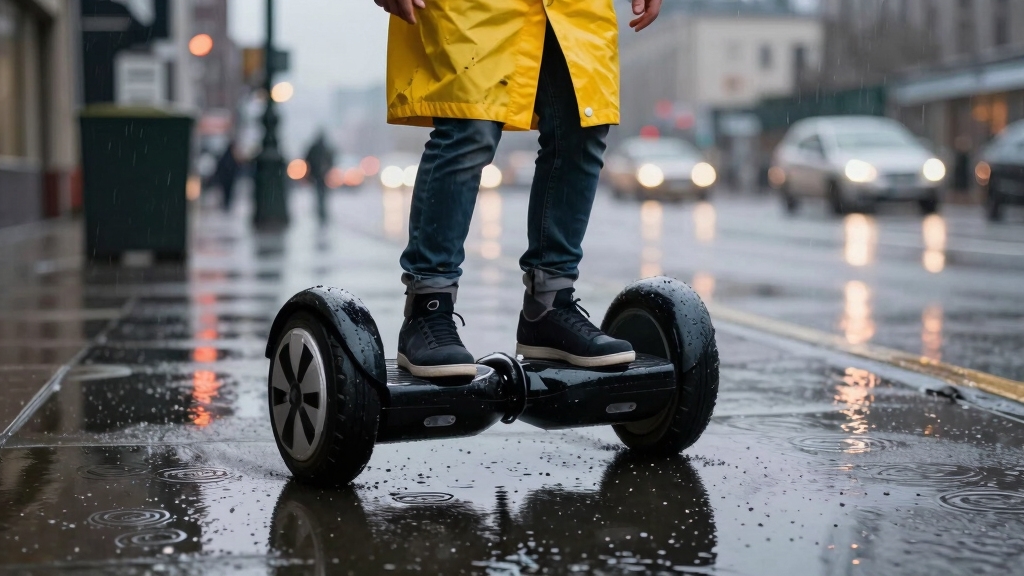
Although it might seem tempting to ride your hoverboard in the rain, you should avoid it whenever possible.
Most manufacturers advise against wet conditions because water can damage critical electronic parts like the motor, motherboard, and battery.
Even if your model tolerates light drizzle, heavy rain or puddles increase the risk of moisture seeping inside.
Wet surfaces also reduce traction, making slips and falls more likely.
Riding through wet grass or mud worsens contamination and mechanical wear.
Keep in mind that water resistance doesn’t mean waterproofing, so don’t rely on it to protect your device fully.
To keep your hoverboard safe and functioning properly, it’s best to wait for dry weather and avoid any wet or damp riding environments altogether.
Riding through puddles or rain may also void warranties, leading to costly repairs.
Understanding Hoverboard Water Resistance Ratings
Before you take your hoverboard out in the rain, it’s a good idea to get familiar with IP water resistance ratings. These ratings let you know how well your hoverboard can handle moisture. Just remember, they show limits rather than offering a waterproof guarantee. So, even if you’ve got a higher-rated model, it doesn’t mean it’s totally safe from water damage.
Understanding what each rating means can really help you make safer choices. This way, you can avoid risky situations and enjoy your ride without worry! Always check the manufacturer specifications to confirm your hoverboard’s water handling capabilities before exposure to moisture.
Decoding IP Water Ratings
When you’re choosing a hoverboard, understanding its IP water resistance rating helps you gauge how well it can handle moisture.
IP ratings, like IP54 or IPX6, indicate protection levels against solids and liquids. For example, IP54 guards against water spray from any angle but doesn’t mean the board is waterproof.
IPX6 resists powerful water jets but won’t guarantee safety in heavy rain.
Remember, water resistance differs from waterproofing; even high-rated hoverboards can suffer damage if exposed to enough moisture.
Knowing the exact rating gives you a clearer idea of what conditions your hoverboard can tolerate, helping you avoid risky situations.
Always use this info cautiously; ratings don’t assure full protection, so don’t rely on them alone to ride in wet weather.
Additionally, riding on wet grass greatly increases the risk of slipping and potential water damage to your hoverboard’s electronics, regardless of its IP rating.
Limits Of Water Resistance
Because water resistance ratings reveal how well a hoverboard can handle moisture, understanding their limits is essential before riding in wet conditions.
While IP ratings like IP54 or IPX6 provide some protection, they don’t guarantee full immunity to rain or water damage.
Avoid heavy rain, puddles, and wet terrain, as water can still seep into sensitive electronics causing costly damage.
| IP Rating | Protection Level |
|---|---|
| IP44 | Splash resistant |
| IP52 | Drip and light spray |
| IP54 | Water spray from any angle |
| IPX6 | Powerful water jets |
| IPX7 | Short-term immersion |
Check your hoverboard’s rating closely and never assume it’s waterproof.
Repeated exposure to moisture can lead to corrosion and battery degradation, so it’s best to minimize riding in wet conditions.
How Rain Can Damage Your Hoverboard’s Electronics?
You really shouldn’t underestimate how vulnerable your hoverboard’s electronics are to rain.
I mean, moisture can sneak into those critical components, like the motor and motherboard.
And when that happens, you could end up with short circuits or even corrosion.
It’s surprising, but even just a little bit of water can lead to some pretty costly damage and malfunction.
Proper maintenance, including regular cleaning and inspection, is essential to prevent water damage and prolong the device’s lifespan, similar to how post-dive rinsing protects dive scooters.
Electronic Component Vulnerability
Although hoverboards may look sturdy on the outside, their delicate electronic components remain highly vulnerable to rain exposure.
When water reaches parts like the motherboard, battery, or motor, it can cause short circuits, corrosion, and permanent damage.
Even small amounts of moisture can disrupt sensors and wiring, leading to erratic performance or complete failure.
Most hoverboards lack full waterproofing, so rain can easily penetrate seals and protective layers.
You might think a light drizzle is harmless, but repeated exposure weakens components over time.
To protect your hoverboard, avoid riding in wet conditions altogether.
If you must ride in damp weather, confirm your model’s water resistance rating is sufficient and take precautions like using protective covers.
Preventing water contact is vital for preserving your hoverboard’s electronic integrity.
Many electric scooters incorporate water-resistant casings and Battery Management Systems to safeguard against moisture-related hazards, a feature often lacking in hoverboards.
Moisture Ingress Effects
Moisture intrusion poses a serious threat to your hoverboard’s delicate electronics. Water can quickly compromise critical components like the motherboard, battery, and motor.
When rainwater seeps into your device, it can cause short circuits, corrosion, or permanent damage to wiring. Even slight dampness might lead to erratic sensor behavior or battery failure.
Water splashed from wet wheels or puddles often infiltrates vulnerable openings, increasing risk. While some models offer water resistance, no hoverboard is fully waterproof.
Exposure to heavy rain or standing water remains unsafe. If moisture enters, shut down the device immediately and dry it thoroughly to minimize harm.
To protect your hoverboard, avoid riding in wet conditions and steer clear of puddles or soaked terrain. Corrosion from moisture increases electrical resistance, causing malfunctions and intermittent power issues, which can severely affect your hoverboard’s performance and lifespan, so prompt drying and inspection of corroded connectors is essential.
Why Riding Hoverboards Through Puddles Is Risky?
Since puddles often conceal deeper water and debris, riding your hoverboard through them greatly increases the risk of water entering sensitive components like the motor and motherboard.
You may not see how deep or dirty a puddle is, which means water can easily seep into vulnerable parts through openings or cracks.
This exposure can cause short circuits, corrosion, or permanent damage to the electronics.
Additionally, wet wheels can splash water upward, worsening the problem.
Even water-resistant hoverboards aren’t designed for full immersion, so puddles remain a serious hazard.
Avoiding puddles helps protect your device from costly repairs or complete failure.
If you do accidentally ride through one, shut off your hoverboard immediately and dry it thoroughly to minimize damage.
Regular maintenance and inspection of cables and connectors after water exposure can prevent long-term issues.
Which Surfaces to Avoid When Riding Hoverboards in Wet Weather
Maneuvering wet surfaces on your hoverboard demands extra caution because certain terrains materially increase the risk of slipping and water damage.
You should avoid puddles and standing water since they can splash into sensitive components and impair traction.
Avoid puddles and standing water to prevent damage to sensitive parts and maintain proper traction.
Wet grass and mud also pose hazards by trapping moisture and debris, potentially damaging the wheels and electronics.
Smooth surfaces like wet tile or polished concrete become dangerously slick, increasing fall risk.
Additionally, rough or uneven wet ground can cause instability and unexpected stops.
Avoid snow, ice, or hail, as these conditions drastically reduce control and can harm your device.
Sticking to dry, non-slippery pavements is safest. Steering clear of these risky surfaces helps protect both your safety and your hoverboard’s longevity in wet weather.
It is also important to regularly inspect and maintain your hoverboard’s electrical components to prevent damage caused by moisture exposure.
How Water Affects Your Hoverboard’s Motor and Battery?
Hey there! Just a quick heads-up about water and your hoverboard. You mightn’t realize this, but water can really mess with your hoverboard’s motor. It can lead to short circuits or even corrosion, which is definitely not what you want.
Now, let’s talk about the battery. When it gets exposed to moisture, its performance can take a hit. This could mean reduced power or, in the worst-case scenario, complete failure. Yikes, right?
Even if just a little water seeps into the internal components, it can throw everything off balance. This not only disrupts how your hoverboard functions but can also lead to higher repair costs. So, it’s best to keep your hoverboard dry!
Exposure to moisture can accelerate battery degradation, shortening the lifespan and reducing the overall performance of your hoverboard.
Motor Damage Risks
Water intrusion can quickly compromise your hoverboard’s motor and battery, leading to performance issues or complete failure.
When water seeps into the motor housing or wiring, it can cause short circuits, corrosion, and overheating.
Even small amounts of moisture can degrade motor components over time, reducing efficiency and causing erratic operation.
You should be especially cautious in heavy rain or when riding through puddles, as water splashes can penetrate vulnerable openings near the wheels.
While some hoverboards offer water resistance, none are fully waterproof, so exposure still risks damage.
If your hoverboard gets wet, turn it off immediately and dry it thoroughly to minimize harm.
Avoid riding in wet conditions to protect the motor and extend your hoverboard’s lifespan.
Battery Performance Impact
Although hoverboards are designed with some protective measures, exposure to moisture can markedly impair battery performance and longevity.
When water infiltrates your hoverboard, it can cause short circuits or corrosion in the battery cells, reducing their capacity and overall lifespan.
You might notice decreased riding time and inconsistent power delivery after wet exposure.
Even if your hoverboard has a water resistance rating, prolonged or heavy moisture contact can still damage the battery’s delicate components.
To protect your battery, avoid riding in rain or through puddles, and never expose your device to wet environments unnecessarily.
If your hoverboard gets wet, turn it off immediately and dry it thoroughly to minimize battery damage and preserve peak performance.
Moisture Ingress Effects
Damage to your hoverboard’s motor and battery can quickly escalate if moisture sneaks inside. Water can cause short circuits, corrosion, and permanent damage to these critical components. This can reduce performance or render your hoverboard unusable.
Even small amounts of moisture can lead to costly repairs or battery failure. Be aware of these moisture ingress effects:
Corrosion on motor windings and battery contacts can impair function. Short-circuiting inside the motherboard can cause erratic behavior or shutdown. Battery swelling or leakage can pose safety risks.
To protect your hoverboard, avoid riding in wet conditions, especially heavy rain or puddles. If moisture does enter, power off immediately and dry the device thoroughly to minimize damage and extend your hoverboard’s lifespan.
How to Protect Your Hoverboard From Rain and Moisture?
When you want to ride your hoverboard safely in damp conditions, taking proactive steps to shield it from rain and moisture is essential.
First, avoid riding in heavy rain or through puddles, as water can easily enter vulnerable areas like foot sensors and internal electronics.
Avoid heavy rain and puddles to protect foot sensors and internal electronics from water damage.
Check your hoverboard’s IP rating to understand its water resistance limits before exposure.
Store your hoverboard in a dry place to prevent corrosion and long-term damage.
After any contact with moisture, switch off the device immediately and dry it thoroughly.
Keep wheels clean to reduce water splashes, and avoid wet grass or muddy surfaces.
These precautions help minimize the risk of costly water damage and ensure your hoverboard stays functional and safe even in light damp conditions.
Do Waterproof Covers Really Protect Hoverboards in the Rain?
Since water exposure poses a significant risk to your hoverboard’s electronics, using a waterproof cover might seem like a smart solution to protect it in the rain.
While covers can reduce water contact, they don’t guarantee full protection. Water can still seep through seams, zippers, or damaged areas, especially during heavy rain or splashes from wet ground.
Additionally, covers may trap moisture inside, increasing humidity around sensitive components.
Consider these points when using waterproof covers:
They help shield against light rain and splashes but aren’t foolproof in prolonged wet conditions. Covers don’t improve traction or prevent water from entering through wheels or sensors.
Overreliance on covers can create a false sense of security, leading to riskier rides in rain.
Use covers cautiously and avoid riding in heavy rain regardless.
What to Do If Your Hoverboard Gets Wet?
Dealing with a wet hoverboard requires prompt and careful action to minimize potential harm. First, turn off your hoverboard immediately to prevent short circuits. Avoid charging it until you’re certain all moisture is gone.
Wipe down the exterior with a dry cloth, focusing on the foot sensors and openings.
Next, leave it in a warm, dry place with good airflow. Avoid direct sunlight or heat sources that could damage components.
You can use silica gel packets or uncooked rice nearby to help absorb moisture. Resist the urge to power it on too soon; wait at least 24 hours or more depending on the wetness.
If you notice unusual sounds, erratic behavior, or failure to charge afterward, consult a professional technician to inspect for internal damage.
When to Stop Riding: Avoid Heavy Rain, Snow, and Ice?
Although some hoverboards can handle light moisture, you should immediately stop riding once heavy rain begins or if snow and ice cover your path.
Stop riding your hoverboard immediately in heavy rain or when snow and ice cover your path.
These conditions drastically increase the risk of water damage and accidents. Hoverboards aren’t built for slippery surfaces, and moisture can seep into critical components like the motor and battery, causing permanent damage.
Snow and ice reduce traction, making falls more likely. To protect your hoverboard and guarantee your safety, avoid these hazardous weather conditions.
Consider these key points to know when to stop riding:
- Heavy rain can overwhelm water resistance and damage electronics.
- Snow and ice create slippery surfaces that compromise control.
- Puddles and wet ground increase the chance of water ingress and mechanical wear.
Frequently Asked Questions
Can Riding in Light Rain Affect My Hoverboard’s Warranty?
Yes, riding your hoverboard in light rain can affect its warranty.
Most manufacturers explicitly exclude water damage from coverage, even if the rain is light.
Water exposure may cause internal issues like motor or battery damage, which won’t be covered under warranty.
To stay safe, check your hoverboard’s IP rating and avoid wet conditions.
If moisture gets inside, power it off immediately and dry it thoroughly to minimize damage risks.
How Long Should I Wait to Use a Hoverboard After It Gets Wet?
You should wait at least 24 to 48 hours before using your hoverboard after it gets wet, like waiting for a desert rain to fully soak in!
First, power it off immediately and dry it thoroughly with a soft cloth.
Leave it in a warm, dry place to make certain all internal moisture evaporates.
Rushing back too soon risks serious electronic damage, so patience is key to keeping your hoverboard safe and functional.
Are Certain Hoverboard Brands More Rain-Resistant Than Others?
Yes, some hoverboard brands offer models with higher water-resistance ratings like IP54 or IPX6, making them more rain-resistant than others.
However, no brand can guarantee full waterproofing, so you should still avoid heavy rain and puddles.
Always check the specific IP rating before riding in wet conditions. Remember that water-resistant doesn’t mean waterproof.
Taking precautions helps protect your hoverboard’s electronics and extends its lifespan.
Can Using a Hoverboard in the Rain Void the Manufacturer’s Insurance?
Yes, using a hoverboard in the rain can void your manufacturer’s insurance or warranty.
Most manufacturers explicitly state avoiding water exposure to prevent damage.
If you ride in wet conditions, any resulting electrical faults or corrosion mightn’t be covered.
You should always check your hoverboard’s warranty terms carefully and avoid rain or puddles to protect your coverage.
Staying dry helps guarantee your insurance remains valid and your device lasts longer.
How Does Rain Impact the Hoverboard’s Tire Grip on Different Terrains?
Imagine gliding on ice instead of pavement. That’s how rain turns your hoverboard’s tire grip on wet terrain.
Rainwater reduces friction, making tires slip on smooth surfaces like asphalt or tile.
On grass or mud, wetness softens the ground, causing tires to sink or slide unpredictably.
You’ll find your control less precise, increasing the risk of falls.
Riding a Hoverboard in the Rain Comes with Serious Risks
Riding your hoverboard in the rain might seem like a light dance through mist, but it’s more like walking a tightrope over a stormy sea.
Water can sneak into sensitive electronics, turning your smooth ride into a risky slip. Protect your board with care, avoid puddles, and know when to pause.
Just like you wouldn’t sail into a tempest, don’t ride into heavy rain or icy paths. Stay safe, stay dry.