
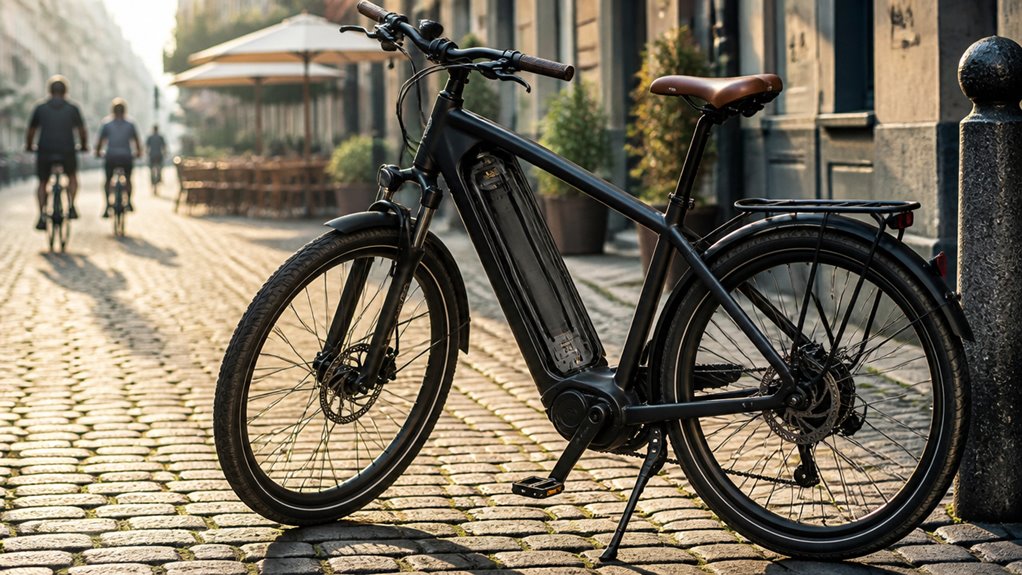
Yes, you can ride an e-bike without the battery, but all propulsion depends solely on your pedaling. The motor won’t assist, and the bike remains heavier due to its motor and frame, making pedaling harder.
Some motors add resistance when unpowered, so shifting to the right gears becomes vital, especially uphill. Removing the battery reduces weight slightly and helps with maintenance or storage.
Understanding these effects will help you manage your ride efficiently without power.
Key Takeaways
- Yes, you can pedal an e-bike without the battery, but electric assistance will be completely unavailable.
- Without the battery, the bike is heavier and may feel harder to pedal due to added motor resistance.
- Proper gearing is essential to compensate for the lack of motor support, especially on hills and during acceleration.
- Removing the battery reduces overall weight by about 3 kg, improving low-speed handling and ease of transport.
- Riding without the battery is useful for maintenance, indoor charging, storage, or reducing accidental power activation.
Can You Ride an E-Bike Without the Battery?
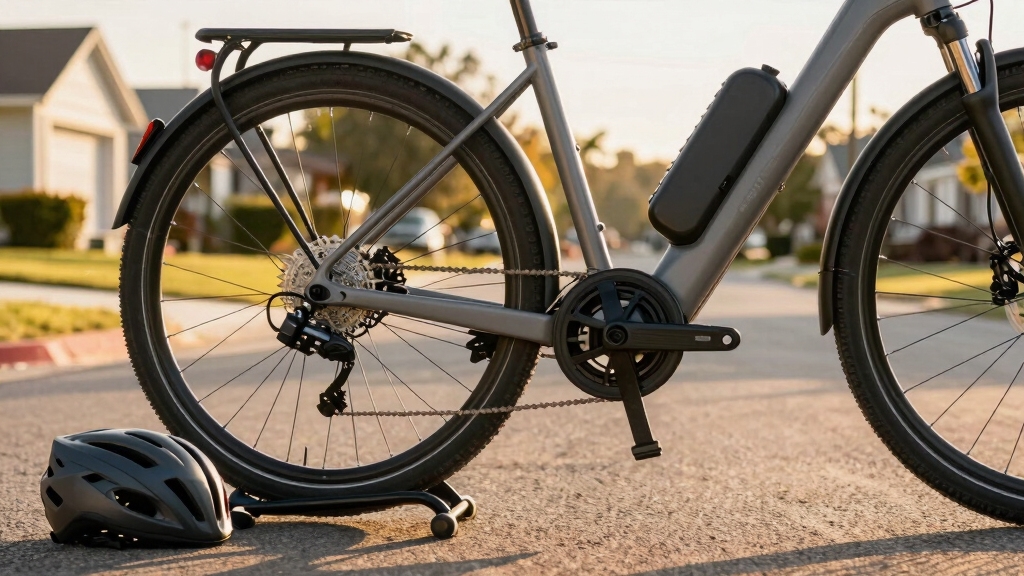
You can ride an e-bike without the battery, as most pedal-assist models allow pedaling even when the electric assist is unavailable.
Most pedal-assist e-bikes can be pedaled even if the battery is not installed or powered.
The drivetrain remains mechanically connected, so pedaling continues to propel the bike like a conventional bicycle, though without motor support.
Without the battery, the electric assist system ceases operation, and the bike behaves as a heavier manual bike due to its design and components.
Removing the battery reduces weight by approximately 3 kg, slightly improving handling, especially at low speeds or during transport.
Some e-bike motors may generate resistance when inactive, so switching off the motor system is advisable.
What Happens When You Ride Without the Battery?
Riding an e-bike without the battery transforms the experience into one similar to using a traditional pedal bike, but with notable differences.
You’ll notice the bike feels heavier due to the motor and frame weight, even though removing the battery cuts about 3 kg. The electric assist stops immediately, so all propulsion relies on your pedaling power.
Some motors create additional resistance when unpowered, making pedaling less efficient than a conventional bike. Handling may improve slightly without the battery’s mass, simplifying low-speed maneuvers and transport.
You must engage appropriate gearing to compensate for lost assistance, especially on inclines. The drivetrain remains mechanically connected, allowing pedaling.
Without motor support, your physical effort increases, and the bike’s dynamics shift noticeably. It is important to remember that the BMS regulates the battery’s performance and safety, so riding without the battery disables these protections.
Why Is Pedaling Harder Without Battery Power?
Without the battery, the electric motor stops providing assistance, so you rely solely on your own pedaling force.
The e-bike weighs more than a conventional bike due to its heavier frame and motor components, which you must propel without support.
Additionally, some motor systems generate drag when inactive, increasing resistance in the drivetrain. This resistance demands greater effort, especially during acceleration and climbing steep inclines.
Since the motor’s torque boost is unavailable, you’ll notice that pedaling feels harder and less efficient. Proper gearing becomes critical to manage this increased workload.
Ultimately, without battery power, the mechanical load and added weight combine to make pedaling markedly more strenuous than when the motor assists you.
Furthermore, the increased power demand caused by heavier loads and terrain directly affects how much effort is required when pedaling without assistance.
When and Why Should You Remove Your E-Bike Battery?
Although e-bike batteries are integral to their function, there are several situations where removing the battery becomes necessary or advantageous.
You might need to take out the battery when charging separately, during maintenance, or to reduce the bike’s weight for transport.
Removing the battery also enhances safety by preventing accidental power activation and protects the battery from dirt and moisture.
Consider these key scenarios for battery removal:
- Charging the battery indoors or away from the bike.
- Performing repairs or routine maintenance on the frame or drivetrain.
- Reducing overall bike weight for easier lifting or carrying.
- Storing the e-bike for extended periods to preserve battery health.
Removing the battery guarantees peak system care and improves convenience in various practical contexts. It is also important to store the battery at an optimal charge level, typically around 40%–60% charge, to extend its lifespan during periods of non-use.
Tips for Riding Safely and Comfortably Without Battery Power
Adapting to pedal power without battery assistance requires mindful adjustments to your riding technique and bike setup.
First, switch off the motor completely to reduce drivetrain resistance and improve pedaling efficiency.
Use lower gears to maintain a steady cadence, especially on inclines and during acceleration.
Since the bike feels heavier without motor support, focus on smooth, controlled pedal strokes to conserve energy.
Keep the battery compartment clean and dry to avoid damage when the battery is removed.
Store the battery in a cool, safe location.
Plan rides on flatter terrain and shorter distances to prevent excessive fatigue.
Finally, practice safe handling by anticipating slower acceleration and increased stopping distances.
Adjust your speed accordingly to maintain control and comfort.
Consider the benefits of removable batteries to facilitate easier charging and reduce weight during rides without power.
Frequently Asked Questions
How Long Can an E-Bike Battery Last on a Single Charge?
An e-bike battery typically lasts between 20 to 70 miles on a single charge, depending on factors like battery capacity, rider weight, terrain, and assist level.
You can expect around 3 to 6 hours of continuous use under moderate conditions.
To maximize battery life, use lower assist settings, maintain steady speeds, and keep your battery charged properly.
What Is the Average Cost of Replacing an E-Bike Battery?
The average cost of replacing an e-bike battery typically ranges from $300 to $700, depending on the battery’s capacity, brand, and chemistry.
Higher-end models or larger capacity batteries can exceed $800. When replacing, make certain compatibility with your e-bike’s system voltage and connector type is checked.
Prices also vary based on whether you purchase an original manufacturer’s battery or a third-party alternative. Third-party options may be cheaper but can vary in quality and warranty.
Can E-Bike Batteries Be Recycled or Disposed of Safely?
Yes, you can recycle e-bike batteries safely by taking them to certified recycling centers or hazardous waste facilities.
Don’t dispose of them in regular trash, as they contain harmful chemicals.
Before recycling, fully discharge the battery and store it in a cool, dry place.
Many manufacturers or retailers offer battery take-back programs to guarantee proper handling.
Following these steps helps prevent environmental damage and promotes responsible battery lifecycle management.
How Do I Know if My E-Bike Battery Is Malfunctioning?
You’ll know your e-bike battery is malfunctioning if it won’t hold a charge, charges unusually slowly, or overheats during use.
Watch for sudden drops in power, inconsistent voltage readings, or the battery not communicating with the motor system.
Swelling or physical damage also signals issues. Use a multimeter to check voltage and consider professional diagnostics if problems persist.
Don’t ignore warning signs to avoid further damage or safety risks.
Are There Different Types of E-Bike Motors Affecting Battery Life?
Yes, different e-bike motors affect battery life.
You’ll find hub motors and mid-drive motors common. Hub motors draw power directly from the battery, often using more energy on hills.
Mid-drive motors are more efficient, leveraging the bike’s gears to reduce battery drain.
Your riding style, motor power, and terrain also influence battery longevity.
Understanding your motor type helps you optimize battery use and plan charging accordingly.
Pedaling an E-Bike Without Power Requires More Effort and Planning
Riding your e-bike without the battery is possible, but have you noticed how much harder pedaling becomes? Without battery power, you lose motor assistance, making climbs and long rides more strenuous.
Removing the battery can protect it from damage or theft, especially during storage or transport. To ride safely without power, adjust your gears and pace yourself.
Understanding these factors guarantees you stay efficient and comfortable, whether your battery’s in or out.